
Cusco Altitude Sickness Guide
Cusco sits about 3,350 m (11,000 ft) above sea level, high enough for altitude illness to be a real travel concern. Travelers who fly directly from low elevation make a rapid ascent, so the first part of a Cusco itinerary deserves the same care as a hike or a train reservation. Plan to arrive slowly, keep your schedule flexible, and know when symptoms call for medical help.
- Give yourself a low-key arrival day and avoid strenuous activity and alcohol for at least the first 48 hours.
- Rest in the first hours after arrival, drink fluids, and choose light meals.
- Headache, nausea, dizziness, fatigue, poor appetite, disturbed sleep, palpitations, and breathlessness can be altitude-related symptoms.
- Discuss acetazolamide or any prevention plan with a clinician before departure. Do not self-medicate after arrival.
- Persistent or severe symptoms need prompt medical assessment. Severe illness that does not improve calls for immediate descent to a lower elevation.
- Buy travel medical and evacuation coverage before departure, and check that altitude-related illness is covered.
Why Cusco’s altitude deserves a plan
Altitude illness becomes a concern above 2,500 m, and Cusco is well beyond that threshold. The practical issue is not simply the number on a map. It is the speed of arrival. A direct flight into Cusco can take you from a much lower elevation to a sleeping altitude of roughly 3,350 m in a single day, leaving little time for your body to adjust.

Private Transfer from Ollantaytambo to Cusco (Hotel/Airport)
Travel with confidence on a private transfer designed for comfort, reliability, and a smooth experience from start to finish. Ideal for travelers retu...

Rainbow Mountain Trek
Rainbow Mountain in Cusco, Peru is a recently discovered attraction. We operate exclusive tours to Vinicunca with all inclusions. Our guides are from...
There is no prize for filling the afternoon after landing. Treat your first two days as a buffer around the city’s plazas, cobbled lanes, and mountain air. That buffer protects the rest of the trip: it gives you room to rest, recognize symptoms early, and avoid turning a manageable adjustment into a disrupted itinerary.
Use the first 48 hours to acclimatize
For the first 48 hours after arriving in Cusco, avoid strenuous activity and alcohol. Peru’s health guidance also recommends resting during the first hours, drinking fluids, and eating light meals. Acclimatization reactions commonly appear during the first two or three days, which is why an unhurried start is more useful than a packed arrival schedule.

Make arrival day almost empty
Settle your airport transfer before travel, then check in, rest, and keep the evening simple. The Cusco Airport to Historic Center Transportation Guide can help you arrange the first leg of the trip before you land. A preplanned transfer is not altitude treatment, but it removes one demanding task from a day best reserved for a light meal, fluids, and a calm start.
Keep day one and day two flexible
Choose plans that are easy to shorten or postpone. Save strenuous hikes, long uphill routes, and physically demanding excursions until you feel well. A gentle pace does not mean staying indoors, but it does mean resisting the urge to make the first morning a test of endurance. Your goal is to enjoy Cusco without giving symptoms a larger stage.
| Time after arrival | Best approach | What to watch for |
|---|---|---|
| First hours | Check in, rest, drink fluids, and eat a light meal. | New headache, nausea, dizziness, unusual fatigue, or breathlessness. |
| First 48 hours | Keep activity light and avoid alcohol and strenuous exertion. | Symptoms that persist, intensify, or make normal activity difficult. |
| Days two and three | Build plans gradually and continue monitoring how you feel. | Acclimatization reactions can occur during this period. |
Recognize altitude sickness symptoms early
Altitude illness can include headache, nausea, dizziness, fatigue, poor appetite, sleep disturbance, palpitations, and breathlessness. A symptom does not need to be dramatic to deserve attention. Notice how you feel at rest, during ordinary movement, and when symptoms are changing rather than settling.
When rest and a slower day are appropriate
For mild symptoms, stop exertion and give yourself time to rest. Keep plans low-key, drink fluids, have a light meal if you can, and watch closely for improvement. Do not use a scheduled tour or a prepaid activity as a reason to push through feeling unwell. A flexible itinerary is valuable precisely because it lets health set the pace.
When to seek medical help and descend
Seek prompt medical assessment if severe symptoms do not improve with rest, or if intense headache, nausea, or shortness of breath persists. For severe, non-resolving altitude illness, immediate descent to a lower elevation is more important than trying to manage the situation alone with medication or commercial remedies.
Peru’s health emergency number is 113. Ambulance availability and reliability can be limited in much of the country, and a seriously ill traveler can sometimes reach a major hospital faster by taxi or private vehicle. Keep your accommodation address, travel insurance details, and a practical transport option handy, especially during the first days at altitude.

One Day Train Trip to Machu Picchu from Cusco
This one-day trip to Machu Picchu from Cusco offers a seamless journey to one of the most iconic landmarks in the wo...

Machu Picchu Full Day Tour from Cusco
Experience Machu Picchu like a true traveler, not just a tourist. We offer a seamless and stress-free experience wit...

Peruvian Cooking Class Cocktails and Market Tour in Cusco
You will cook 3 Peruvian courses and 2 cocktails. Our Peruvian Cooking, cocktails and market tour starts at San Pedr...
Medication, coca tea, and oxygen: use sensible boundaries
Acetazolamide can be prescribed as preventive medication for some travelers, particularly when gradual ascent is not feasible. It is a pre-trip conversation for a clinician familiar with high-altitude travel, not a medicine to buy casually after landing. Your clinician can consider your route, health history, existing medicines, and the time available to acclimatize.
Coca tea, coca leaves, oxygen cans, and over-the-counter products sold for soroche should not be treated as proven prevention or a substitute for care. The dependable basics are a slower ascent where possible, reduced exertion, no alcohol at first, clinician-directed medication when appropriate, medical assessment for persistent symptoms, and descent for severe illness.
Who needs extra medical planning before Cusco
Travelers with heart or lung disease should speak with a clinician experienced in high-altitude medicine before planning a Cusco stay. Travelers with hypertension or arrhythmias should have a recent medical review and bring their full supply of prescribed medication. This is also a good time to decide who in your travel party knows the plan if you need to rest, seek care, or descend.
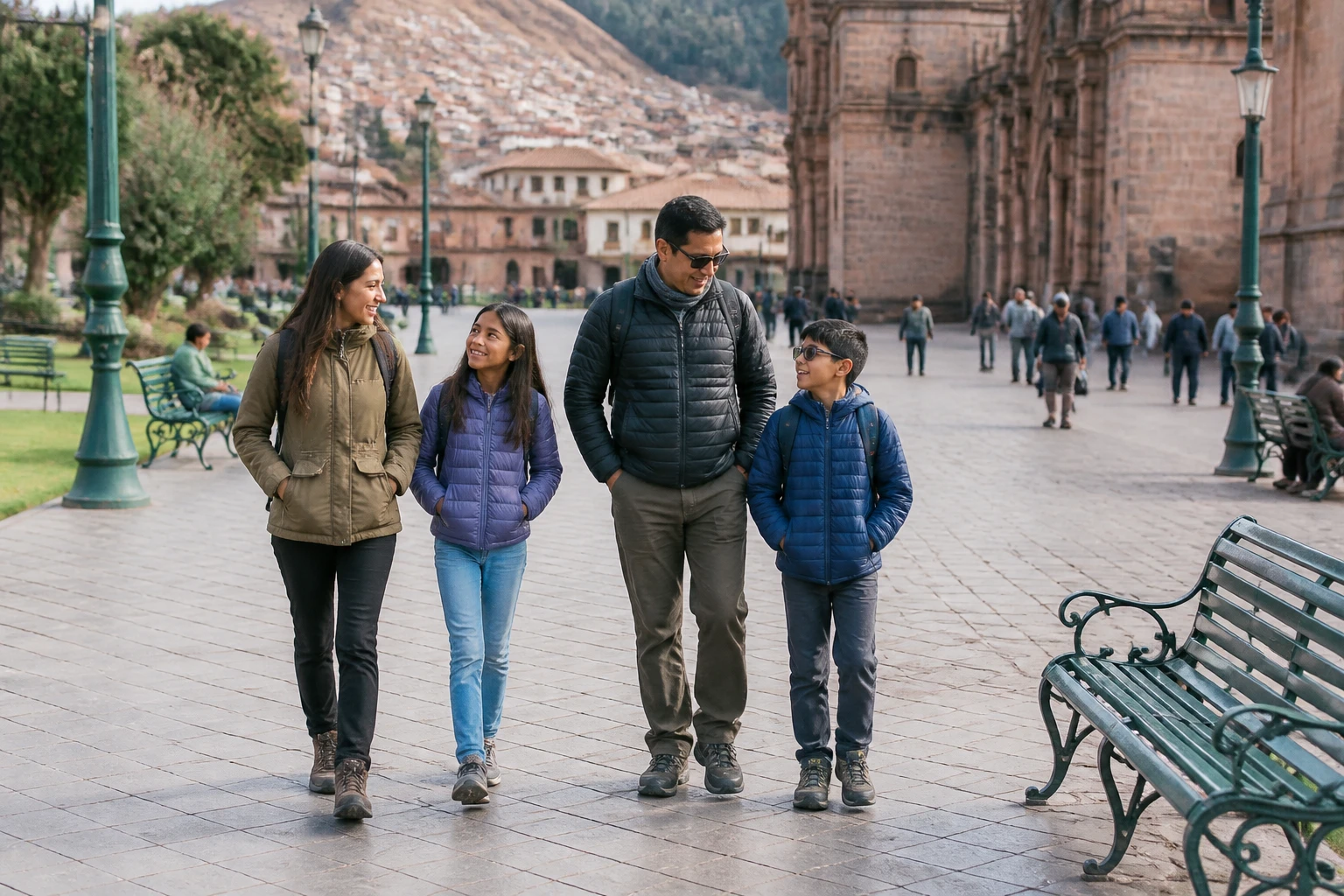
Children can also be affected by altitude illness. Persistent crying can be a sign that a child is unwell at altitude, so families should leave extra room in the schedule for rest and close observation. A child who seems persistently unwell should not be urged through a sightseeing plan simply because the day was booked in advance.
Shape the itinerary around a slower ascent
If your route allows it, consider spending one or two nights at a lower elevation before sleeping in Cusco. This is an itinerary option to discuss with a clinician, particularly if you are arriving rapidly from low altitude or have health factors that need individual advice. It does not guarantee that altitude illness will be avoided, but it gives your trip a more gradual rhythm.
Accept the tradeoff before you book
A slower approach can mean extra lodging, additional transfers, or fewer activities at the beginning of the trip. In return, it reduces pressure to sightsee or trek immediately after a rapid ascent. The Sacred Valley Travel Guide From Cusco can help with route planning that leaves more calendar space around your Cusco arrival, while your medical advice should guide the health side of the decision.
Put demanding plans later in the stay
Schedule the most active parts of your trip after the initial adjustment period whenever possible. Keep the first two days light enough that you can change direction without losing the whole holiday. When choosing a 3 Days in Cusco Itinerary, protect the arrival window first, then add museums, neighborhoods, ruins, day trips, or hiking according to how you are feeling.
Pack for a clear response, not a false cure
Packing will not prevent altitude illness, but a few practical items can make it easier to respond calmly. Keep the essentials accessible rather than buried in checked luggage, and make sure your traveling companions know where to find your medication and insurance details.
- Your full supply of regular prescribed medication.
- Any clinician-directed altitude medication, with instructions for its use.
- Travel medical insurance and emergency evacuation policy details.
- Your accommodation address and Peru’s health emergency number, 113.
- Water and easy, light food for the first hours after arrival.
Do not assume ordinary travel insurance will cover every outcome. Specialized medical care can cost tens of thousands of dollars, and payment in full can be required at discharge. Before departure, choose travel medical and evacuation coverage that suits your itinerary and confirm its rules for altitude-related illness, pre-existing conditions, evacuation, and treatment location.
Still comparing Cusco Altitude Sickness Guide?
Ask for tour ideas, hotel suggestions, or a simple trip plan that combines both.
Trip Helper
Keep altitude advice separate from other health planning
Altitude is one part of a Peru health plan. For travel limited to highland tourist areas including Cusco, the Inca Trail, and Machu Picchu, yellow fever vaccination is not generally recommended. The guidance differs for lower-elevation areas of the Cusco region, so travelers adding Amazon or other lowland destinations should get itinerary-specific medical advice before departure.

Make Cusco’s first days part of the experience
Cusco rewards travelers who leave room to arrive. This is a city where an unhurried first day can be a wise part of the journey, not lost time. Rest early, eat lightly, skip alcohol and strenuous activity for the first 48 hours, and respond quickly if symptoms persist or worsen. With a flexible plan and a realistic respect for 3,350 m, you can give the trip its best possible start.
Frequently asked questions
Is altitude sickness common in Cusco?
Altitude illness is a meaningful possibility in Cusco because the city is about 3,350 m (11,000 ft) above sea level, well above the elevation where altitude illness becomes a concern. Risk is especially relevant for travelers who fly in rapidly from low altitude.
How long should I acclimatize in Cusco?
Keep your first 48 hours low-key and avoid strenuous activity and alcohol during that period. Acclimatization reactions commonly occur in the first two or three days, so build a flexible start into the itinerary.
What are the symptoms of altitude sickness in Cusco?
Symptoms can include headache, nausea, dizziness, fatigue, poor appetite, sleep disturbance, palpitations, and breathlessness. Seek prompt medical assessment if intense headache, nausea, or shortness of breath persists, or if severe symptoms do not improve with rest.
Should I take acetazolamide for Cusco altitude sickness?
Take acetazolamide only if it has been prescribed for you by a clinician. It can be used preventively for some rapid-ascent or higher-risk itineraries, but it is not a medication to self-prescribe or buy casually on arrival.
Do coca tea or oxygen cans prevent altitude sickness?
No, they should not be relied on as proven prevention or treatment for altitude illness. A slower ascent where possible, reduced exertion, avoiding alcohol at first, medical advice, and descent for severe illness are the safer priorities.
Can I go straight to a strenuous tour after landing in Cusco?
It is better to avoid strenuous activity for at least the first 48 hours after arrival. Travelers flying directly into Cusco make a rapid ascent, so reserve demanding plans for later when possible.
What should I do in an altitude emergency in Cusco?
For severe or non-resolving illness, seek urgent medical help and descend immediately to a lower elevation. Peru’s health emergency number is 113; because ambulance services can be limited in much of Peru, a taxi or private vehicle can sometimes be faster for reaching a major hospital.
Rainbow Mountain Trek
Rainbow Mountain in Cusco, Peru is a recently discovered attraction. We operate exclusive tours to Vinicunca with all inclusions. Our guides are from...
Private Transfer from Ollantaytambo to Cusco (Hotel/Airport)
Travel with confidence on a private transfer designed for comfort, reliability, and a smooth experience from start t...
Experiences to explore
 Explore experience ↗
Planetarium Cusco: Learn About Inca Astronomy
◷ 2 hr
Excellent way to spend a few hours during the evening in Cusco at the small and private Planetarium; located at about 10 minutes by car
See dates for Current pricing
View dates Explore experience ↗
Essential Peru 9 Days of Magic and Culture
◷ 216 hr
A complete adventure through the best of Peru Discover Peru from north to south on an unforgettable tour. Start in Lima, exploring its
See dates for Current pricing
View dates Explore experience ↗
Breathtaking MachuPicchu FullDay Tour with First Class IncaRail Train from Cusco
◷ 24 hr
Get stunning views of the Andes Mountains on board the FIRTS CLASS Inca Rail train from Cusco. Journey back in time and explore the "Lo
See dates for Current pricing
View dates