Sacred Valley Travel Guide From Cusco
The best Sacred Valley plan from Cusco depends on what comes next. A round trip suits travelers who want selected stops in one long day. A one-way journey ending in Ollantaytambo is more practical when a Machu Picchu train follows. Current station-access changes make advance confirmation and schedule buffers especially important in 2026.
- Choose a Cusco round trip for a focused day visit with selected stops.
- End in Ollantaytambo if you have an onward train or want a slower itinerary.
- Confirm the exact station, road approach, transfer point, and departure time shortly before travel.
- Budget separately for road transport, guiding, admission, meals, lodging, and rail tickets.
- Use reputable transport and avoid unnecessary overnight road travel in mountainous areas.
- Do not depend on buying a Machu Picchu entry ticket after arrival.
There is no single required circuit. Pisac, Ollantaytambo, Maras, and Moray can be arranged in different combinations, but fitting every name into one day can turn the journey into a sequence of hurried arrivals. Decide first if your priority is archaeological sites, village time, scenery, shopping, photography, or reaching the train corridor without stress.

2-Day Sacred Valley & Machu Picchu Tour by Train from Cusco
Experience the Best of the Sacred Valley and Machu Picchu Discover the heart of the Inca world on this unforgettable 2-day small-group tour from Cusc...

6-Day Cusco and Machu Picchu Tour: Sacred Valley & Maras Moray
Cusco: “navel of the world” and center of power. Exciting and legendary. Everything Cusco has to offer is right...

2-Day Luxury Machu Picchu & Sacred Valley Classic Tour
Explore the Sacred Valley of the Incas on this 2-day tour, which leaves Cusco to visit a lively market town and two...

The Best Private Sacred Valley Tour in Cusco ( with Pisac)
We know very well each place of this tour, since we have been grown in this area and we studied over 3 years to get...
This guide avoids fixed travel times and prices because the available official evidence does not establish reliable current figures for local road transport, guides, admissions, lodging, or rail fares. Ask for a written itinerary that identifies pickup, included stops, waiting time, admission arrangements, luggage handling, and the final drop-off point.
Choose the route that matches your next move
Start with the end of the day and plan backward. If you will sleep in Cusco, protect enough time for the return journey. If you will stay in the valley, confirm that your driver serves the exact lodging. If you will board a train, treat the station and check-in requirement as fixed anchors while keeping the sightseeing stops flexible.
Option 1: A Sacred Valley day trip from Cusco
A single long day can cover selected Sacred Valley stops, but it is better suited to a focused route than an exhaustive circuit. Shared transport may reduce the road-transport share of your budget. A vetted private transfer can give you more control over departure time, stops, and the return to Cusco. Neither choice eliminates delays caused by roads, weather, protests, or operational changes.
Before booking, ask how many stops are included and how much usable time is planned at each one. Confirm if pickup is at your lodging or a meeting point, where the trip ends, and what happens if road conditions change. A full minibus and a private car can follow similar roads while producing very different levels of flexibility.
Option 2: Travel one way and sleep in Ollantaytambo
An overnight near Ollantaytambo is a logical choice before a next-day Machu Picchu train. It removes the need to return to Cusco before rail travel and creates a buffer around current station-access works. This is an itinerary inference based on the rail network and access notice, not an official recommendation from the operator.
For a more spacious route, A Slow Sacred Valley Itinerary: Pisac, Ollantaytambo, Maras and Moray provides a useful framework for dividing the major names across your available time. The key decision is still practical: decide where you will sleep, where your luggage will go, and which commitments cannot move.
Option 3: Use a Sacred Valley stay as a separate trip
Not every valley visit needs to connect directly with Machu Picchu. A separate stay lets you choose fewer stops and avoid organizing the entire day around a train. Ask lodging providers about transfers, road access, luggage storage, meal availability, and the exact pickup location for your return to Cusco. Obtain important arrangements in writing rather than relying on a general neighborhood name.
Plan the stops without overloading the day
A good route has a clear priority and a sensible stopping rule. Select one or two places that matter most, then treat additional stops as optional until the operator confirms the route. This protects time for meals, restrooms, walking, traffic, and unexpected delays. It also makes it easier to remove a low-priority stop without losing the whole plan.
- List your non-negotiable stops and your optional stops.
- Fix any train departure, lodging check-in, or scheduled pickup.
- Ask the operator for realistic driving and visit windows for your date.
- Confirm what will be removed first if the route falls behind.
- Keep passports, tickets, medication, and essential layers with you.
- Recheck road and rail conditions shortly before departure.
Avoid accepting a vague promise to “see everything.” The evidence available for this guide does not support universal driving times between Cusco and individual valley stops. Road conditions, pickup patterns, demonstrations, weather, and station arrangements can all affect the day. Request date-specific timing from the company that will operate your vehicle.

Full-Day Excursion to Sacred Valley, Pisac and Ollantaytambo from Cusco
You will know the 5 most important places in the Sacred Valley You will have a buffet lunch of the 30 best dishes o...

The Ultimate Full Day Sacred Valley Tour
Beat the Crowds: Experience the magic without the masses. We've meticulously planned our itinerary to ensure you arr...

Machu Picchu Private Day Trip from Cusco
This private Machu Picchu day trip is ideal for travelers seeking a seamless, stress free experience. With guarantee...
Compare shared tours, private transfers, and independent transport
| Transport style | Best fit | Main tradeoff | Questions to ask |
|---|---|---|---|
| Shared day transport | Travelers following a set circuit | Less control over stops and delays | Pickup point, group size, inclusions, return location |
| Private transfer | Travelers prioritizing flexibility | Usually a separate and variable budget category | Vehicle, driver, waiting time, luggage, backup plan |
| One-way transfer | Travelers staying in the valley | Requires coordinated lodging and onward plans | Exact drop-off, luggage space, road access |
| Tour plus rail connection | Travelers continuing toward Machu Picchu | A delay can affect a fixed departure | Station, transfer point, check-in buffer, contingency |
| Independent public transport | Travelers comfortable arranging each segment | More transfers and less itinerary support | Daytime operation, drop-off point, luggage, final connection |
Road safety deserves more weight than a small saving. Current official travel advice warns that bus crashes are common, particularly at night, and recommends reputable transport companies. It advises avoiding overnight road travel where possible, especially in mountainous or remote areas. Check recent reviews, vehicle details, driver arrangements, and emergency contacts before paying.
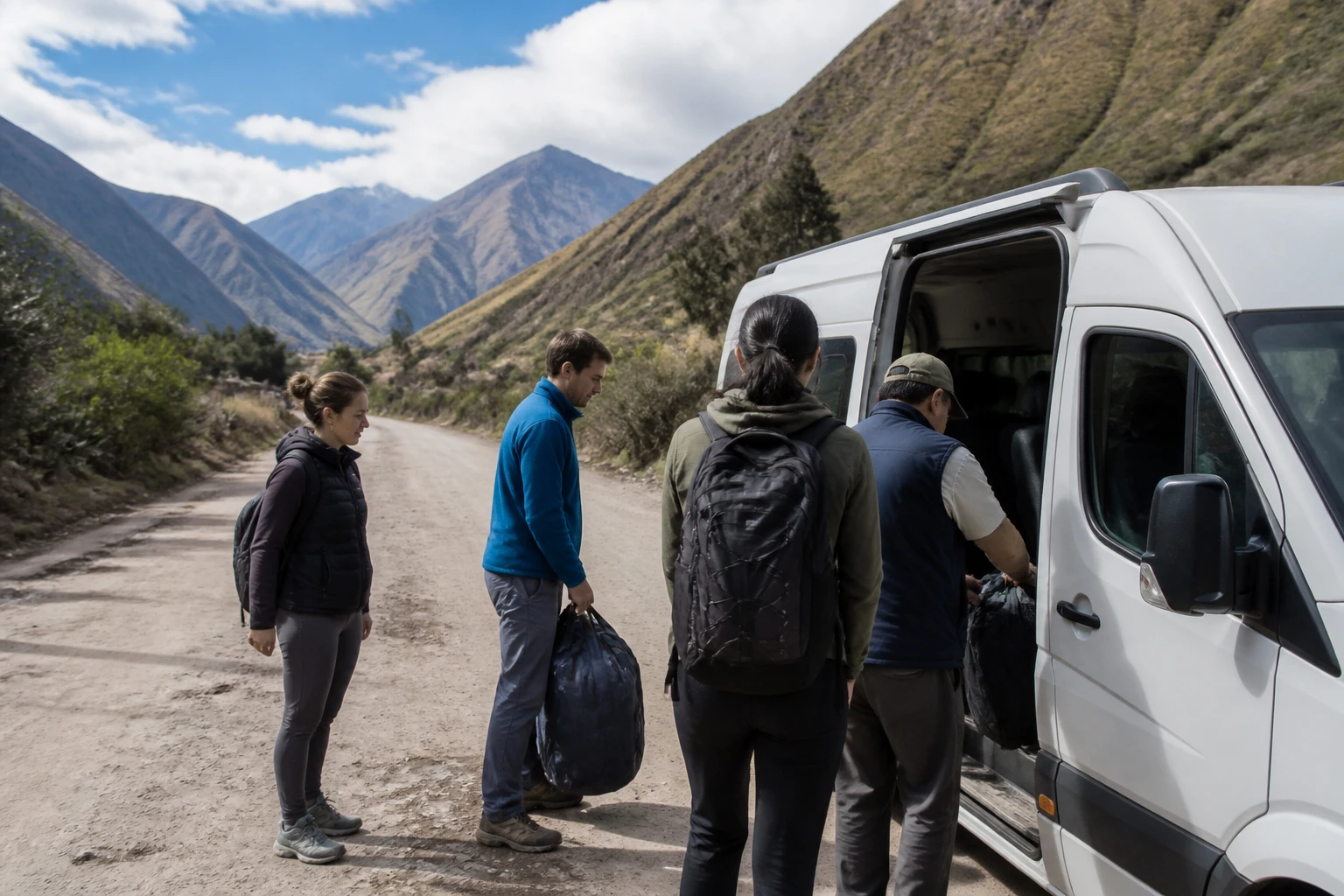
Shared daytime transport can be a practical budget choice. A private vehicle may be worth considering when you have a train to catch, substantial luggage, mobility needs, children, or a strong preference for fewer stops. Private transport offers more control, but it cannot guarantee passage through a blockade or remove weather and road risks.
Connecting the Sacred Valley with Machu Picchu trains
Ollantaytambo is the principal Sacred Valley rail base in the available operator information. PeruRail lists Expedition and Vistadome departures there, while Urubamba has Vistadome service. The May to December 2026 timetable shows multiple daily departures between Ollantaytambo and Machu Picchu Pueblo, including early and later options, but schedules remain subject to operational change.
For help comparing the rail leg, Choosing the Right Train to Machu Picchu covers the subject in greater depth. Before selecting a service, compare departure station, check-in requirement, luggage arrangements, arrival time, and how the train fits your Machu Picchu entry plan. Do not choose solely by the most attractive departure shown in an old screenshot or itinerary.
Allow for Ollantaytambo station-access changes in 2026
An operator notice dated April 10, 2026 said road-improvement work beginning April 13 would alter access to Ollantaytambo station for approximately eight months. The announced alternative approach uses Via de Evitamiento, Rumira, San Isidro, Calicanto Bridge, and Avenida Ferrocarril. Selected services also use a bus transfer involving Pachar station.
The work notice may remain relevant into December, while the published timetable covers May through December and warns that schedules can change. Reconfirm your actual departure station, vehicle transfer, meeting point, road approach, and departure time shortly before travel. PeruRail says passengers should be ready to board 30 minutes before departure, but extra access time may still be sensible.
- Train number and travel date
- Named departure station
- Any Pachar bus transfer
- Current road approach and vehicle drop-off
- Operator check-in requirement
- Luggage rules and assistance request
- Backup contact if the road journey is delayed
Book Machu Picchu entry separately and early
A train ticket does not solve the separate question of Machu Picchu admission. The Ministry of Culture says up to 1,000 in-person tickets are sold daily in Machupicchu Pueblo, subject to availability, and those purchases are for entry on the following day. This limited fallback should not be the foundation of a fixed itinerary.
Check live entry availability before locking in nonrefundable supporting arrangements. Make sure the date and entry conditions work with your rail schedule, overnight stay, and transfer plan. If official availability changes, adjust the itinerary rather than assuming a ticket will appear after arrival.
Still comparing Sacred Valley Tours From Cusco?
Ask for tour ideas, hotel suggestions, or a simple trip plan that combines both.
Trip Helper
Build a realistic Sacred Valley budget
Current official evidence retrieved for this guide does not provide dependable 2026 prices for Sacred Valley road transport, guides, lodging, site admission, or rail tickets. Fixed totals would therefore create false precision. Compare live quotes for your exact date and keep each major component visible rather than accepting an unexplained package total.

| Budget component | What to confirm |
|---|---|
| Road transport | Shared or private, one way or return, pickup, waiting time, tolls or parking |
| Guide | Private or group service, language, meeting point, duration |
| Archaeological entry | Sites covered, purchase method, date restrictions |
| Food | Included meal, stop location, dietary needs |
| Lodging | Taxes, check-in, luggage storage, transfer support |
| Rail | Service, station, date, luggage conditions, change terms |
| Contingency | Extra transfer, delay, meal, or unplanned overnight |
Ask for a written list of inclusions and exclusions. A low headline figure may omit admission, guiding, meals, a final hotel transfer, or rail travel. A higher quote may include services you do not need. Compare like with like, then retain a contingency allowance for schedule changes and disrupted connections.
Weather, disruption, and timing buffers
Official travel advice current on July 18, 2026 warns that protests in Peru can occur with little notice. Cusco is among the regions that have experienced protests, and roadblocks can disrupt roads and rail services. Monitor local reporting and operator messages before travel. Never attempt to bypass a blockade, and add buffer time around rail departures and flights.
The same advice describes the Andes rainy season as November through May. During that period, landslides and related hazards can interrupt roads, railways, flights, and tourist sites. Conditions do not follow a perfect calendar, so check the forecast and operating notices for your dates instead of relying only on a seasonal label.
Carry essential medication, identification, tickets, a charged phone, water, sun protection, and layers in your day bag. Keep anything needed for the next morning with you if your main luggage travels separately. Confirm baggage limits directly with the rail operator before packing because this evidence pack does not establish current allowances.
Altitude and pacing before leaving Cusco
Avoid building a demanding transfer day around assumptions about how you will feel. If altitude is a concern, allow flexibility and seek appropriate medical guidance for personal health questions. Altitude in Cusco: How to Acclimatize Without Wasting Your Trip offers a separate planning framework for the days before your Sacred Valley departure.
Keep the first version of your route simple. Long drives, fixed check-ins, extensive walking, and a train deadline can create pressure even before personal health needs enter the picture. Tell your operator about relevant limitations and ask where restrooms, meal stops, and opportunities to shorten the route fit into the plan.
Accessibility and limited-mobility planning
The retrieved official sources do not provide enough detail to promise step-free access at Sacred Valley ruins, village streets, road vehicles, or along station-to-platform routes. Travelers who use wheelchairs, walk with difficulty, or require assistance should request written confirmation from each transport, lodging, guide, and rail provider.
- Can the vehicle carry the required mobility device?
- Is assistance available at pickup, drop-off, and the platform?
- Are steps, steep surfaces, or long walking sections involved?
- Can a site visit be shortened or replaced without losing transport?
- Does the lodging entrance and room meet the traveler’s specific needs?
- How do the current Ollantaytambo access changes affect assistance?
Use precise questions rather than asking if a place is simply “accessible.” State the dimensions of equipment, transfer assistance required, maximum comfortable walking distance, and need for seating or restroom access. Save written responses and reconfirm them after any station or route change.

Machu Picchu Tour Full Day by Train
Experience the awe-inspiring Inca ruins of Machu Picchu, known as one of the New 7 Wonders of the modern world, on a...

Machu Picchu Official Ticket Circuit 2, Bus & Private Guide
Discover Machu Picchu, one of the New Seven Wonders of the World and the most iconic Inca citadel, on a private tour...

Machu Picchu Circuit 2 Entrance Ticket with Guided Tour
Explore the wonders of Machu Picchu via the official Circuit 2 route, known for its stunning views and historical si...
A practical booking sequence
- Decide between a Cusco round trip, a valley overnight, and an onward rail connection.
- Check Machu Picchu entry availability if the trip continues there.
- Select the train and verify the named station and current access arrangement.
- Choose your priority Sacred Valley stops and remove anything that overloads the day.
- Compare written transport quotes with inclusions clearly separated.
- Book lodging that works with your arrival, luggage, and mobility requirements.
- Reconfirm road conditions, protests, station access, and operational notices shortly before departure.
- Keep a buffer around rail, flight, and other fixed connections.
The strongest Sacred Valley itinerary is not necessarily the one with the most stops. It is the one that protects the important connection, leaves room for the unexpected, and still gives you time to look around. Set the anchors first, confirm current conditions, and let optional stops remain optional.
Frequently asked questions
Can you visit the Sacred Valley as a day trip from Cusco?
Yes. A single long day can cover selected stops, but the available evidence supports treating it as a focused route rather than trying to include every major name. Confirm pickup, stops, visit windows, and the return location with the operator.
Should I stay overnight in Ollantaytambo before Machu Picchu?
It can be a practical choice when you have a next-day train. Staying near Ollantaytambo avoids returning to Cusco before rail travel and adds a buffer around current station-access works. This is an itinerary inference, not an official operator recommendation.
Do trains to Machu Picchu leave from Ollantaytambo?
Yes. Available PeruRail information lists Expedition and Vistadome departures from Ollantaytambo. Urubamba also has Vistadome service. Schedules and operating arrangements can change, so verify the station and departure details for your date.
How early should I arrive for a PeruRail train?
PeruRail says passengers should be ready to board 30 minutes before departure. Current road works affecting access to Ollantaytambo may justify allowing additional time. Confirm the road approach, transfer point, station, and departure time shortly before travel.
Are Ollantaytambo station-access works still affecting travel in 2026?
An April 10, 2026 operator notice said access changes beginning April 13 were expected to last approximately eight months. That estimate extends into the period covered by the May to December timetable. Reconfirm the current arrangement because both access and schedules may change.
Can I buy a Machu Picchu ticket after I arrive?
The Ministry of Culture says up to 1,000 in-person tickets are sold daily in Machupicchu Pueblo, subject to availability, for entry the following day. Do not rely on this limited option for a fixed itinerary. Check live availability before arranging supporting travel.
How much does a Sacred Valley trip from Cusco cost?
No dependable fixed 2026 total was established by the retrieved official evidence. Compare live prices for road transport, guiding, archaeological entry, meals, lodging, and rail tickets as separate components. Ask each provider for written inclusions and exclusions.
Is the Sacred Valley wheelchair accessible?
The retrieved official sources do not provide enough detail to promise step-free access across ruins, streets, road vehicles, lodging, or station routes. Request written confirmation for your specific needs, including how current Ollantaytambo access changes affect assistance.
Can protests or rain disrupt a Sacred Valley trip?
Yes. Current official travel advice warns that protests can occur with little warning and disrupt roads or rail. It also says the Andes rainy season, described as November through May, can cause landslides and transport interruptions. Monitor current updates and never try to bypass a blockade.
2-Day Sacred Valley & Machu Picchu Tour by Train from Cusco
Experience the Best of the Sacred Valley and Machu Picchu Discover the heart of the Inca world on this unforgettable 2-day small-group tour from Cusc...
Full-Day Excursion to Sacred Valley, Pisac and Ollantaytambo from Cusco
You will know the 5 most important places in the Sacred Valley You will have a buffet lunch of the 30 best dishes o...
The Best Private Sacred Valley Tour in Cusco ( with Pisac)
We know very well each place of this tour, since we have been grown in this area and we studied over 3 years to get...
Machu Picchu Private Day Trip from Cusco
This private Machu Picchu day trip is ideal for travelers seeking a seamless, stress free experience. With guarantee...


