Best Cusco Photo Spots
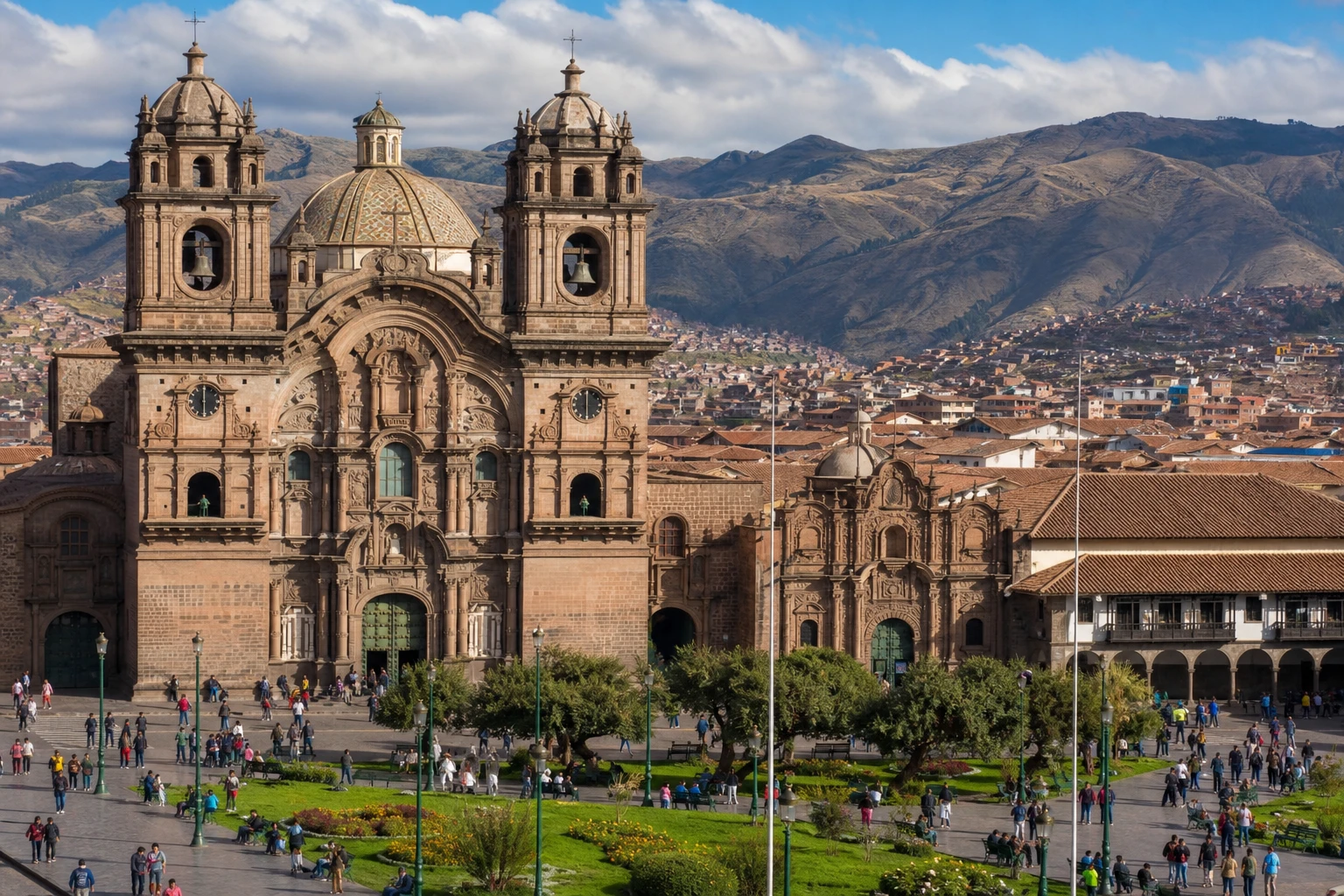
Cusco makes a strong photo day when you treat it as two connected settings. The Historic Center supplies a walk-based route through San Cristóbal, San Blas, Qorikancha, Cusco Cathedral, and San Cristóbal Temple. North of Plaza de Armas, Saqsaywaman adds monumental archaeological areas and a broader landscape-focused counterpoint. Together, they let photographers move between close urban compositions and large-scale Inca stonework without scattering the day across an untested list of viewpoints.
- Start in Cusco’s Historic Center for a flexible, walk-based sequence of architecture and street scenes.
- Use San Cristóbal and San Blas as neighborhood anchors, then include Qorikancha, Cusco Cathedral, and San Cristóbal Temple in the same visual story.
- Plan Saqsaywaman within its published 07:00 to 17:30 visiting window.
- Choose a pedestrian approach or one of the two paved vehicular access routes to Saqsaywaman according to your day’s priorities.
- Do not fly a drone or shoot commercially at Saqsaywaman without the required authorization.
Build your photo route around two contrasting Cusco settings
The Historic Center and Saqsaywaman call for different ways of working. In town, allow the route itself to shape the collection: establish the setting, move in for details, and pause when an architectural relationship catches your eye. At Saqsaywaman, give yourself room to work through the scale of its named monumental areas. This division also keeps planning simple: one part of the day is urban and walk-led, while the other operates within a defined archaeological-site schedule.
Historic Center photo spots: San Cristóbal, San Blas, Qorikancha and the cathedral
Cusco’s Historic Center is the best place to begin an urban photography walk because the key locations sit within one coherent historic-core grouping. San Cristóbal and San Blas are traditional neighborhoods named alongside Qorikancha, Cusco Cathedral, and San Cristóbal Temple. Rather than racing between them with a fixed shot list, use these places as dependable anchors and leave space to follow lines, layers, doorways, façades, people in motion, and changing perspectives along the way.
San Cristóbal and San Blas for a slower neighborhood sequence
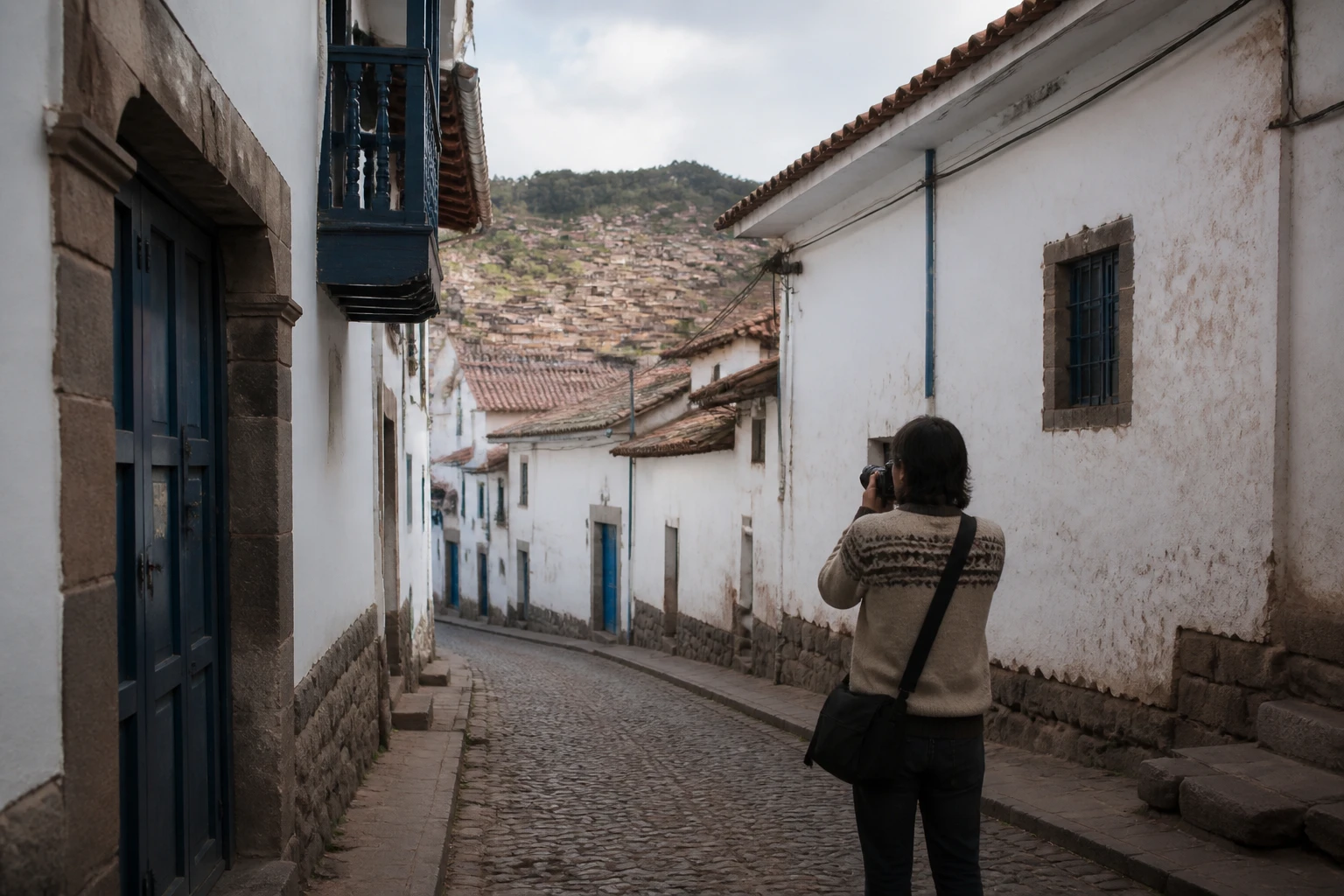
Start by treating San Cristóbal and San Blas as part of the same urban story rather than isolated stops. Photograph a wide establishing frame before looking for tighter compositions that simplify the scene. Alternate between horizontal images that hold a sense of place and vertical frames that isolate an architectural feature or a passerby. For ideas on giving this portion of the route more time, a San Blas Cusco Travel Guide is a useful companion for planning the neighborhood portion of your day.
Qorikancha, Cusco Cathedral and San Cristóbal Temple as landmark anchors
Qorikancha, Cusco Cathedral, and San Cristóbal Temple give the walk clear visual waypoints. Use each landmark to reset your approach. One stop can become a place for a broad contextual image; the next can be used to search for repeating forms, edges, shadows, or a single human-scale moment. A modest three-image goal at each anchor keeps the exercise purposeful: one scene-setter, one structured composition, and one detail that carries the texture of the route.
Keep expectations flexible inside the historic core. The strength of this route is its walkability and variety, not a promise of one prescribed frame. Photograph respectfully around religious and heritage places, avoid blocking pedestrian flow, and let the day’s light and activity determine where you spend more time. That approach produces a more coherent set of images than attempting to copy a checklist of supposed “must-have” views.
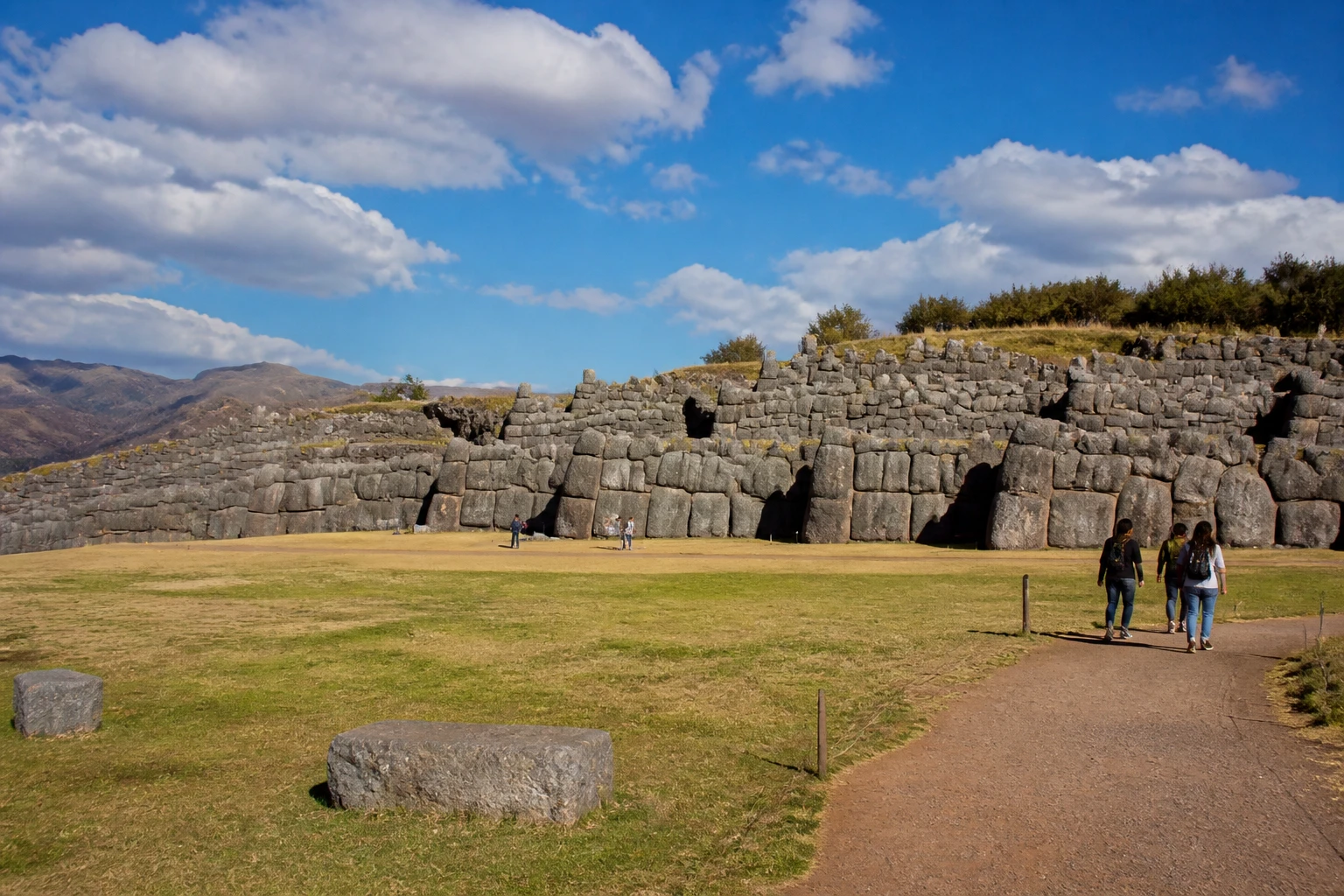
Saqsaywaman for monumental stonework and archaeological landscapes
Saqsaywaman is the essential addition for photographers who want an archaeological setting beyond the Historic Center. Located north of Plaza de Armas, the complex includes the Baluartes, Muyuqmarca, Rodadero, and Chinkana. These named areas invite a deliberate shift in scale. Look beyond a single headline composition and build a sequence that moves between the monument as a whole, the relationships among its forms, and the smaller details that give the images a sense of material and place.
Still comparing Sightseeing?
Ask for tour ideas, hotel suggestions, or a simple trip plan that combines both.
Trip Helper
Plan a sequence through the site’s named areas
The Baluartes, Muyuqmarca, Rodadero, and Chinkana provide a practical structure for your session. Avoid treating every frame as a wide view. Start with a composition that establishes the scale of the site, then make a second image that emphasizes form or rhythm, followed by a detail frame. Working this way helps you leave with a visual narrative instead of a set of nearly identical photographs.
Choose your approach: on foot or by paved road
Saqsaywaman can be reached on foot through the Qolqampata and San Cristóbal approach or through Toqocachi and San Blas. Two paved vehicular access routes are also available. The pedestrian routes suit photographers who want the journey to be part of the day’s visual rhythm; vehicular access suits a more direct arrival and more time within the archaeological complex. A Sacsayhuaman Guide for First Timers can help with wider route planning before you decide which approach fits your schedule.
Work within the published visiting hours
Saqsaywaman lists visiting hours of 07:00 to 17:30, so plan archaeological-site photography inside that window. There is a level entrance for visitors and a short tourist circuit enabled for touring. These features can be helpful when choosing a route, but the complex should not be assumed to be fully step-free throughout. Build in time to move carefully, review the site layout on arrival, and select compositions that work from the accessible route available to you.
Saqsaywaman photography rules to know before you go
A strong photograph is never worth damaging a heritage site or disrupting other visitors. Saqsaywaman has specific rules that matter for photographers, especially anyone traveling with a drone or working on a commercial assignment. Review your plan before setting out, since authorization needs affect what equipment and type of work you can undertake at the site.
- Drone flights require authorization from the DDC-Cusco.
- Commercial filming and commercial photography require authorization.
- Do not climb or paint the walls.
- Food, alcohol or drugs, animals, and camping are prohibited at the site.
- Use established visitor areas and keep your attention on the photograph without stepping into restricted or unsafe spaces.
The practical lesson is simple: make your photographs through observation and composition, not by seeking a risky angle. Pack only equipment you can comfortably manage, keep a close hold on loose accessories, and leave the drone at home unless you have obtained permission. If your shoot is for a client, publication, or commercial project, arrange the appropriate authorization before the visit rather than assuming ordinary visitor access covers that work.
Choose the right Cusco photo spot for the images you want
| Planning priority | Historic Center cluster | Saqsaywaman |
|---|---|---|
| Core subject | Architecture and street-photography route | Monumental archaeological areas and landscapes |
| How to move | Walk-based route through named historic-core locations | Pedestrian approaches or two paved vehicular routes |
| Best planning style | Flexible route built around neighborhood and landmark anchors | Defined visit within the 07:00 to 17:30 schedule |
| Key consideration | Work patiently through several connected locations | Follow heritage-site rules and secure authorizations where needed |
Choose the Historic Center if your priority is a varied walk where photographs can evolve gradually between neighborhoods and landmarks. Choose Saqsaywaman if you want the day’s defining images to center on archaeological scale and named monumental areas. The most satisfying plan includes both, but gives each a different purpose. That prevents the city walk from becoming a rushed transfer and prevents the archaeological visit from becoming a quick stop with no time to study the setting.
A simple shot plan for a productive photo day
A small creative brief helps you photograph with more intention. Before leaving, decide what you want the finished set to communicate: a sense of historic-city movement, a study of monumental form, or a combination of both. Then limit yourself to a few repeatable shot types. This keeps your attention on the scene, lightens decision fatigue, and helps you recognize when you have already made the frame you came for.
- Make one wide image at each major location to establish the setting.
- Look for a medium composition that organizes the scene around shape, pattern, or movement.
- Finish with a close detail that adds texture or visual rhythm to the sequence.
- At Saqsaywaman, factor the 07:00 to 17:30 visiting hours into the order of your day.
- Before using specialized equipment at Saqsaywaman, confirm that your plan complies with the site’s photography and drone rules.
Road-trip photography beyond the city needs seasonal flexibility
If your photographic plans extend from Cusco toward Manu by road, build seasonal conditions into the itinerary. Peru tourism identifies May through November as the dry season for this broader route. In the rainy season, road access can be compromised and closures can occur. Keep this advice specific to the journey toward Manu rather than applying it to every location in Cusco city, and leave room in the schedule for changing road conditions.
The strongest Cusco photo day pairs the city with Saqsaywaman
For first-time photographers in Cusco, the most rewarding plan is a focused pairing: spend part of the day walking the Historic Center through San Cristóbal, San Blas, Qorikancha, Cusco Cathedral, and San Cristóbal Temple, then dedicate a separate block to Saqsaywaman. The city route rewards patient observation; the archaeological complex rewards attention to scale, form, and site rules. Start with a short, realistic shot list, respect the heritage setting, and give both environments time to unfold.
Frequently asked questions
What are the best-supported photo spots in Cusco?
Start with Cusco’s Historic Center, including San Cristóbal, San Blas, Qorikancha, Cusco Cathedral, and San Cristóbal Temple, then add Saqsaywaman north of Plaza de Armas for monumental archaeological settings.
What time is Saqsaywaman open for photography?
Saqsaywaman lists visiting hours of 07:00 to 17:30. Plan your site session within that window and check current visitor information before departure, since schedules can change.
Can I fly a drone at Saqsaywaman?
Only with authorization from the DDC-Cusco. Do not assume that ordinary visitor access permits drone use at the site.
Do commercial photographers need permission at Saqsaywaman?
Yes. Commercial filming and commercial photography require authorization at Saqsaywaman, so arrange it before your visit.
How can I reach Saqsaywaman from the Historic Center?
You can approach on foot through Qolqampata and San Cristóbal or through Toqocachi and San Blas. The site also has two paved vehicular access routes.


