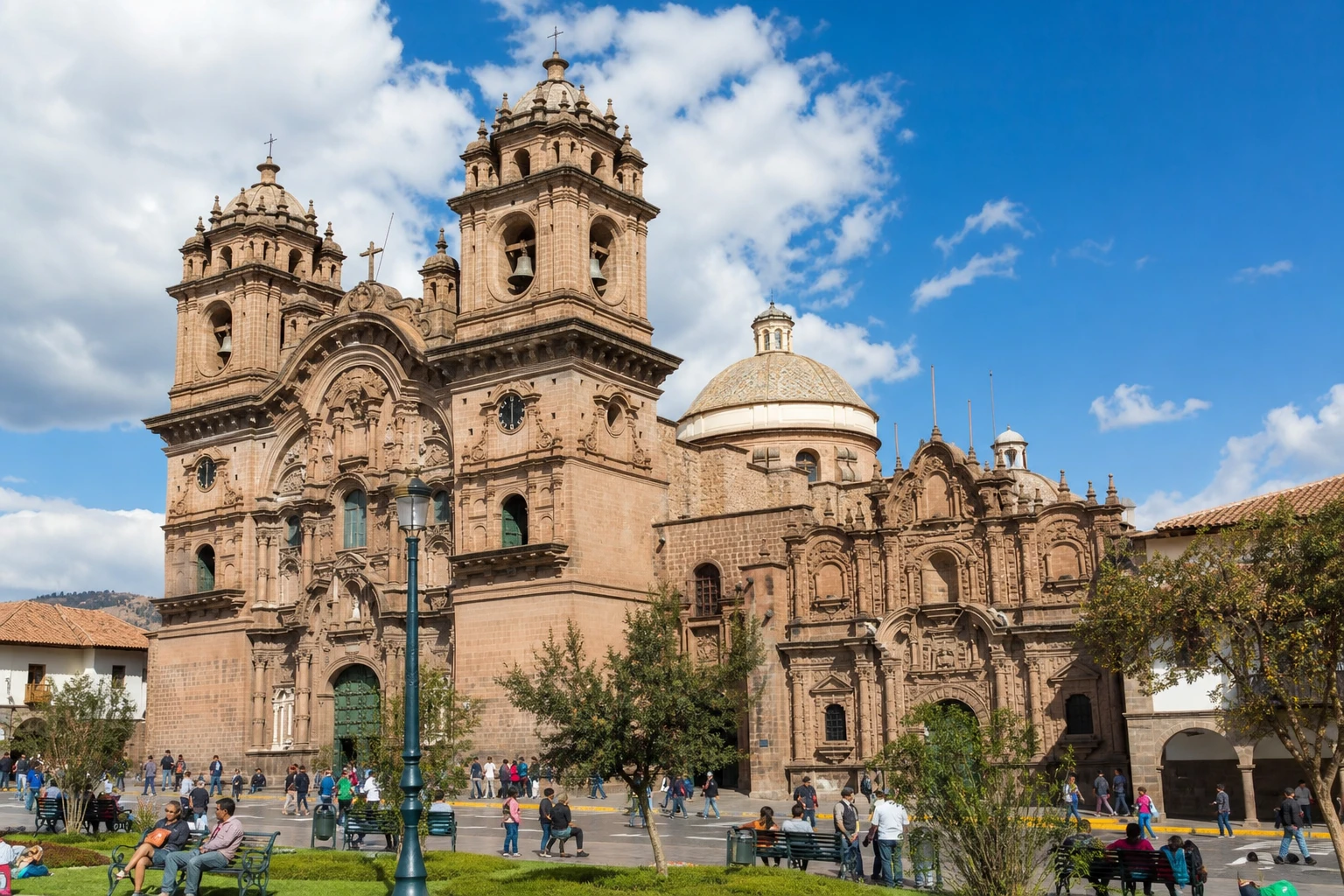
Cusco Cathedral Guide
Cusco Cathedral is one of the essential cultural stops in the city, standing on the Plaza de Armas as a place of worship and a dense collection of religious art. A visit brings together three adjoining churches, Cusco School paintings, carved furnishings, silverwork, sculpture, and the deeply important image of the Señor de los Temblores. Give the experience room in your schedule rather than treating it as a quick look inside.
- Find the cathedral complex on Cusco's Plaza de Armas, where it comprises the Templo del Triunfo, Basilica Cathedral, and Templo de la Sagrada Familia.
- Plan a morning or early-afternoon visit, but confirm access shortly before going because worship and special activities can change visitor entry.
- Look for Marcos Zapata's Last Supper alongside Cusco School paintings, altarpieces, choir stalls, silverwork, murals, and sculpture.
- Treat old published prices as a guide only. Confirm the current admission and religious-circuit rules at the ticket office.
- Keep the tone respectful inside: this is an active religious complex as well as a historic art collection.
Find the three churches on Plaza de Armas
The Cusco Cathedral complex occupies the Plaza de Armas, making it a straightforward landmark to build into a historic-center day. It is not a single interior alone. The complex brings together the Templo del Triunfo, the Basilica Cathedral, and the Templo de la Sagrada Familia. Knowing this helps explain why the visit holds so much art and devotional material within one connected stop.

Cusco City Sightseeing and Sacsayhuaman Archeological Park Tour
Be fascinated on a half-day tour of Cusco’s surrounding archeological sites, including the famous Sacsayhuaman, where the Incas’ construction of t...

Cusco City Sightseeing, San Pedro Market, Cathedral and Qorikancha Temple
Discover the magic and beauty of Cusco, the capital of the Incan Empire. The flawlessly built Incan roads spread to...

Highlights & Hidden Gems With Locals: Best of Cusco Private Tour
This is not just another city tour; this is the best of Cusco from a unique perspective! Get to know Cusco on a city...

Guided Walking Tour Cusco
Discover the beauty of the capital of the Incan Empire, the incredible city of Cusco. Follow the roads from the city...
Use the square as your arrival point
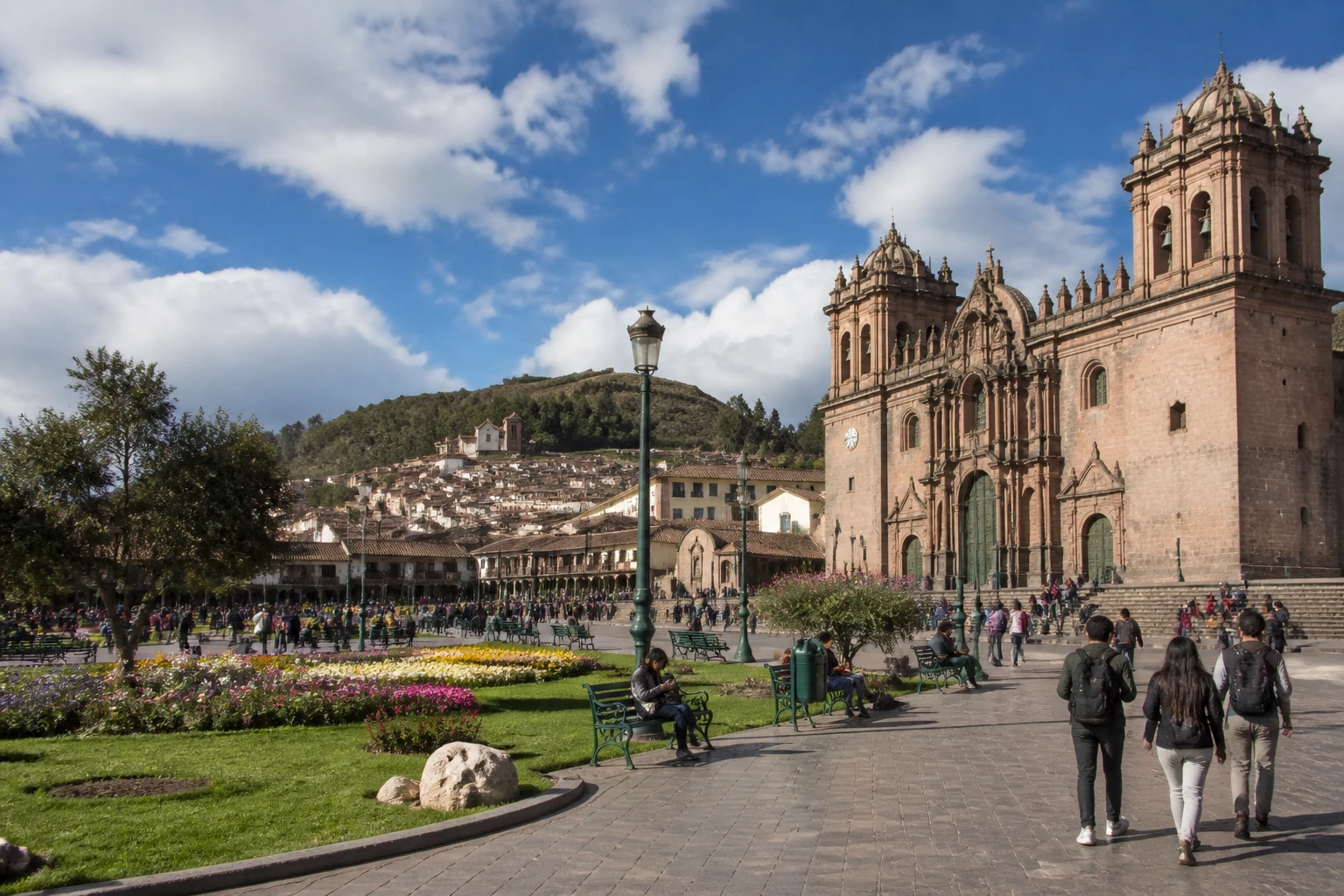
Set your navigation for Plaza de Armas and allow a little flexibility before and after the visit. The cathedral is a practical anchor for a day in central Cusco, especially when you want time to pause, orient yourself, and choose the next stop without rushing. If you have a fixed tour departure later, leave a buffer because religious services or special activities can affect visitor access.
See the art that makes the cathedral memorable
Come prepared to look closely. The cathedral complex holds Cusco School paintings, altarpieces, choir stalls, sacristy holdings, silverwork, colonial sculpture, and murals. These are not incidental decorations around a sanctuary. Together, they make the cathedral a substantial art-focused visit within Cusco's religious landscape.
Start with Marcos Zapata's Last Supper
Marcos Zapata's Last Supper is among the works highlighted in the cathedral collection. It is a useful focal point for visitors who want to understand why the complex matters beyond its setting on the square. After finding it, continue slowly through the spaces, watching for the shifts between painting, carved wood, metalwork, sculpture, and mural decoration.
- Cusco School paintings, including Marcos Zapata's Last Supper.
- Altarpieces and choir stalls.
- Sacristy holdings and silverwork.
- Colonial sculpture and murals.
- The image of the Señor de los Temblores.
The Señor de los Temblores image gives the complex an especially strong devotional dimension. That living religious role shapes the right approach for visitors. Keep voices low, move attentively around people who are there to worship, and follow directions given inside. A measured visit will be more rewarding than trying to race through every room.
Choose a flexible time for your visit
Plan for a morning or early-afternoon visit and check the current visitor schedule immediately before you go. Published hours have differed, and access can change around religious services, ceremonies, maintenance, and special activities. The important planning move is simple: avoid treating a posted timetable as a guarantee, especially if the cathedral is the only open window in a tightly packed day.

If access is temporarily limited, use the time to explore the Plaza de Armas surroundings and return later rather than letting the change derail the day. The cathedral's central location makes that flexibility easier. Travelers who want a calmer visit rhythm should avoid building the stop immediately before a nonrefundable departure or a timed activity elsewhere in Cusco.
Remember that worship takes priority
The cathedral is both a visitor attraction and a functioning religious complex. Services and special events can change how visitors move through the building or when entry is possible. Respectful behavior and a flexible schedule are the best preparation. Do not assume that a visitor route will operate in exactly the same way on every day of your stay.
Understand cathedral tickets and the religious circuit
Budget for paid entry, then verify the current amount and ticket options at the ticket office. As a useful reference, a 2023 Ministry of Culture guide listed S/25 for adult cathedral admission, S/12.50 for university students and children, and free entry for local residents. Those figures are not a confirmed 2026 tariff, so use them to estimate rather than to calculate an exact trip budget.
| Ticket reference from the 2023 guide | Published reference price | How to use it when planning |
|---|---|---|
| Adult cathedral admission | S/25 | Treat as a budgeting reference and confirm the current amount before entry. |
| University students and children | S/12.50 | Confirm current eligibility requirements and price at the ticket office. |
| Religious-circuit ticket | S/30 | Ask for the current included-site list before choosing this option. |
At those published reference prices, the religious-circuit ticket cost only S/5 more than standalone adult admission. It can be the better-value choice if you truly plan to visit several included churches or the Archbishop's Palace Museum. For a cathedral-only stop or a short itinerary, standalone admission is simpler. Included sites have been described differently in published material, so ask for the current circuit list when purchasing.

The Most Traditional Tours Of Cusco And Machu Picchu By Panoramic Train 3 Days
This tourist package is one of the most traditional in Cusco if you visit Cusco, are the classic places that should...

Private Cusco City Tour Archaeological Sites, Guide & Driver only
Enjoy a 6-hour, private, guided tour of Cusco, considered the historical capital of America. Not only will you visit...

Cusco Private City Tour
This is one of the most famous and traditional tours in Cusco. We offer you an exciting way to visit the seings of...
Ask about guides, audio guides, and visitor needs
Planning information has listed audio guides, guided visits in Spanish, English, and Quechua, plus a souvenir shop. These can add useful context to a visit centered on religious art, particularly if you want help locating the major works. Service availability can change, so check on the day if an audio guide or a guided visit is important to your plans.
Do not assume step-free access, wheelchair circulation, accessible toilets, seating, or assistive services at this historic complex. Travelers with mobility, sensory, or service-animal requirements should contact the cathedral administration in advance with specific questions. Planning information lists [email protected] and (084) 231615 as contact leads; confirm that these details and any arrangements remain current before setting out.
Fit the cathedral into a well-paced Cusco stay
The cathedral works best as a deliberate cultural stop, not merely a rainy-day backup or a few minutes between bookings. Its Plaza de Armas position makes it easy to slot into a historic-center day, while its collection rewards visitors who leave time to look. For broader sequencing, a 3 Days in Cusco Itinerary can help you give the cathedral a sensible place among the city's other priorities.
- Choose a morning or early-afternoon window rather than relying on a narrow time slot.
- Confirm current visitor access before heading to Plaza de Armas.
- Decide whether you want cathedral-only entry or genuinely have time for a religious circuit.
- Ask about an audio guide or guided visit if interpretation matters to you.
- Move through the complex with the awareness that worship can take place alongside tourism.
Is Cusco Cathedral worth visiting?
Cusco Cathedral is well worth prioritizing for travelers interested in religious art, Cusco School painting, and the city's living spiritual traditions. Its strongest draw is the concentration of works inside a three-church complex on Plaza de Armas, especially Marcos Zapata's Last Supper and the Señor de los Temblores image. The main limitation is variable access around worship, so confirm the current schedule, arrive with patience, and let the visit unfold at an unhurried pace.
Frequently asked questions
Where is Cusco Cathedral?
Cusco Cathedral is on the Plaza de Armas in Cusco. The complex consists of the Templo del Triunfo, Basilica Cathedral, and Templo de la Sagrada Familia.
What should I see inside Cusco Cathedral?
Look for Marcos Zapata's Last Supper, Cusco School paintings, altarpieces, choir stalls, silverwork, colonial sculpture, murals, and the Señor de los Temblores image. These works are central to the cathedral's importance as an art and devotional site.
What are the visiting hours for Cusco Cathedral?
Visitor access times can change, so confirm the current schedule immediately before visiting. Religious services, ceremonies, maintenance, and special activities can alter access, making a morning or early-afternoon window the most practical plan.
How much does entry to Cusco Cathedral cost?
A 2023 Ministry of Culture guide listed adult admission at S/25 and a religious-circuit ticket at S/30, but these are reference prices rather than confirmed current tariffs. Verify the current price and ticket rules at the ticket office.
Should I buy the Cusco religious-circuit ticket?
The circuit can be worthwhile if you plan to visit several included sites, because its published 2023 reference price was only S/5 above standalone adult cathedral entry. Ask for the current included-site list before buying, as published descriptions have varied.
Is Cusco Cathedral accessible for wheelchair users?
Accessibility arrangements should be confirmed directly before your visit. Do not assume step-free entry, wheelchair circulation, accessible toilets, seating, or assistive services at this historic religious complex.
Cusco City Sightseeing, San Pedro Market, Cathedral and Qorikancha Temple
Discover the magic and beauty of Cusco, the capital of the Incan Empire. The flawlessly built Incan roads spread to all regions from the “Plaza” w...

Cusco City Tour I Half-Day
Enjoy the Ancient Inca Capital of Cusco .This Tour is half a day that includes a visit to the Cathedral in the main...

Cusco City Tour
Enjoy the Ancient Inca Capital of Cusco .This Tour is half a day that includes a visit to the Cathedral in the main...

Cusco City Tour and Nearby Archaeological Sites
Enjoy a guided tour of this charming city, which was the capital of the Inca Empire. The tour starts with a visit to...


