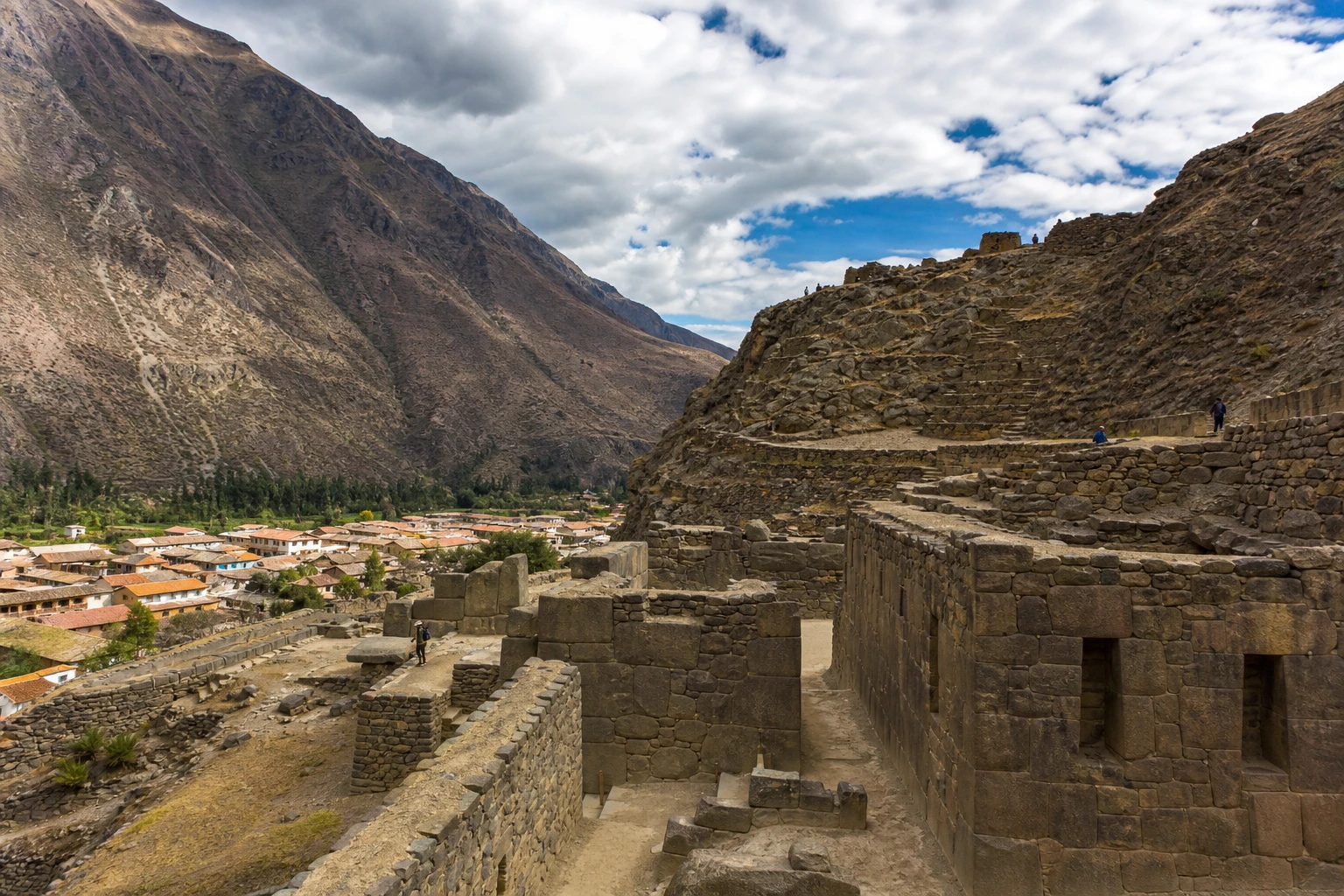
Ollantaytambo Day Trip From Cusco
An Ollantaytambo day trip from Cusco works best when the town is treated as the destination, not merely as a station on the way to Machu Picchu. The archaeological park rewards unhurried time, while the road journey through the Sacred Valley makes ambitious schedules vulnerable to delays. A focused plan leaves room for the site, the town, meals, and the return to Cusco without turning the day into a race.
Ollantaytambo day trip essentials
- The listed Cusco–Chinchero–Urubamba–Ollantaytambo road route covers 61 kilometers.
- Reserve meaningful time for the archaeological park instead of building the day around transportation alone.
- Choose a focused Ollantaytambo visit if exploring the site is your main priority.
- Ollantaytambo admission is part of the Cusco Tourist Ticket system, so check which ticket category fits your wider itinerary.
- If you have a train connection, build the entire day around its fixed departure time and check current operator notices.
- Travelers with reduced mobility should confirm site conditions and transport assistance before committing.
The central decision is simple: visit Ollantaytambo in depth, or use it as one component of a broader Sacred Valley circuit. Both approaches can work. The first offers more flexibility at the archaeological park. The second adds variety but reduces the time available at each stop and increases exposure to road delays.

Sacred Valley Full-Day Private Tour from Urubamba & Ollantaytambo
Explore the best and most unique sites of the Sacred Valley on a leisurely full-day tour with a local guide. This private experience is perfect for th...

Full-Day Excursion to Sacred Valley, Pisac and Ollantaytambo from Cusco
You will know the 5 most important places in the Sacred Valley You will have a buffet lunch of the 30 best dishes o...

2-Day Luxury Machu Picchu & Sacred Valley Classic Tour
Explore the Sacred Valley of the Incas on this 2-day tour, which leaves Cusco to visit a lively market town and two...

2-Day Sacred Valley & Machu Picchu Tour by Train from Cusco
Experience the Best of the Sacred Valley and Machu Picchu Discover the heart of the Inca world on this unforgettabl...
Is Ollantaytambo worth a full day from Cusco?
Yes, Ollantaytambo is a worthwhile day trip for travelers who want one substantial archaeological stop rather than a rapid collection of viewpoints. It is both an archaeological-park destination and a major rail gateway for Machu Picchu. That dual role can make the town feel busy around train movements, but it also makes the journey useful for understanding how Sacred Valley travel fits together.
A dedicated day is especially sensible if you prefer to set your own pace. You can devote the useful middle portion of the day to the park and avoid sacrificing the visit whenever the road runs slowly. Travelers considering several valley destinations should first compare the broader planning choices in the Sacred Valley Travel Guide From Cusco.
The main limitation is the return journey. Because Cusco and Ollantaytambo are separated by a substantial road route, adding too many stops can leave the archaeological park squeezed between transport legs. If Ollantaytambo is the reason for the outing, protect that time first and treat any additional stop as optional.
The road route from Cusco to Ollantaytambo
Cusco’s cultural authority lists the road route through Chinchero and Urubamba at 61 kilometers. That figure is more useful than a rigid travel-time promise because journey duration depends on the day’s traffic, stops, and road conditions. Leave a generous margin rather than planning your archaeological visit around the fastest possible run.

Do not substitute travel times from other Sacred Valley routes when planning. For example, the official tourism inventory lists the Pisac–Ollantaytambo tourist-minibus corridor at 58 kilometers and about 1 hour 31 minutes. That is a separate journey and should not be presented as the direct travel time between Cusco and Ollantaytambo.
For practical scheduling, think in broad blocks rather than minute-by-minute targets. Allow a morning road journey, a substantial period in Ollantaytambo, and a protected return window. If the vehicle pauses elsewhere in the valley, count that as part of the day rather than as free sightseeing added on top.
Choosing transport for the day trip
Independent transport is the better fit when Ollantaytambo is your priority. It gives you control over how much of the day is assigned to the archaeological park and whether another Sacred Valley stop is included. When arranging the journey, confirm the departure point, return plan, and any intermediate stops before setting out.
A broader circuit is more suitable when variety matters more than depth. Ollantaytambo forms part of an established Sacred Valley travel corridor, and the official tourism inventory identifies tourist-minibus transportation between Pisac and Ollantaytambo. The tradeoff is straightforward: every additional destination means less time at the park and more of the day spent on the road.
Before booking a tour or transfer, look beyond the destination list. Ask how long the itinerary reserves for Ollantaytambo and whether the plan is tied to train passengers. A schedule designed mainly around station drop-offs may not provide the time you want at the archaeological park.
Transport options at a glance
| Approach | Best for | Main tradeoff |
|---|---|---|
| Independent road journey | Travelers prioritizing Ollantaytambo and control over stops | Requires you to organize the departure and return |
| Multi-stop Sacred Valley circuit | Travelers who want several destinations in one outing | Less time at the archaeological park |
| Ollantaytambo plus a train connection | Travelers continuing toward Machu Picchu | The fixed rail schedule controls the day |

6-Day Cusco and Machu Picchu Tour: Sacred Valley & Maras Moray
Cusco: “navel of the world” and center of power. Exciting and legendary. Everything Cusco has to offer is right...

Excursion to Rainbow Mountain Full Day Optional Red Valley
It is an impressive day of hiking in the Cordillera Vilcanota, "which is very close to the highest and sacred mounta...

Excursión to Humantay Lake Full Day from Cusco
The Humantay Laguna Tour of 1 Day was for nature lovers who have a day off or visitors who arrive in Cusco and can n...
A flexible one-day itinerary
Start early enough to preserve the middle of the day for Ollantaytambo, but avoid building the plan around an unsupported road-time estimate. Your departure should reflect the meeting point, vehicle arrangement, and any confirmed stops. The goal is to reach the town with enough time and energy to appreciate the archaeological park rather than watching the clock from the entrance.
- Leave Cusco with a clear pickup or meeting arrangement and a confirmed return plan.
- Travel through the Chinchero–Urubamba corridor without treating optional stops as guaranteed additions.
- Make the archaeological park the main scheduled activity.
- Leave unscheduled time for a meal, a break, and movement through the town.
- Begin the return with a reasonable buffer for road delays.
- If connecting to a train, replace this flexible outline with a schedule built around the confirmed rail departure.
This outline is intentionally flexible. Exact departure times, pickup arrangements, and stop durations depend on the transport or tour selected. Review the booking confirmation once, note the essential times, and avoid filling every open period with another destination.
If Ollantaytambo is one part of a longer stay, the 3 Days in Cusco Itinerary can help you decide which city sights belong on separate days. Keeping major Cusco attractions away from the day-trip schedule reduces the temptation to rush back for another timed visit.
How to plan your archaeological park visit
Give the archaeological park a defined block of the day before adding other stops. Ollantaytambo is recognized as an archaeological-park destination, so arriving only for a station transfer misses the central reason to visit. A focused schedule also gives you room to slow down if moving through the site takes longer than expected.
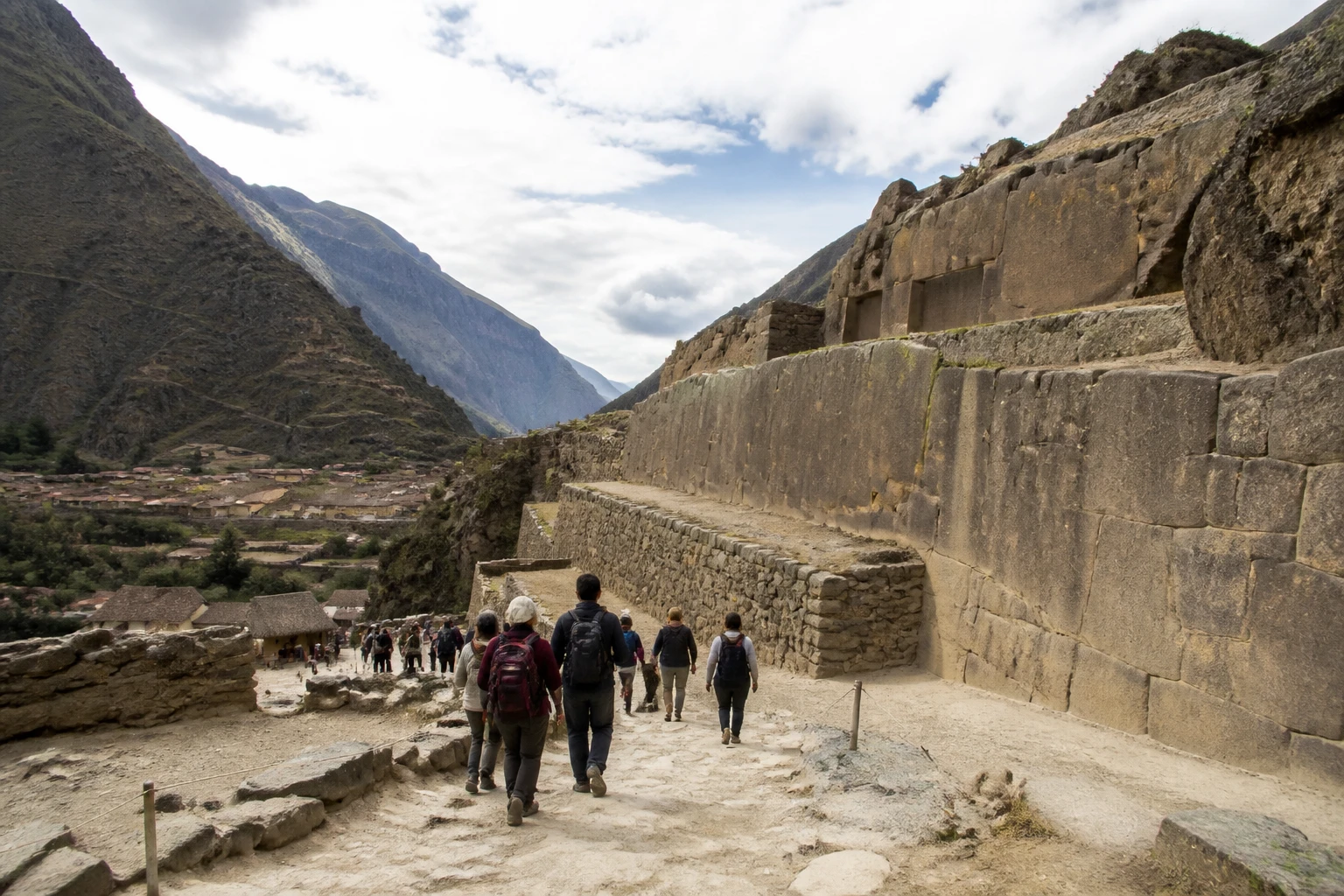
Current opening hours were not established in the supplied official material, so check the cultural authority’s visitor information when choosing your departure time. This is particularly important if your plan falls near the beginning or end of the visiting day. Do not assume that a train timetable and archaeological-site access follow the same schedule.
Visitor management can change. On July 16, 2026, Cusco’s regional government reported that agencies were coordinating improvements to access and visitor experience on Circuit III after an operational problem affected the circuit. The notice did not announce an Ollantaytambo closure, but it is sensible to check current access conditions before departure.
Ollantaytambo tickets and entry costs
Ollantaytambo is included in the Cusco Tourist Ticket system. The national tourism inventory lists the archaeological park under the general ticket and the Circuit III partial ticket. This matters because the right purchase depends on whether you plan to visit other included attractions during your time in the Cusco region.
The tourism inventory lists the general ticket at S/130 for adults and S/70 for students, while the Circuit III partial ticket is listed at S/70. COSITUC’s FAQ also lists an Integral Tourist Ticket price of S/70 for Peruvian nationals and permanent residents. These categories are not interchangeable, and a complete current price table for every visitor group was not established.
Reconfirm the applicable category and current price before purchasing, especially if you are a foreign visitor, student, resident, or national traveler. Compare the partial and general tickets according to the attractions you genuinely plan to visit. Buying the wider ticket offers little practical value if the remaining included sites do not fit your itinerary.
Still comparing Ollantaytambo Day Trip From Cusco?
Ask for tour ideas, hotel suggestions, or a simple trip plan that combines both.
Trip Helper
Should you combine Ollantaytambo with other Sacred Valley stops?
Combine stops only when seeing more of the valley matters more than spending longer at Ollantaytambo. The town is part of a wider Sacred Valley circuit, so pairing destinations is geographically logical. The cost is a tighter schedule, reduced archaeological-park time, and greater exposure to delays across multiple road segments.
A focused day is the stronger choice for travelers who enjoy archaeology, prefer fewer transitions, or dislike watching the clock. A circuit suits travelers who have limited days and accept shorter visits. The Slow Sacred Valley Itinerary covering Pisac, Ollantaytambo, Maras, and Moray offers a useful framework for spreading major valley destinations across more time.
Full-Day Excursion to Sacred Valley, Pisac and Ollantaytambo from Cusco
You will know the 5 most important places in the Sacred Valley You will have a buffet lunch of the 30 best dishes of Peru. We have fun and knowledge...
2-Day Sacred Valley & Machu Picchu Tour by Train from Cusco
Experience the Best of the Sacred Valley and Machu Picchu Discover the heart of the Inca world on this unforgettabl...
Machu Picchu Full-Day Tour from Cusco with Panoramic Train
Enjoy a Small Day trip to Machu picchu with us If you’re short on time, this experience is the best option and wel...
Sacred Valley Full-Day Private Tour from Urubamba & Ollantaytambo
Explore the best and most unique sites of the Sacred Valley on a leisurely full-day tour with a local guide. This pr...
Protect the part of the day you would be most disappointed to lose. If that is Ollantaytambo, schedule it first and keep every other stop optional.
Avoid treating the route as a checklist. A long lunch, road congestion, or a delayed departure can quickly consume the margin between stops. A shorter list with real time at Ollantaytambo usually produces a more coherent day than an itinerary that depends on every transfer running perfectly.
Combining Ollantaytambo with a Machu Picchu train
A train connection changes the trip completely because the rail departure becomes the fixed point around which everything else must fit. PeruRail’s May–December 2026 timetable includes an Ollantaytambo-to-Machu Picchu departure at 05:05. That example shows how early some services can be, but it does not mean every train leaves at that hour or that schedules will remain unchanged.
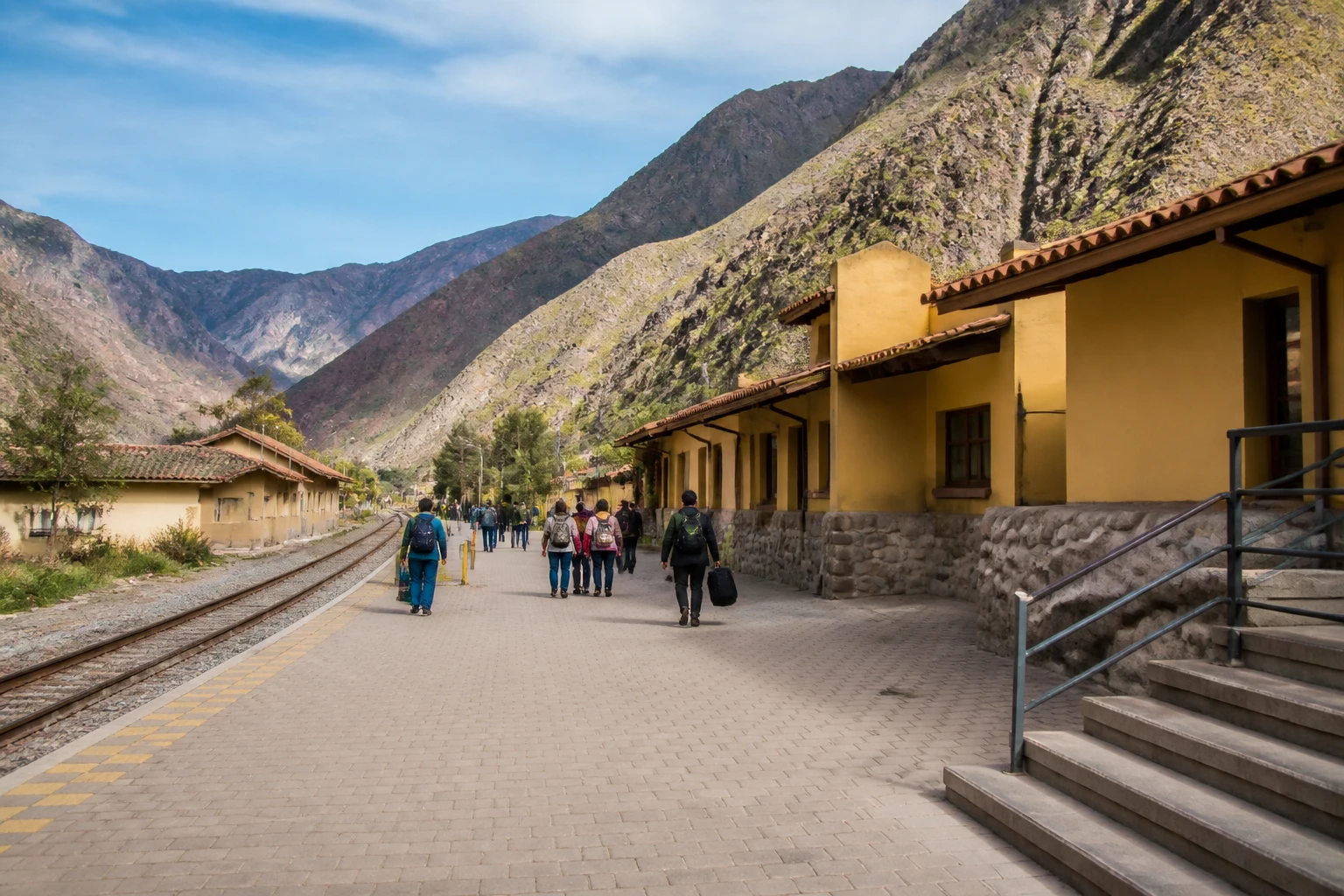
Travelers holding a same-day train should work backward from the departure shown on their ticket. Allow time to reach the correct station access point and complete any operator requirements. Do not assume that a flexible archaeological visit can be inserted before a very early service.
Rail service was reported operating normally after an earlier disruption, including a regular-operation notice on March 31, 2026. PeruRail then announced modifications involving services and access at Ollantaytambo on April 10, 2026. Check the operator’s latest notices immediately before travel because restored service does not guarantee that station arrangements or timetables will remain unchanged.
The Machu Picchu Train Routes guide is the more useful next step if rail planning is central to your itinerary. Keep the day trip and the train journey conceptually separate until you know the exact departure. Only then should you decide whether there is enough time for the archaeological park.
Accessibility and physical planning
Travelers with reduced mobility should contact the Cusco cultural authority and their chosen transport operator before committing to the visit. Current official information supplied for this guide does not establish an accessible route, verified facilities, or an assistance policy for the archaeological park. Avoid relying on a general claim that the ruins are wheelchair-accessible.
Ask questions that relate directly to your needs: where the vehicle can stop, what assistance the operator provides, and which parts of the planned visit are realistic. If an organized itinerary includes several Sacred Valley sites, confirm each stop separately rather than assuming one accessibility arrangement applies throughout the circuit.
All travelers should pace the day according to their condition rather than the longest possible attraction list. If you have recently arrived in the region, consult Altitude in Cusco: How to Acclimatize Without Wasting Your Trip before committing to a packed excursion. A measured schedule leaves more room for breaks and unexpected delays.

Machu Picchu Full-Day Tour from Cusco with Panoramic Train
Enjoy a Small Day trip to Machu picchu with us If you’re short on time, this experience is the best option and wel...

Essential Machu Picchu Full Day Tour
Discover one of the most impressive places in the world: Machu Picchu. With your tour, you will explore this world w...

Classic Inca Trail 4 days to Machu Picchu
4 Day Inca Trail to Machu Picchu passing some incan sites and get Machu Picchu by the sungate • Hike Inca Trail...
What to bring and what to confirm
Pack for a full day away from your Cusco accommodation and keep essential documents easy to reach. Your exact list will depend on the season, transport, and any rail connection. Avoid loading yourself with unnecessary items, especially if your plan involves moving between a vehicle, the archaeological park, and the station.
- Your confirmed transport details and meeting point
- The correct Tourist Ticket or a clear plan for purchasing the applicable category
- Personal identification and any document required for a discounted ticket
- Water, sun protection, and a light layer suited to the day’s conditions
- Comfortable footwear appropriate for an archaeological visit
- Rail ticket and the latest operator notice if continuing toward Machu Picchu
Complete three checks before leaving: the applicable ticket category, the current access arrangement at the archaeological park, and your return transportation. Train passengers should add a fourth check for the latest timetable and station instructions. This short review covers the details most likely to disrupt the day without turning preparation into a lengthy checklist.
How to choose the right version of the trip
| Traveler priority | Recommended plan | Reason |
|---|---|---|
| Ollantaytambo archaeology | A focused out-and-back day | Protects meaningful time at the park |
| Several Sacred Valley destinations | A carefully limited circuit | Adds variety but shortens each visit |
| Same-day Machu Picchu train | A rail-first schedule | The fixed departure controls every other activity |
| Reduced mobility | A confirmed customized plan | Accessibility routes and assistance require direct confirmation |
| Unhurried regional travel | Ollantaytambo within a multi-day valley itinerary | Reduces pressure to fit several major stops into one day |
The best plan is usually the least complicated one that meets your main goal. Choose a focused return trip for depth, a limited circuit for variety, or a train-centered schedule for onward travel. Trying to combine all three produces the greatest risk of losing time where it matters most.
The practical verdict
An Ollantaytambo day trip from Cusco suits travelers who want a substantial Sacred Valley archaeological visit without making Machu Picchu the day’s only focus. Its greatest strength is flexibility: independent planning can preserve meaningful time at the park or connect the town with a carefully chosen second stop.
The main limitation is the temptation to overfill the itinerary. The 61-kilometer route, road-delay exposure, ticket logistics, and possible train constraints all compete for the same day. Decide what matters most, verify the current access and transport details, and leave enough margin to experience Ollantaytambo as more than a transfer point.
Frequently asked questions
How far is Ollantaytambo from Cusco by road?
Cusco’s cultural authority lists the Cusco–Chinchero–Urubamba–Ollantaytambo route at 61 kilometers. Journey time varies with traffic, stops, and road conditions, so leave a generous scheduling margin.
Can you visit Ollantaytambo as a day trip from Cusco?
Yes, Ollantaytambo works as a day trip when you reserve a substantial part of the day for the archaeological park. Adding several Sacred Valley stops reduces your time at the site and increases exposure to road delays.
How much does entry to Ollantaytambo cost?
Ollantaytambo is included in the Cusco Tourist Ticket system rather than having one universal price for every traveler. The tourism inventory lists the general ticket at S/130 for adults and S/70 for students, plus a S/70 Circuit III partial ticket, but visitors should reconfirm current prices and eligibility categories before purchase.
Is Ollantaytambo included in the Cusco Tourist Ticket?
Yes, the archaeological park is included in the Cusco Tourist Ticket system. It is listed under both the general ticket and the Circuit III partial ticket.
Can I visit Ollantaytambo and take a train to Machu Picchu on the same day?
Yes, but the confirmed train departure must control the schedule. Some services leave very early, and timetables or station-access arrangements can change, so check the operator’s latest information immediately before travel.
Is Ollantaytambo wheelchair-accessible?
Do not assume that the archaeological park has a verified wheelchair-accessible route. Travelers with reduced mobility should confirm current site conditions with the cultural authority and discuss transportation assistance with their chosen operator before booking.
Should I combine Ollantaytambo with Pisac or other Sacred Valley stops?
Combine them if seeing several destinations matters more than spending longer at Ollantaytambo. A multi-stop circuit offers variety, while a focused day protects more time for the archaeological park and reduces the effect of delays.
Are trains operating between Ollantaytambo and Machu Picchu?
The corridor was reported operating regularly after an earlier disruption, but subsequent notices included service and access modifications at Ollantaytambo. Check the rail operator’s latest notices and your ticket details immediately before departure.


