

Best Cusco Food Tours
Find the best Cusco food tour for your interests, pace, dietary needs, and budget. This practical guide explains how to compare market walks, regional tasting routes, private experiences, and shorter altitude-friendly options.
The best Cusco food tours do more than move between tasting stops. A well-designed route explains what you are eating, connects ingredients with local life, and gives you enough time to enjoy the city without turning lunch into an endurance event. The right choice depends on your interests, walking comfort, dietary needs, and how recently you arrived at altitude.
- Choose a market-focused tour for ingredient knowledge and everyday food context.
- Choose a sit-down tasting route if regional dishes matter more than covering ground.
- Favor a shorter, gentler route soon after arriving in high-altitude Cusco.
- Confirm the seller through official tourism directories before paying.
- Check the complete list of tastings, drinks, transport, tips, and extra charges.
There is no universal winner. A lively market walk can be perfect for a curious cook but frustrating for someone who needs regular seating. A fixed group route offers structure and social energy, while a private tour can be easier to adapt. Treat “best” as the strongest match for your priorities rather than the longest menu or most polished advertisement.

Peruvian Cooking Class Cocktails and Market Tour in Cusco
You will cook 3 Peruvian courses and 2 cocktails. Our Peruvian Cooking, cocktails and market tour starts at San Pedro Market (door number 1), with a v...

Machu Picchu Tour Full Day by Train
Experience the awe-inspiring Inca ruins of Machu Picchu, known as one of the New 7 Wonders of the modern world, on a...

Excursion to Rainbow Mountain Full Day Optional Red Valley
It is an impressive day of hiking in the Cordillera Vilcanota, "which is very close to the highest and sacred mounta...

Rainbow Mountain Beat-the-Crowd, Small Group - 8:00 AM Departure
Rainbow Mountain is Peru's second most visited destination after Machu Picchu. And with that popularity comes the cr...
What makes a Cusco food tour worth booking
A worthwhile tour should have a clear culinary theme. Look for an itinerary that tells you whether the focus is market culture, regional cooking, restaurant dishes, drinks, or a broad introduction. A vague promise of “many tastings” is less useful than a concise description of the neighborhoods, stop types, and food traditions covered.
Good pacing matters just as much as variety. Ask how much of the experience is spent walking, standing, and sitting. Also check the approximate distance, the steepest part of the route, and whether transportation connects any stops. These details become especially important on Cusco’s gradients and cobbled streets or when someone in the group has limited mobility.
The guide should add context that would be difficult to gain by ordering alone. Useful interpretation can cover ingredients, preparation, regional connections, and dining customs. A fixed route naturally sacrifices some flexibility, so its value lies in thoughtful curation rather than the number of plates placed on the table.
Match the tour style to your interests
| Tour style to seek | Best suited to | Main question before booking |
|---|---|---|
| Market-focused walk | Travelers interested in ingredients and daily food culture | How much time is spent interpreting the market rather than simply passing through? |
| Regional tasting route | Travelers who want several prepared dishes and more seating | Are the stops samples, shared plates, or full dishes? |
| Short city introduction | Recent arrivals and travelers with limited time | What are the walking distance, gradients, and total duration? |
| Private or customizable route | Families, dietary needs, and travelers wanting a flexible pace | Which substitutions and route changes are confirmed in advance? |
| Drink-centered experience | Travelers interested in beverages and food pairings | Are nonalcoholic options included at every drink stop? |
Market-focused tours
Choose a market-led itinerary if you want the guide to explain ingredients, produce, buying customs, and the role of the market in city life. The route should make room for interpretation instead of treating the market as a colorful shortcut between restaurants. Before booking, ask whether purchases and tastings inside the market are included in the total price.

Independent visitors can first read the San Pedro Market Guide to understand the subject and decide how much guided interpretation they want. A tour can add structure and conversation, while an independent visit gives you more freedom to pause, browse, or leave when the surroundings become busy.
Regional dish and restaurant routes
A restaurant-based route suits travelers who care more about prepared dishes and conversation than market browsing. Compare the number of seated stops, portion format, and time allowed at each table. Several thoughtful dishes can provide a better experience than a rushed sequence of bites, particularly when the itinerary includes detailed explanations.
Short and gentle city routes
A shorter route is the sensible choice for a first day in Cusco. The city stands at about 3,339 meters, or roughly 11,000 feet, and visitors are at risk of altitude illness. Avoid treating your first hours in the city as a challenge to walk steep streets, eat heavily, and sample alcohol at every stop.
A guide to altitude acclimatization in Cusco can help you plan the wider arrival day. For the food tour itself, favor a city-based itinerary with a manageable pace, seating, and a straightforward return to your accommodation. If you feel unwell, do not let a prepaid tasting schedule pressure you into continuing.

The Ultimate Full Day Sacred Valley Tour
Beat the Crowds: Experience the magic without the masses. We've meticulously planned our itinerary to ensure you arr...

6-Day Cusco and Machu Picchu Tour: Sacred Valley & Maras Moray
Cusco: “navel of the world” and center of power. Exciting and legendary. Everything Cusco has to offer is right...

Bean to Bar Chocolate Workshop in ChocoMuseo Cusco
Learn how to make your own chocolate on a 2-hour workshop at the ChocoMuseo in Cusco. This is a hands-on activity, s...
Private and customizable experiences
Private tours are worth considering when pace and substitutions matter more than meeting other travelers. Before paying, describe the essential adjustment clearly. That could mean avoiding stairs, limiting standing time, arranging vehicle access, excluding alcohol, or replacing ingredients. Do not assume that “private” automatically makes every restaurant or street on the route accessible.
Verify the tour seller before you book
Check the seller through Peru’s tourism system rather than relying only on a marketplace profile or social media account. MINCETUR’s 2026 Cusco traveler information includes directories for travel agencies and food-and-beverage businesses. Cusco’s regional tourism authority, GERCETUR, also publishes information about tourism oversight.
This check is practical because the business taking payment is not always the guide or restaurant providing the experience. Confirm the legal business name, the tour operator responsible for the booking, and a dependable contact method. GERCETUR reported enforcement activity involving tourism businesses operating outside sector rules in July 2026, although those reports were not specific to food tours.
Marketplace reviews can still help you judge communication and pacing, but they should complement formal checks rather than replace them. Focus on recent comments that describe the actual itinerary. Reviews praising a guide’s personality are encouraging, yet they reveal little about walking distance, dietary handling, or what the advertised price includes.
Compare the itinerary stop by stop
Ask for a useful itinerary description before booking. You do not need every restaurant name, but you should understand the number and type of stops, whether the route includes a market, and how much walking separates tastings. A stated start and finish area also helps you judge transportation needs and plan the rest of the day.
Clarify whether “tasting” means a small sample, a shared plate, or an individual dish. Check if drinks are included and whether alcohol is optional. If market purchases form part of the experience, determine whether they are covered or paid separately. These distinctions matter more than the headline number of stops.
Check the cancellation terms and minimum group requirements shown during booking. Your confirmation should identify the meeting point, start time, operator contact, and included services. Keep that information available offline so a weak connection does not leave you searching for instructions on the street.
Understand the total cost without relying on a headline price
Cusco food tour prices vary by provider, route, group size, and inclusions, so compare the complete package rather than a promotional figure. Obtain the total price before paying and check the currency used. A lower initial price can be poor value if key tastings or restaurant charges remain extra.

- Number of tastings, shared plates, or full dishes
- Included water, soft drinks, and alcoholic drinks
- Market purchases or ingredients used during the route
- Transportation between stops, if any
- Tips or service charges
- Any extra payment expected at restaurants
Value is also shaped by group size, guide attention, and depth of explanation. A compact route with strong interpretation can be a better purchase than a longer outing padded with walking. Compare what you will learn and experience, not only how many hours appear in the listing.
Confirm dietary needs and accessibility in advance
Tell the operator about allergies, intolerances, religious restrictions, vegetarian or vegan needs, and alcohol preferences before booking. Ask which stops can substitute ingredients and how cross-contact is handled. A dish that can be omitted is not the same as a meaningful replacement, so clarify whether the adapted route still includes a comparable number of tastings.
Travelers who do not drink alcohol should confirm that nonalcoholic choices are available at relevant stops. Families should also ask whether the selected dishes, group pace, and standing periods suit their children. Keep the conversation focused on requirements that would affect your ability to participate.
For mobility access, request specific route information rather than a general “accessible” label. Ask about gradients, cobblestones, steps, seating frequency, restroom access, standing time, and vehicle availability. Confirm whether every planned stop has a workable entrance. A route can be manageable overall while still containing one decisive barrier.
Still comparing Cusco Food Tours?
Ask for tour ideas, hotel suggestions, or a simple trip plan that combines both.
Trip Helper
Plan the tour around Cusco’s altitude
Cusco’s elevation changes how an otherwise easy food walk can feel. Visitors to the city face a recognized risk of altitude illness, so build a gentler schedule after arrival. A slow route with seating and modest portions is more appropriate than combining a demanding walk with a large meal or alcohol-heavy tasting.
If possible, avoid placing a fixed food tour immediately after your flight or road transfer. Arrival delays can create stress, and your body benefits from a less demanding start. When fitting the experience into a 3 Days in Cusco Itinerary, place it where it will not compete with your arrival or an especially active sightseeing day.
Choose accommodation with the route in mind. The guide to Where to Stay in Cusco for First Timers can help you compare convenient bases before adding an evening tasting walk. A practical location reduces the need for extra travel when you are tired, full, or adjusting to the elevation.
Use sensible food and water precautions
Tap water is not potable in many parts of Peru, and ice can be made with tap water. Ask what drinking water is served and how ice is sourced. Choose hot food that arrives hot, and take extra care with raw items when you are not confident about water handling.
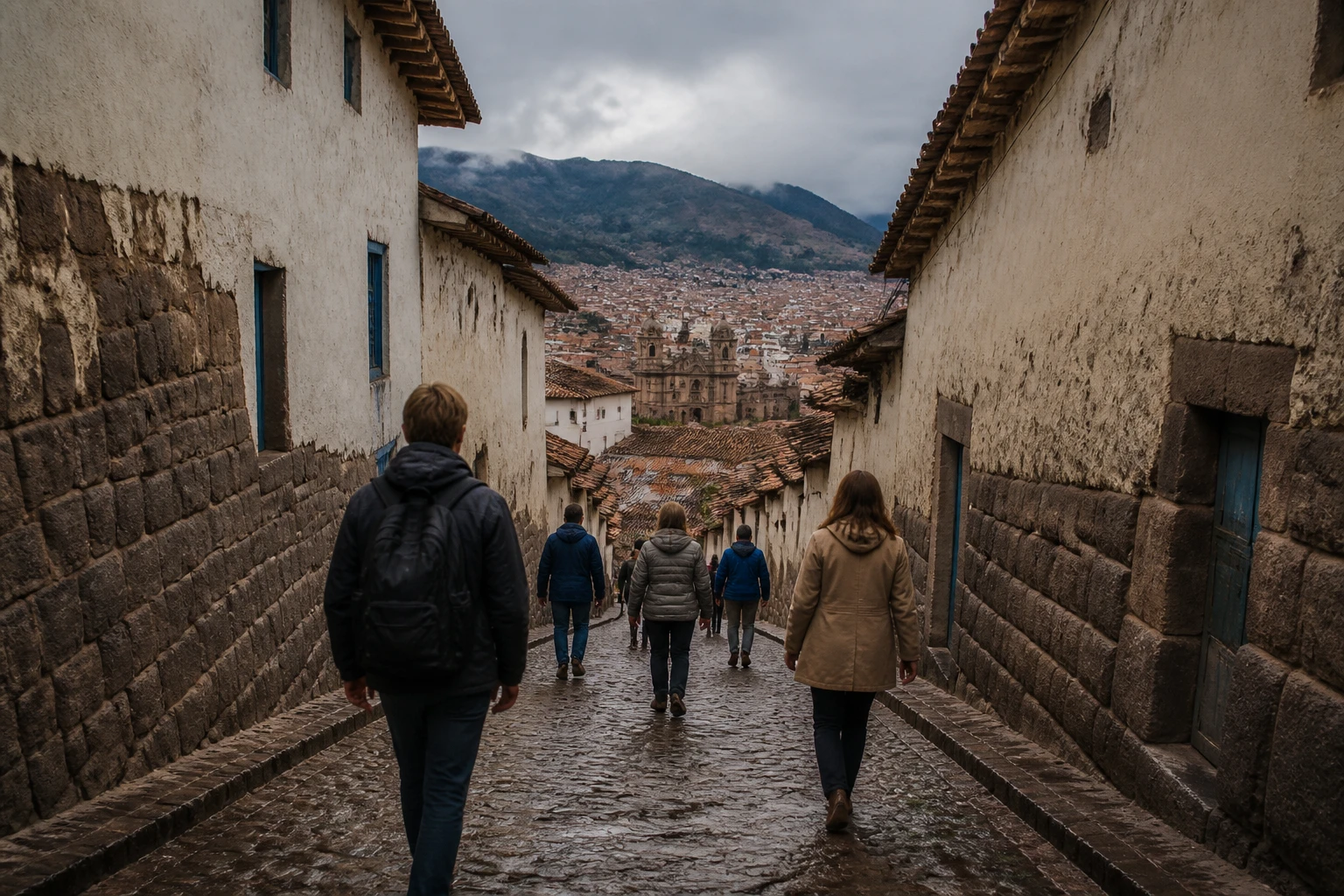
These precautions do not require avoiding every fresh dish or market setting. They call for ordinary judgment. A responsible tour should answer clear questions about water, ice, and food handling without dismissing them. Travelers with medical dietary concerns should carry any personal supplies or medication recommended by their clinician.
Check current conditions before the tour
Heavy rain can affect roads, walking routes, and services. A July 2026 notice reported a 60-day emergency across districts in 22 Peruvian regions, including Cusco, because of potential heavy rainfall connected with the 2026–2027 El Niño phenomenon. The notice warned of flooding, landslides, road closures, transport disruption, and service interruptions, but it did not state that central Cusco food tours were closed.
Recheck local conditions shortly before the activity, especially if rain is forecast or the itinerary uses transportation beyond central Cusco. Wear shoes with dependable grip and bring a compact rain layer when conditions warrant it. Follow the operator’s update if a stop or route must change.
Peru is under a Level 2 advisory to exercise increased caution because of crime, civil unrest, and kidnapping risk. Cusco city and the popular nearby visitor circuit are specifically distinguished from the higher-risk Cusco-area location in that advisory. Stay alert for petty theft, keep valuables controlled in busy places, and avoid demonstrations.
What to bring on a Cusco food walk
- Comfortable footwear suited to uneven or cobbled surfaces
- A light rain layer when wet conditions are possible
- Safe drinking water unless the tour clearly provides it
- A small amount of secure payment for confirmed extras
- Your booking details and meeting instructions saved offline
- Any essential medication or allergy information
Carry only what you can manage comfortably while eating and walking. A bulky daypack becomes awkward in compact restaurants and busy market aisles. Keep your phone, wallet, and documents secure rather than placing them on a table or in an open outer pocket.
Peruvian Cooking Class Cocktails and Market Tour in Cusco
You will cook 3 Peruvian courses and 2 cocktails. Our Peruvian Cooking, cocktails and market tour starts at San Pedr...

Salkantay Trek to Machu Picchu 4or 5 Days Authentic Peruvian Food
The Salkantay to Machu Picchu trek is popular with trekking enthusiasts. Embark on an epic 75 km trek through breath...
A simple booking process that avoids common surprises
- Decide whether market context, regional dishes, flexibility, or a short walk is your main priority.
- Check the seller through the relevant MINCETUR or GERCETUR tourism information.
- Compare the route, walking demands, stop format, and amount of seating.
- Confirm dietary substitutions, allergen handling, alcohol alternatives, and accessibility needs.
- Review the total price, inclusions, cancellation conditions, meeting point, and operator contact.
- Recheck weather, transport conditions, and your own comfort at altitude before departure.
Choosing your best Cusco food tour
Choose a market tour for ingredient stories, a restaurant route for seated regional dishes, a short walk for a gentler introduction, or a private experience when flexibility is essential. The best choice is the one that states its route, pace, inclusions, and accommodations clearly before you pay.
Once you have found that match, verify the seller, save the meeting instructions, and leave enough space in your schedule to enjoy the experience. Cusco rewards curiosity, but at this elevation, curiosity works best at a measured walking pace and with room left for the next plate.
Frequently asked questions
Which is the best food tour in Cusco?
The best Cusco food tour is the one that matches your preferred balance of market context, regional dishes, walking, seating, and dietary flexibility. Compare the actual route and inclusions rather than relying on a broad “best” label.
Should I book a Cusco food tour on my first day?
A short, gently paced tour can work after you have had time to settle in, but avoid a demanding or alcohol-heavy experience immediately after arrival. Cusco is about 3,339 meters high, and visitors face a risk of altitude illness.
Are Cusco food tours suitable for vegetarians or vegans?
Some itineraries can potentially be adapted, but substitutions must be confirmed with the individual operator in advance. Ask whether replacement dishes are provided and whether the adapted route retains a comparable number of tastings.
Can food tours accommodate allergies?
Allergy arrangements depend on the operator and participating food businesses. Describe the allergen before booking and ask how ingredients, substitutions, and cross-contact are handled at every stop.
Are Cusco food tours wheelchair accessible?
Accessibility varies by route and stop. Confirm gradients, cobblestones, steps, entrances, seating, restrooms, standing time, and vehicle access before making a reservation.
What should a Cusco food tour price include?
The booking should clearly state the included tastings or dishes, drinks, market purchases, transportation, tips, and restaurant charges. Compare the total cost because inclusions differ among itineraries.
Is tap water safe to drink during a food tour in Peru?
Tap water is not potable in many parts of Peru. Ask what water is served and how ice is made, choose hot food served hot, and be cautious with raw items when water handling is unclear.
How can I check whether a Cusco tour seller is legitimate?
Check the business through relevant MINCETUR tourism directories and information published by GERCETUR Cusco. Confirm the legal business name and the operator responsible for your booking before paying.
Peruvian Cooking Class Cocktails and Market Tour in Cusco
You will cook 3 Peruvian courses and 2 cocktails. Our Peruvian Cooking, cocktails and market tour starts at San Pedro Market (door number 1), with a v...
Salkantay Trek to Machu Picchu 4or 5 Days Authentic Peruvian Food
The Salkantay to Machu Picchu trek is popular with trekking enthusiasts. Embark on an epic 75 km trek through breath...

Classic Inca Trail 4 days to Machu Picchu
4 Day Inca Trail to Machu Picchu passing some incan sites and get Machu Picchu by the sungate • Hike Inca Trail...
Peruvian Cooking Class Cocktails and Market Tour in Cusco
You will cook 3 Peruvian courses and 2 cocktails. Our Peruvian Cooking, cocktails and market tour starts at San Pedro Market (door number 1), with a v...

2-Day Sacred Valley & Machu Picchu Tour by Train from Cusco
Experience the Best of the Sacred Valley and Machu Picchu Discover the heart of the Inca world on this unforgettabl...
Salkantay Trek to Machu Picchu 4or 5 Days Authentic Peruvian Food
The Salkantay to Machu Picchu trek is popular with trekking enthusiasts. Embark on an epic 75 km trek through breath...

Essential Machu Picchu Full Day Tour
Discover one of the most impressive places in the world: Machu Picchu. With your tour, you will explore this world w...
Keep exploring
Related Guides
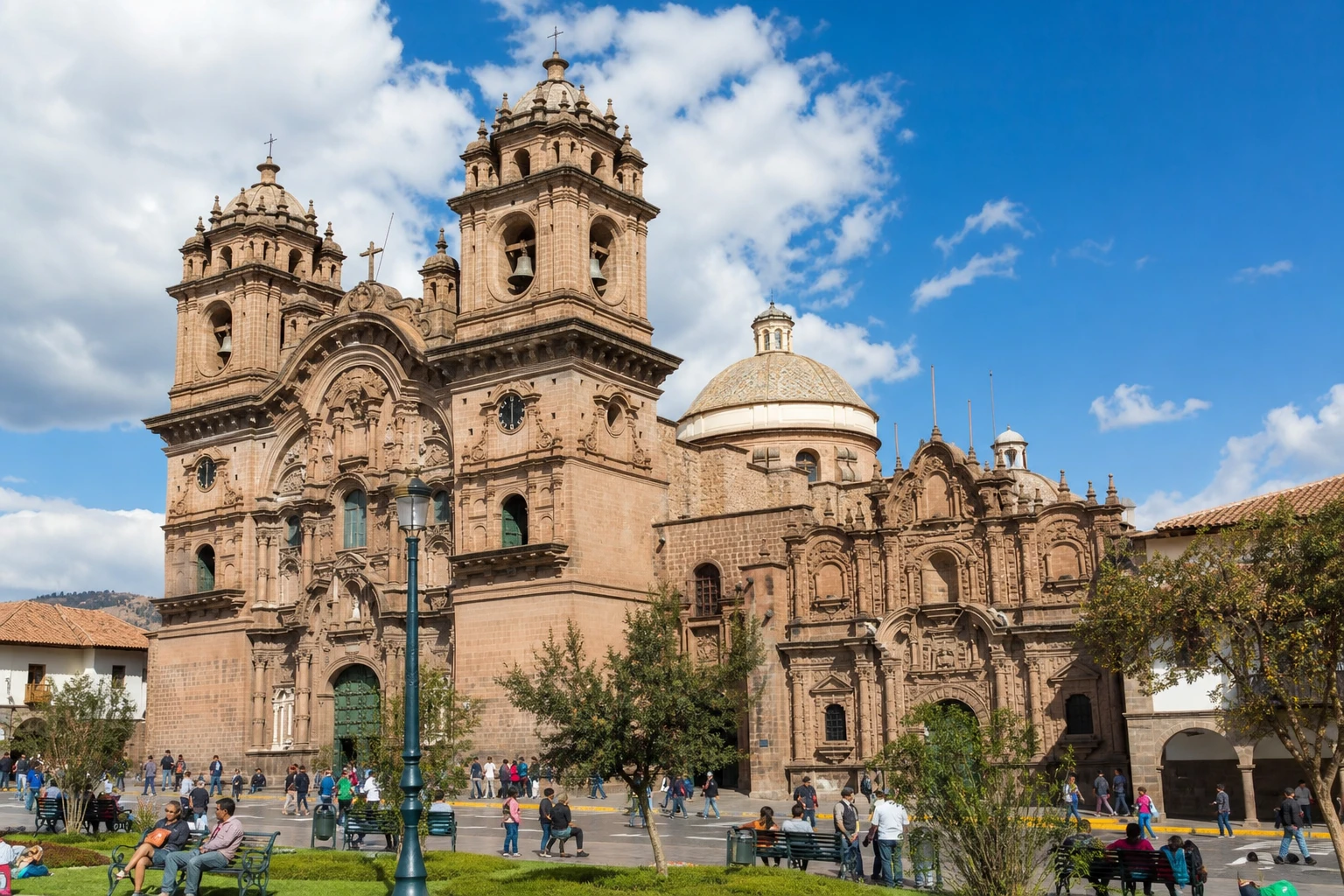
Cusco Cathedral Guide
Plan a rewarding visit to Cusco Cathedral with its key artworks, ticket options, visiting advice, worship etiquette, and accessibility…
Read guide →
Cusco on a Budget Travel Guide
Plan a budget-friendly Cusco trip with practical Tourist Ticket advice, flexible Sacred Valley timing, cost-control strategies, and essential safety…
Read guide →
Inca Trail to Machu Picchu Guide
Plan the classic Inca Trail to Machu Picchu with practical guidance on permits, the Km 82 route, timing, published…
Read guide →