
Plaza de Armas Cusco Guide
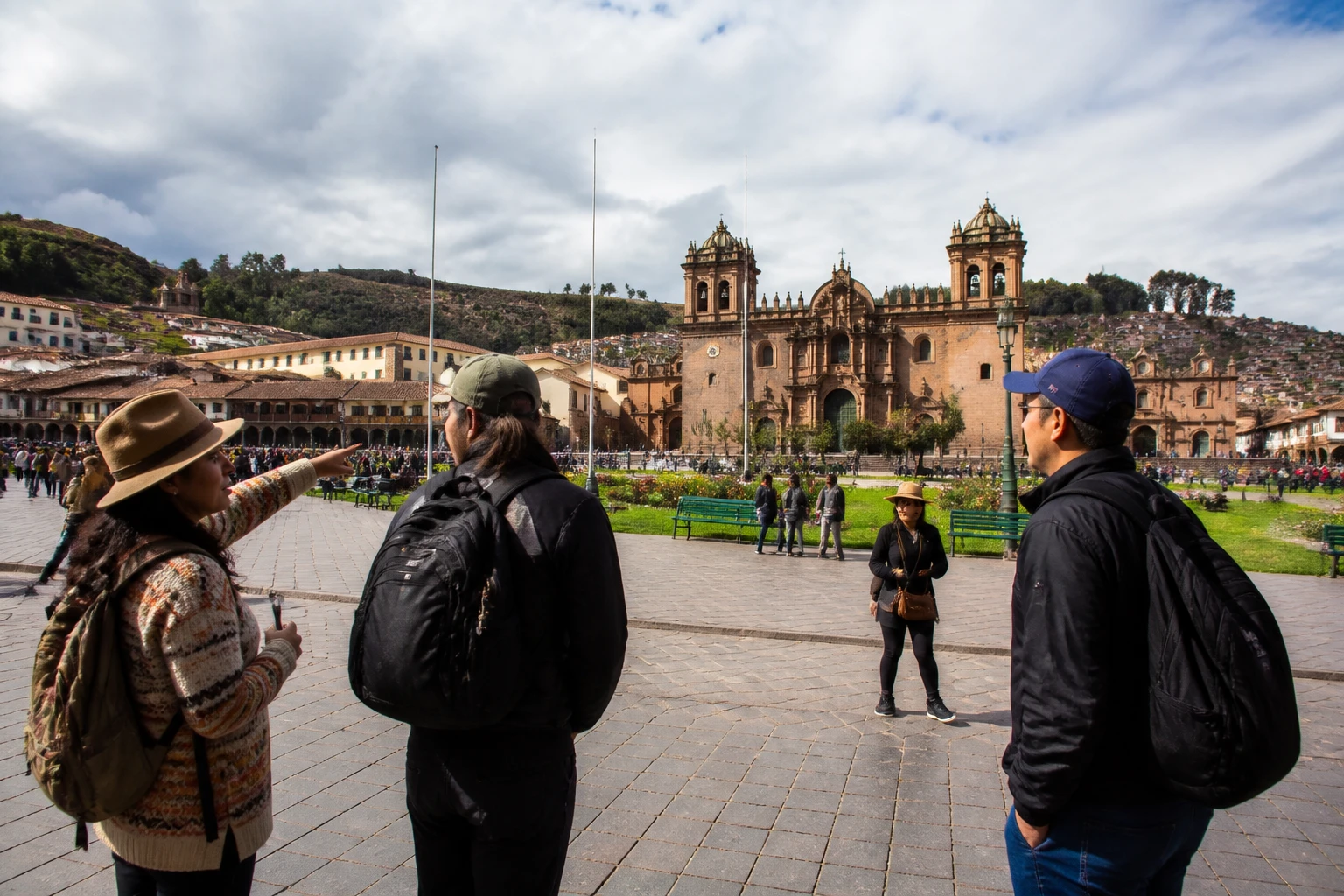
Plaza de Armas is the natural starting point for understanding Cusco’s historic center. Known officially as Plaza Mayor and identified with the former Awkaypata, it has long served as the city’s historical nucleus. Today it works best as both a destination and an orientation point, giving visitors a central place around which to arrange museums, neighborhood walks, meals, and longer excursions.
Plaza de Armas at a glance
- Plaza de Armas belongs to Cusco’s historic-center fabric rather than operating as a separately ticketed archaeological park.
- The official airport planning estimate is 6.4 kilometers by road and about 25 minutes by taxi, although traffic and events can increase the journey.
- June festivities can bring major cultural programming as well as altered circulation, crowded viewing areas, and transport delays.
- Nearby ticketed attractions have separate entry rules, so do not assume that one admission arrangement covers the whole area.
- Visitors requiring step-free access or specific drop-off arrangements should confirm a suitable route before arriving.
- Use the plaza as an anchor for a compact historic-center walk or a broader multi-day Cusco itinerary.
There is no need to treat the square as an attraction that must be rushed through once and checked off a list. Visit briefly when first orienting yourself, return during a historic-center walk, or pause between nearby indoor stops. Its central role makes it particularly useful on a first day, when a simple route is often easier to manage than a tightly packed schedule.

Cusco City Tour Four Ruins in Half-Day
Enjoy the Ancient Inca Capital of Cusco .This Tour is half a day that includes a visit to the main square , the Temple of Sun Koricancha nearby ruins...

Peruvian Cooking Class Cocktails and Market Tour in Cusco
You will cook 3 Peruvian courses and 2 cocktails. Our Peruvian Cooking, cocktails and market tour starts at San Pedr...

Traditional Peruvian Cooking Class and Market Tour in Cusco
This activity is directed by an original chef from the city of Cusco, who has grown up among the traditions and stor...
Why the plaza matters to Cusco
The municipal historic-center authority identifies the present-day Plaza Mayor with Awkaypata and describes it as the historical nucleus of Cusco. That context changes how the square is best experienced. Rather than viewing it as an isolated landmark, consider it part of a connected urban landscape shaped by public life, surrounding heritage buildings, historic streets, and institutions within the center.
A first visit can be deliberately simple. Find a comfortable place to pause, study the routes leaving the square, and decide which direction fits the rest of your day. This short orientation reduces unnecessary backtracking later, especially when several walks, museums, meals, and transport arrangements compete for limited time.
The plaza also rewards repeat visits because its function can change with the city’s calendar. On an ordinary sightseeing day, it is a practical meeting and navigation point. During major civic and cultural programming, the same central setting can become a venue, with different crowd patterns, sightlines, and access conditions.
Getting to Plaza de Armas from Cusco Airport
Alejandro Velasco Astete International Airport is 6.4 kilometers by road from Plaza de Armas. The official tourism inventory gives a taxi estimate of about 25 minutes. Use that figure as a planning baseline rather than a firm arrival time because traffic, street activity, and event-related circulation can affect the journey.
Avoid scheduling a fixed meeting in the plaza immediately after landing. Leave time for baggage collection, finding transport, reaching the historic center, and checking into your accommodation. If your arrival coincides with a large event, ask your driver or hotel whether the closest practical drop-off point has changed.
For a closer look at transfer choices and arrival planning, consult the Cusco Airport to Historic Center Transportation Guide. Travelers still choosing a base can also compare the areas covered in Where to Stay in Cusco for First Timers. A central location can simplify sightseeing, but the best choice depends on mobility needs, planned excursions, and preferred surroundings.
How much time to allow
Allow about 30 to 60 minutes for an unhurried first look, longer if you plan to sit, take photographs, meet a guide, or enter a nearby attraction. This is a suggested planning window rather than an operating limit. The square is more useful when paired with the surrounding center than when treated as a stand-alone stop with a fixed duration.
- Begin with one slow circuit to understand the square’s layout and identify the street you will use next.
- Pause before taking photographs so you are not blocking pedestrian movement or a meeting point.
- Choose one nearby indoor attraction or neighborhood walk rather than stacking several timed entries together.
- Keep your return route flexible if civic activity or temporary event controls change normal circulation.
- Use the plaza as an end point later in the day only if that direction makes sense for your accommodation or transport.
Visitors on a short trip can place the square near the beginning of a 3 Days in Cusco Itinerary. That provides a clear introduction to the center without consuming the entire day. It also leaves room to adjust later plans according to energy, weather, and any event activity encountered locally.

Excursion to Rainbow Mountain Full Day Optional Red Valley
It is an impressive day of hiking in the Cordillera Vilcanota, "which is very close to the highest and sacred mounta...

Machu Picchu Private Day Trip from Cusco
This private Machu Picchu day trip is ideal for travelers seeking a seamless, stress free experience. With guarantee...

Inca Trail 4-Day Trek to Machu Picchu – Return by Vistadome Train
Travel confidently with Alpaca Expeditions, Peru's #1 Tour Operator!. 3 Guarantees for Your Inca Trail Adventure...
Choosing the best time for your visit
The best time depends on what you want from the square. Prioritize your preferred light if photography matters, or arrange the visit around the opening time of a nearby museum. For a general introduction, choose a period when you have no immediate reservation. That flexibility lets you pause, reorient, or change streets without turning a relaxed public space into a race against the clock.
Event dates require a different strategy. Major programming can make Plaza de Armas especially compelling, but it can also affect circulation, visibility, crowd density, and the reliability of road transport. Check current announcements from Cusco’s municipality and EMUFEC shortly before a festival visit rather than relying on a previous year’s arrangements.
| Planning priority | Suggested approach |
|---|---|
| A relaxed first look | Visit without an immediate timed reservation and allow room for a short walk afterward. |
| Airport arrival day | Use 25 minutes as a taxi baseline, then add a sensible buffer for airport and traffic delays. |
| June celebrations | Check current event and circulation notices close to the date. |
| Nearby museum visit | Arrange the plaza around the museum’s separate hours and entry rules. |
| Mobility requirements | Confirm a suitable route, curb access, and drop-off point before arrival. |
Visiting during June festivities and Inti Raymi
June is an important period to watch when planning around Plaza de Armas. In 2026, Inti Raymi took place on June 24 and included presentations at Qorikancha, Plaza de Armas, and Sacsayhuamán. That event has already passed, but its use of the plaza illustrates how major festival programming can reshape a normal sightseeing day.

Future schedules, viewing arrangements, and circulation controls should be checked for the year of travel. Do not assume that a previous program establishes where spectators can stand, which roads will be restricted, or whether any particular viewing area uses a ticket. Build extra time into transfers and choose a meeting point that remains practical if access changes.
Travelers connecting festival activities with the hilltop venue can prepare with the Sacsayhuaman Guide for First Timers. Keep the plaza and Sacsayhuamán as distinct planning items. Their inclusion in the same ceremonial program does not mean they share access procedures, transport arrangements, or visitor rules.
Admission, tickets, and opening times
Plaza de Armas forms part of the historic-center management area and is not presented as a separately ticketed archaeological park. Plan your budget around the attractions, museums, guided services, meals, and transport you choose nearby rather than expecting one plaza ticket to cover the surrounding area.
Nearby interiors follow their own visitor rules. The Regional Historical Museum, for example, requires the Cusco Tourist Ticket for foreign and Peruvian tourists under its published conditions. This requirement belongs to the museum and should not be interpreted as a fee for entering or sitting in Plaza de Armas.
The plaza does not have a fixed visitor schedule comparable to the published hours of a museum. Temporary controls can still occur during major public programming. If your plans depend on crossing the square at a specific time, review current municipal and event information shortly before setting out.
Still comparing Plaza De Armas Cusco Walking Tour?
Ask for tour ideas, hotel suggestions, or a simple trip plan that combines both.
Trip Helper
Adding the Regional Historical Museum
The Regional Historical Museum, housed in the Casa del Inka Garcilaso de la Vega, is a practical historic-center addition. Its published hours are 08:00 to 17:00 daily and on holidays, with access ending 30 minutes before closing. It closes on January 1 and December 25. These times apply to the museum, not to Plaza de Armas.
Check the museum’s current visitor information before building a timed route, since admission policies and schedules can change. When combining the two places, visit the museum during its operating window and leave the plaza portion flexible. This prevents a leisurely pause outside from causing a missed final entry.
A good sequence is to orient yourself in the square, complete the museum visit, and then continue through the historic center. Reversing that order also works if you have a morning museum plan. The main principle is to let the ticketed, scheduled interior determine the timing while the public urban stop provides flexibility.
Building a historic-center walking route
Plaza de Armas works well as the anchor of a broader walk because it is the historic nucleus rather than an isolated site. Choose a simple outward route and avoid repeatedly crossing the same ground. A focused plan with one neighborhood, one museum, and time for a meal is often more enjoyable than a long checklist of disconnected stops.

One useful extension is the artist-quarter setting described in the San Blas Cusco Travel Guide. Decide before leaving the plaza whether the neighborhood is your main walk or merely one stop among many. A clear route protects time for observation and reduces the temptation to hurry through every street that looks interesting.
If this is your first day in Cusco, keep the route adjustable. Pause when you need to, avoid committing to several back-to-back entries, and save longer excursions for a day with more predictable timing. Travelers concerned about adapting comfortably can review Altitude in Cusco: How to Acclimatize Without Wasting Your Trip before creating an ambitious walking schedule.
Accessibility and mobility planning
Do not assume that every approach to Plaza de Armas provides the same level of step-free access. Comprehensive details about curb ramps, tactile paving, accessible toilets, and wheelchair-friendly taxi drop-off points are not published as a single dependable route guide. Visitors with specific requirements should confirm arrangements with their hotel, operator, or the municipal authority before arrival.
- Ask which approach offers the most suitable drop-off point for your mobility needs.
- Confirm whether a planned museum or interior attraction has separate accessibility arrangements.
- Avoid relying on an event-day taxi drop-off without checking temporary traffic controls.
- Keep the walking plan short enough to change course if the chosen approach is unsuitable.
- Arrange assistance in advance when independent navigation depends on specific curb or toilet facilities.
Event days deserve extra preparation because temporary barriers, dense gatherings, and circulation changes can affect an otherwise workable plan. Confirm the route close to the date and share the intended meeting point with everyone in your group. A flexible schedule is more useful than a precise itinerary built around assumptions about street access.

Rainbow Mountain Beat-the-Crowd, Small Group - 8:00 AM Departure
Rainbow Mountain is Peru's second most visited destination after Machu Picchu. And with that popularity comes the cr...

The Ultimate Full Day Sacred Valley Tour
Beat the Crowds: Experience the magic without the masses. We've meticulously planned our itinerary to ensure you arr...

Bean to Bar Chocolate Workshop in ChocoMuseo Cusco
Learn how to make your own chocolate on a 2-hour workshop at the ChocoMuseo in Cusco. This is a hands-on activity, s...
What to bring and how to plan the day
Bring only what supports the day you have planned. A charged phone, offline accommodation details, water, weather-appropriate layers, and any museum admission documents are more useful than carrying a bulky daypack through a busy central area. Keep essential items organized so you can move between outdoor and indoor stops without repeatedly unpacking.
Use a meeting point that everyone can identify without depending on temporary decorations, stages, barriers, or parked vehicles. During large events, agree on a backup location outside the busiest part of the square. If mobile service or group communication fails, a clear fallback plan can prevent a long and frustrating search.
Photography is easiest when you first observe pedestrian movement and event activity rather than stopping abruptly. Be considerate around ceremonies and civic programming, and follow temporary directions from local personnel. The square is an active part of the city, so allow room for residents, workers, worshippers, performers, and other visitors to use it.
Is Plaza de Armas worth visiting?
Yes. Plaza de Armas is worthwhile because it provides historical context, a practical orientation point, and an adaptable base for exploring central Cusco. Its main limitation is that major events can reduce predictability. Crowds, temporary controls, and changing road access can turn a simple stop into a more complicated visit.
First-time visitors should place the plaza near the beginning of their Cusco plans, then connect it with one or two well-chosen nearby experiences. Festival travelers should check current arrangements, while visitors with mobility requirements should confirm an appropriate approach. With those practical details settled, the square becomes what it should be: a clear point of entry into Cusco’s historic center.
Frequently asked questions
Do you need a ticket to visit Plaza de Armas in Cusco?
Plaza de Armas is part of Cusco’s historic-center fabric and is not presented as a separately ticketed archaeological park. Museums and other ticketed attractions nearby have their own admission requirements.
How far is Plaza de Armas from Cusco Airport?
Plaza de Armas is 6.4 kilometers by road from Alejandro Velasco Astete International Airport. The official taxi estimate is about 25 minutes, but traffic and event-related restrictions can lengthen the trip.
How long should I spend at Plaza de Armas?
Allow roughly 30 to 60 minutes for an initial visit, then add time for any nearby museum, meal, guided walk, or neighborhood route. This is a suggested planning window rather than an official limit.
Does Inti Raymi take place in Plaza de Armas?
Plaza de Armas was one of the presentation venues for Inti Raymi on June 24, 2026, alongside Qorikancha and Sacsayhuamán. Check the official program for your year of travel because access and viewing arrangements can change.
Is Plaza de Armas wheelchair accessible?
Travelers should not assume that every approach offers the same step-free conditions. Confirm curb access, drop-off points, accessible toilets, and any required assistance with a hotel, operator, or municipal authority before arrival.
What museum can I combine with Plaza de Armas?
The nearby Regional Historical Museum in the Casa del Inka Garcilaso de la Vega is a practical addition. It publishes daily and holiday hours of 08:00 to 17:00, with access ending 30 minutes before closing, and it closes on January 1 and December 25.
Can festivals affect access to Plaza de Armas?
Yes. Major civic and cultural events can change circulation, crowd levels, sightlines, and transport reliability around the square. Check current municipal and EMUFEC announcements close to your visit.
Cusco City Tour Four Ruins in Half-Day
Enjoy the Ancient Inca Capital of Cusco .This Tour is half a day that includes a visit to the main square , the Temple of Sun Koricancha nearby ruins...

Machu Picchu Day Trip from Cusco by Train – Small Group
Machu Picchu Full-Day Tour by Train from Cusco—Small Group Are you short on time but still dreaming of visiting Ma...
Machu Picchu Private Day Trip from Cusco
This private Machu Picchu day trip is ideal for travelers seeking a seamless, stress free experience. With guarantee...

Sacred Valley Full Day Tour
The Sacred Valley of the Incas is one of Peru's most iconic destinations and one of the main gateways to discovering...


