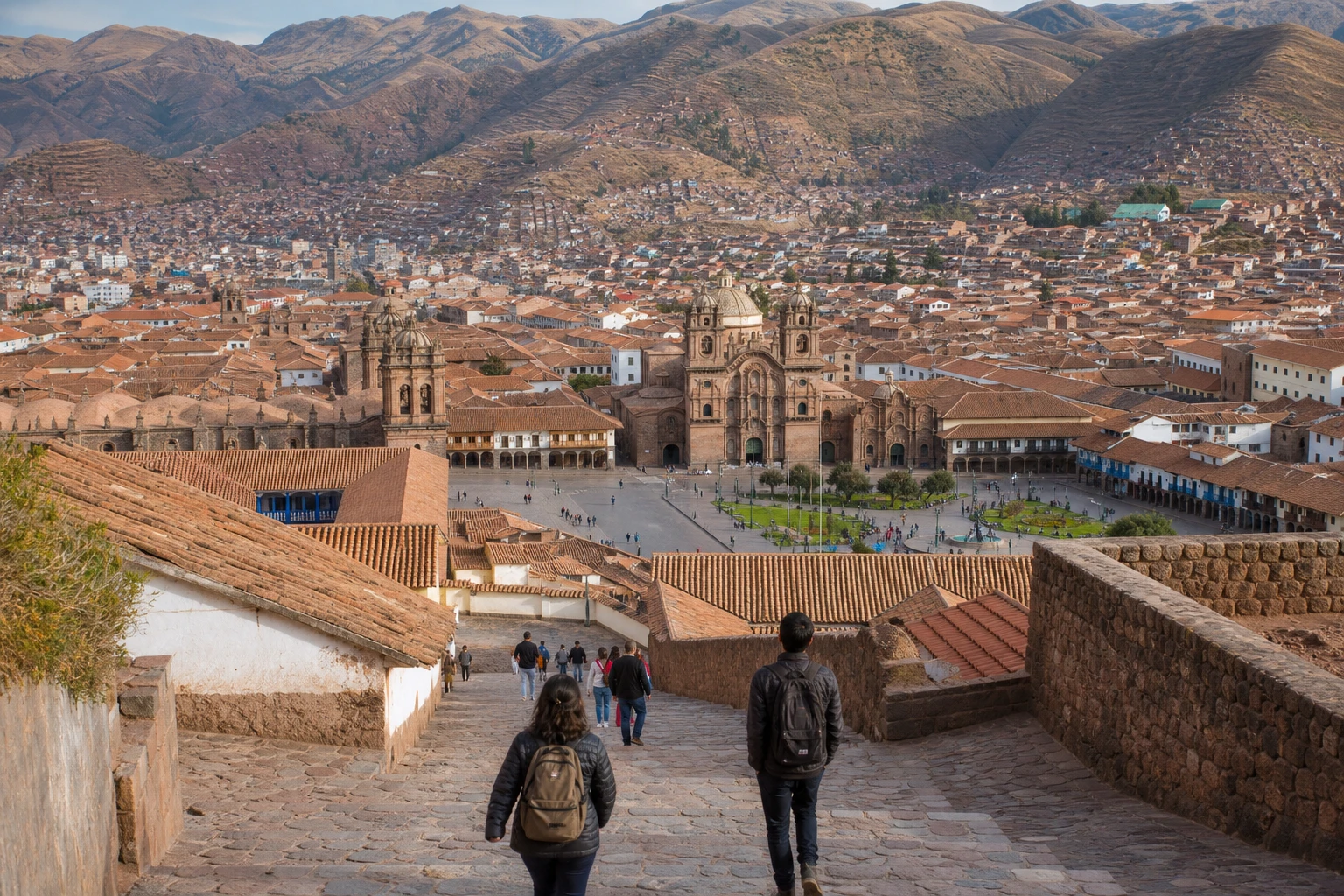
4 Days in Cusco Itinerary
Four days in Cusco gives you enough time for a measured introduction to the city, a day among nearby archaeological sites, a journey through the Sacred Valley, and a ticketed visit to Machu Picchu. The schedule is still compact, so its success depends on careful sequencing. Keep the first day light, place flexible sightseeing in the middle, and build the final two days around confirmed rail and Machu Picchu reservations.
The plan below uses an overnight in Ollantaytambo or Machupicchu Pueblo before Machu Picchu. That choice shortens the transport chain on the final morning and reduces the chance of arriving rushed. It also turns the Sacred Valley into part of the trip rather than treating it only as scenery seen through a window.
Key takeaways for planning four days in Cusco
- Make your Machu Picchu admission, circuit, visit time, and train reservations the fixed points of the itinerary.
- Use Day 1 for arrival and gentle exploration rather than a tightly timed excursion.
- Reserve Day 2 for central Cusco and nearby archaeological sites.
- Travel through the Sacred Valley on Day 3 and sleep in Ollantaytambo or Machupicchu Pueblo.
- Read the complete rail itinerary because some Cusco-area services combine a bus transfer with a train.
- Pack a small overnight bag that complies with your train service's luggage rules.

6-Day Cusco and Machu Picchu Tour: Sacred Valley & Maras Moray
Cusco: “navel of the world” and center of power. Exciting and legendary. Everything Cusco has to offer is right here. An intense trip to the past...
Four-day Cusco itinerary at a glance
| Day | Main plan | Recommended overnight | Planning priority |
|---|---|---|---|
| Day 1 | Arrive and explore Cusco at an easy pace | Cusco | Avoid a rigid arrival-day schedule |
| Day 2 | Cusco city and nearby archaeological sites | Cusco | Keep the route flexible |
| Day 3 | Sacred Valley journey | Ollantaytambo or Machupicchu Pueblo | Follow the confirmed rail plan |
| Day 4 | Ticketed Machu Picchu circuit and return journey | Depends on onward plans | Match the day to the booked entry and train |
This sequence works best when Machu Picchu is the trip's main fixed event. If your confirmed admission or train operates on a different day, rearrange the flexible Cusco portions around it. Do not squeeze a complicated rail journey into an unprotected gap between other reservations.
Book Machu Picchu before filling the daily schedule
Start with Machu Picchu admission. Online buyers are directed to the state Tuboleto platform by Peru's Ministry of Culture. Admission involves a selected date, visit time, circuit, and route, so it is more specific than a general entrance ticket. Once that reservation is secure, choose trains that fit the assigned visit and decide where to spend the previous night.
- Choose the date you want to visit Machu Picchu.
- Compare the available circuits and routes for that date.
- Confirm the assigned entry time before selecting transportation.
- Reserve the outbound and return rail services.
- Read each service description for departure station and bus-transfer details.
- Build the Sacred Valley and Cusco days around those confirmed reservations.
Do not base a four-day trip on buying admission after arrival. A limited allocation of 1,000 tickets is sold in person each day at Machupicchu Pueblo for use the following day. That system can serve as a contingency, but capacity is limited and it is not a dependable same-day solution.
Day 1: Arrive in Cusco and leave room to adjust
Make the first day deliberately simple. Settle into your accommodation, eat, and take a short walk that can end whenever you choose. A loose schedule protects the rest of the itinerary if your arrival changes and gives you a calmer introduction before the longer sightseeing and transport days begin.
Before arrival, use a Cusco Airport to Historic Center Transportation Guide to compare the practical transfer choices for your first day. Keep your lodging details available and avoid placing a prepaid tour too close to your expected arrival. The most useful Day 1 plan is one you can shorten without losing a major reservation.
A flexible afternoon or evening plan
- Check in and organize the documents needed for later reservations.
- Confirm the following day's meeting point if you booked a guided city excursion.
- Take a short central walk rather than attempting a long checklist.
- Choose an early stopping point if you feel tired.
- Recheck the date, visit time, circuit, and route printed on your Machu Picchu booking.
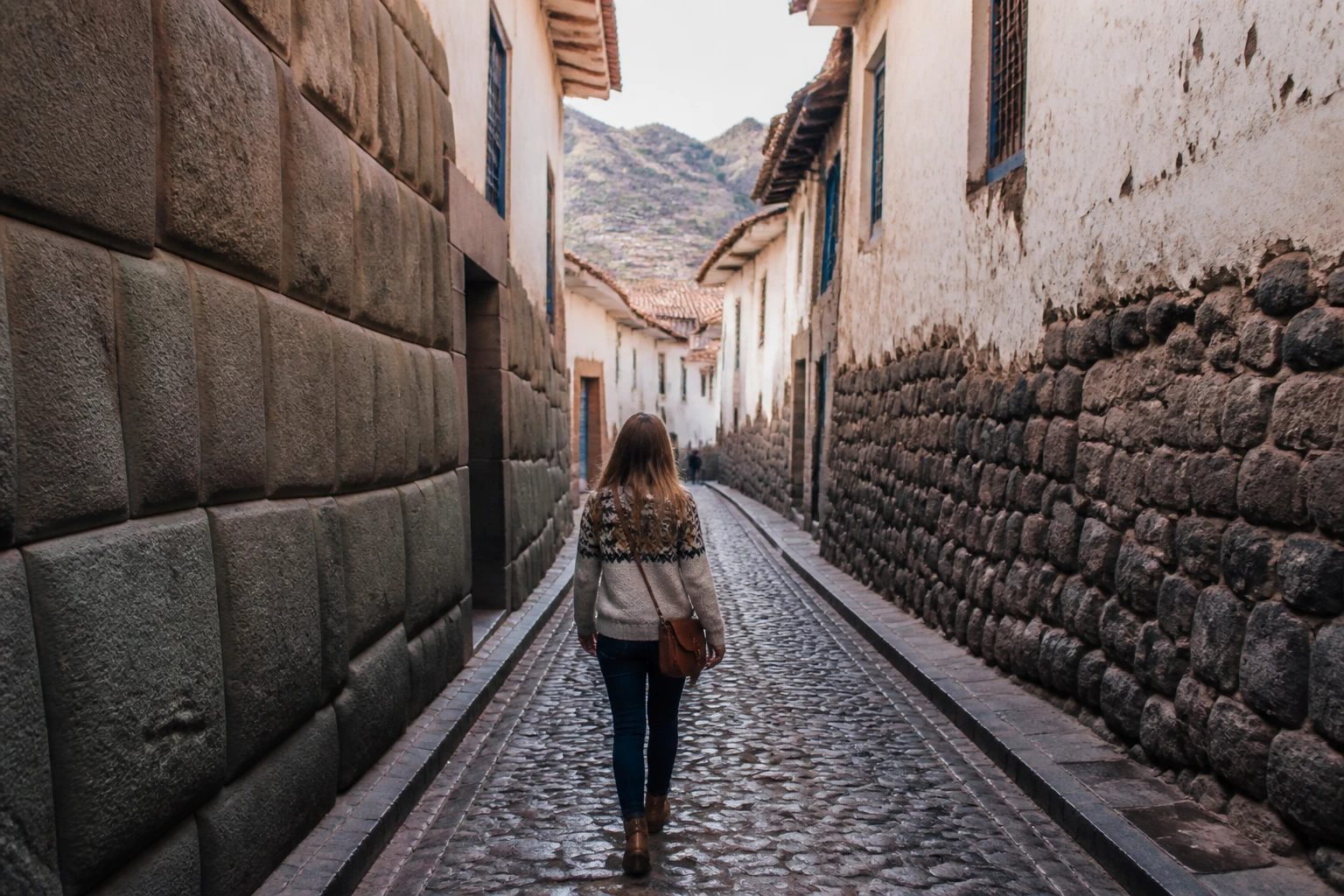
If you want a focused neighborhood walk, consult the San Blas Cusco Travel Guide and choose only as much of the route as suits your energy. Save any must-see stop for Day 2 rather than turning arrival day into a race.
Day 2: Explore Cusco and nearby archaeological sites
Use the second day for the city and nearby archaeological sites. This is the itinerary's most adaptable full day because it is not tied to the Sacred Valley rail sequence. You can arrange it independently or choose a guided outing, but protect enough time at the end of the day to repack and check the next morning's departure instructions.
A balanced route combines a central walk with one concentrated archaeological visit instead of stacking several distant stops. The Sacsayhuaman Guide for First Timers can help you plan that portion without overloading the day. If you prefer streets and neighborhoods, build your walk around the subject covered in the Twelve Angled Stone Walk and the San Blas guide.

Machu Picchu Private Day Trip from Cusco
This private Machu Picchu day trip is ideal for travelers seeking a seamless, stress free experience. With guarantee...

One Day Train Trip to Machu Picchu from Cusco
This one-day trip to Machu Picchu from Cusco offers a seamless journey to one of the most iconic landmarks in the wo...

Machu Picchu Day Trip from Cusco: Full-Day Guided Tour
Our Day trip to Machu Picchu from Cusco is a beautiful way to see one of the World's New Seven Wonders. Happy Gringo...
How to structure the day
- Begin with the central sights that matter most to you.
- Pause for a meal before committing to the archaeological portion.
- Visit one primary archaeological area or follow a clearly defined guided route.
- Return with enough time to collect laundry, repack, and charge devices.
- Review the Day 3 rail or tour confirmation line by line.
Keep your final evening in Cusco practical. Separate the items needed for the Sacred Valley overnight, place your passport or accepted identification with your tickets, and confirm whether your departure begins at a rail station or at a bus meeting point. This small check prevents a common planning error: assuming every service begins with a direct train from central Cusco.
Day 3: Travel through the Sacred Valley and sleep closer to Machu Picchu
Day 3 links Cusco with the final Machu Picchu visit. Travel through the Sacred Valley, then spend the night in Ollantaytambo or continue to Machupicchu Pueblo if your reservations favor that sequence. The right choice depends on the departure station, train time, and Machu Picchu entry assigned to your booking.
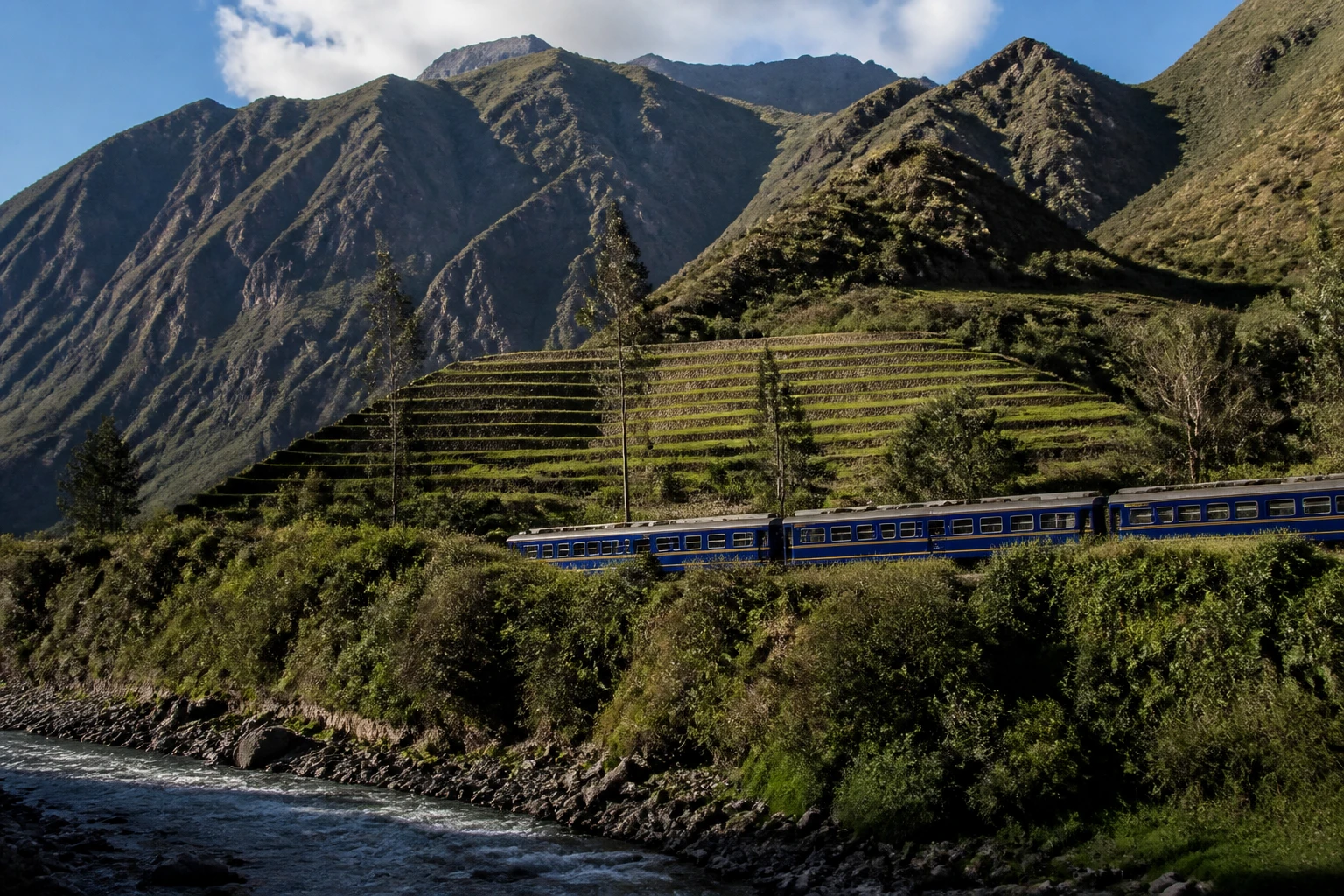
Use the Sacred Valley Travel Guide From Cusco to choose a realistic valley route. For a four-day schedule, prioritize the stops that fit your confirmed transport rather than attempting every named destination. Your rail departure is the hard deadline, so any independent driver or tour plan should be built backward from the required check-in time.
Ollantaytambo or Machupicchu Pueblo?
| Overnight choice | Best planning use | Main consideration |
|---|---|---|
| Ollantaytambo | Useful when the chosen train departs from Ollantaytambo the next day | The final morning still includes the train journey |
| Machupicchu Pueblo | Useful when you want to complete the train journey on Day 3 | The Day 3 schedule must comfortably fit the selected train |
Neither overnight is automatically better. Match the hotel to the ticketed entry and the actual service line on your rail confirmation. If the departure details change seasonally, use the current operator information rather than an old sample schedule.
Day 4: Follow your ticketed Machu Picchu route and return
The fourth day should revolve around your assigned Machu Picchu visit. Carry the identification and ticket required by your booking, follow the route printed on that ticket, and leave enough time for each transportation connection. PeruRail advises passengers to arrive 30 minutes before departure with their passport or identification and ticket.
Do not plan the day around a photograph, viewpoint, or optional hike unless your chosen route includes it. The official system lists three circuits and 10 routes, and each offers a different visit. Some options, including Intipunku, Inka Bridge, Great Cavern, and Huchuypicchu, are listed only for high season.
After the visit, continue according to the return service shown on your booking. Some journeys back toward Cusco combine train and bus segments, so note the final drop-off rather than assuming the service ends where the rail segment ends. Avoid placing a tightly timed flight or separate long-distance connection immediately after a complex return itinerary.
Choose the Machu Picchu circuit for the experience you want
Route selection changes what you can see. Circuit 1 is designated Panoramic, Circuit 2 is labeled Machu Picchu Classic, and Circuit 3 is called Machu Picchu Royalty. Treat these as distinct experiences rather than interchangeable time slots. Compare the currently offered routes before paying, especially if a particular viewpoint or additional hike matters to you.
| Circuit | Official label | Planning focus |
|---|---|---|
| Circuit 1 | Panoramic | Compare its available routes if elevated views are your priority |
| Circuit 2 | Machu Picchu Classic | Review the specific route included with the selected ticket |
| Circuit 3 | Machu Picchu Royalty | Check the exact lower-sector route and any seasonal option |
Route availability and capacity can vary by date. Check the live ticket selection rather than assuming every route shown in a general circuit description will be offered during your trip. Once booked, shape the rest of Day 4 around that ticket instead of trying to improvise a different route at the entrance.
Still comparing Cusco 4 Day Itinerary With Machu Picchu And Sacred Valley?
Ask for tour ideas, hotel suggestions, or a simple trip plan that combines both.
Trip Helper
Read the complete train itinerary before departure
A train booking can include more than a train. PeruRail's May to December 2026 timetable shows several bimodal Cusco-area services in which a private bus transfer from Wanchaq comes before the rail portion through the Sacred Valley. Check the full service line for the meeting point, transfer, station, and final destination.
The Choosing the Right Train to Machu Picchu guide can help you understand the broader train-route decisions. Your own confirmation remains the operating plan for the day. Station and service arrangements can change by season, so review them again shortly before travel.
- Check whether the first segment is a bus or train.
- Note the precise starting point and required arrival time.
- Confirm where any transfer takes place.
- Carry the ticket and the identification connected to the reservation.
- Check the destination of the final segment, not only the train portion.
- Allow a buffer before any unrelated reservation.
Pack a small overnight bag for the final two days
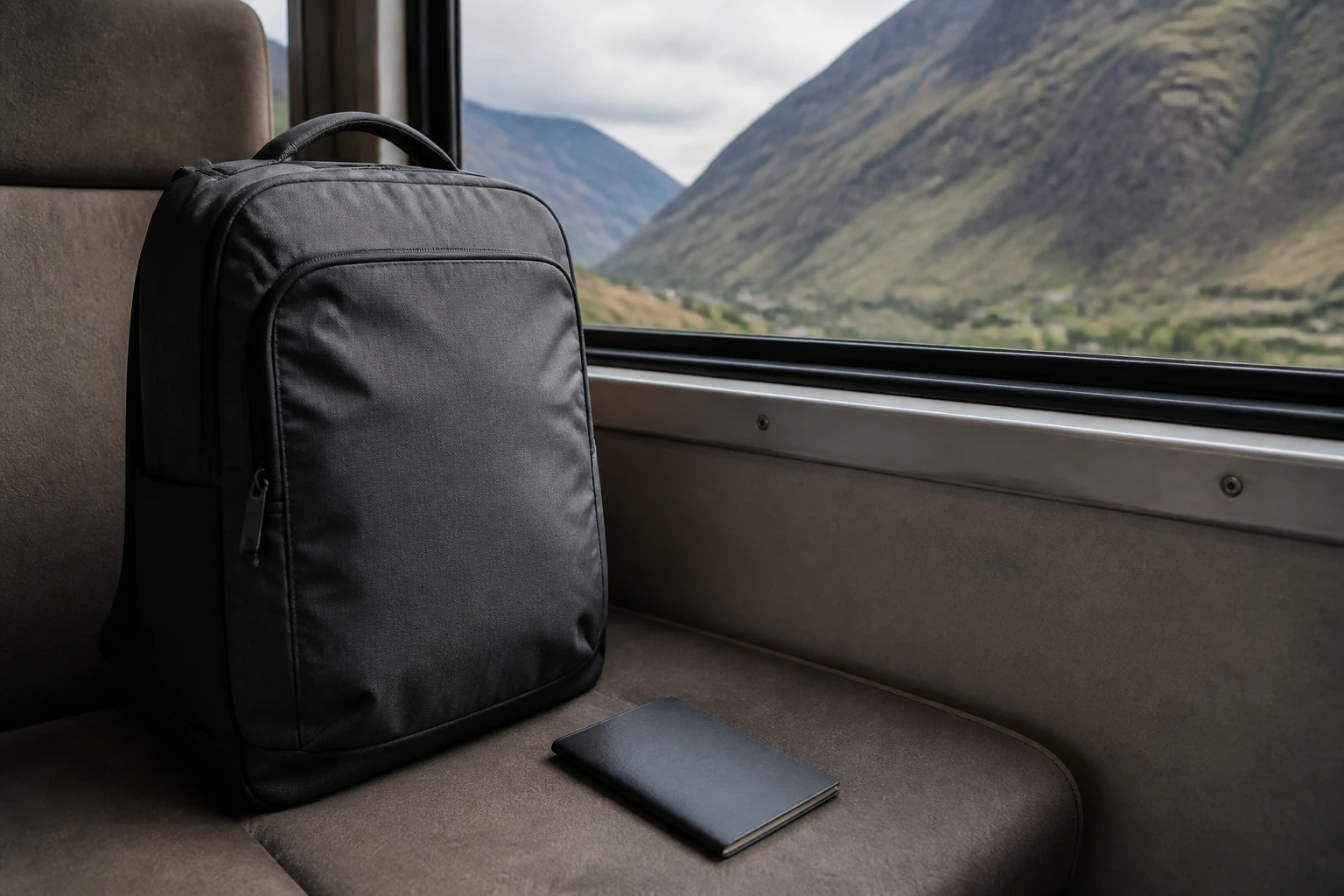
Pack lightly for the Sacred Valley and Machu Picchu portion. PeruRail's standard tourist-service allowance is one bag or backpack weighing up to 8 kilograms and measuring no more than 115 linear centimeters, approximately 55 by 35 by 25 centimeters. Check the allowance attached to your selected service before departure.
Free luggage storage is listed at Ollantaytambo and Machu Picchu stations, although published storage hours are inconsistent. Confirm current availability before depending on it. A simpler strategy is to leave large luggage with your Cusco accommodation when permitted and travel with only the items needed for one night.
Passengers who need special luggage assistance should contact PeruRail at least 48 hours before travel, and assistance remains subject to available space. Travelers with mobility needs should also confirm accessibility arrangements with each rail, transfer, lodging, and site operator before booking because the journey contains several separate stages.
Where to stay during a four-day itinerary
Plan for two nights in Cusco followed by one strategic night in Ollantaytambo or Machupicchu Pueblo. This pattern supports the itinerary without requiring a pre-dawn chain all the way from Cusco on the final day. It also makes Day 3 a transition through the Sacred Valley rather than a round trip back to the city.
For the first two nights, consult Where to Stay in Cusco for First Timers and prioritize the location that works with your arrival and Day 3 pickup or departure. For the third night, let the confirmed train and admission times determine the town. A convenient address is more valuable here than adding another attraction to the schedule.
How to think about the trip budget
Treat Machu Picchu as the itinerary's main advance-booking expense. The total depends on live admission, rail, accommodation, local transport, and any guided services. Prices vary by travel date and selected service, so compare the complete cost of the schedule before confirming nonrefundable parts.
- Machu Picchu admission for the selected circuit and route
- Outbound and return rail transportation
- Any bus segment included in a bimodal rail service
- Cusco, Ollantaytambo, or Machupicchu Pueblo accommodation
- Sacred Valley transportation or a guided excursion
- Meals, local transfers, and optional guiding
Compare packages by their actual inclusions. A lower headline price does not help if it leaves out a required transfer or conflicts with your admission time. Keep the ticketed Machu Picchu visit and transport sequence together when assessing the cost.

Classic Inca Trail 4 days to Machu Picchu
4 Day Inca Trail to Machu Picchu passing some incan sites and get Machu Picchu by the sungate • Hike Inca Trail...

Machu Picchu Day Trip from Cusco
Local experts for an easy way to visit Machu Picchu with a special cancellation poliy, all details are arranged: tic...

The Ultimate Full Day Sacred Valley Tour
Beat the Crowds: Experience the magic without the masses. We've meticulously planned our itinerary to ensure you arr...
Build a backup plan without weakening the itinerary
Your best backup plan is flexibility around the fixed reservations. Day 1 and most of Day 2 can be shortened, expanded, or rearranged. Day 3 and Day 4 should follow the confirmed transport and admission sequence. Save copies of the relevant confirmations and check for service updates shortly before departure.
If online Machu Picchu admission is unavailable, do not assume the in-person allocation will rescue the trip. The 1,000 daily in-person tickets in Machupicchu Pueblo are for use the next day and remain capacity-limited. A traveler relying on that option would need extra schedule flexibility that a four-day itinerary does not provide comfortably.
What to organize before leaving Cusco
- Passport or accepted identification connected to each reservation
- Machu Picchu admission showing the date, time, circuit, and route
- Complete rail confirmation, including any bus-transfer segment
- Small overnight bag within the applicable allowance
- Accommodation details for the third night
- Charged phone and accessible copies of essential confirmations
Review these items at the end of Day 2, not while rushing toward the departure point on Day 3. Pay particular attention to Wanchaq, Ollantaytambo, and Machu Picchu station details shown on the booking. The first location printed in the service sequence is the one that matters when you leave.
Who this itinerary suits
This itinerary suits first-time visitors who want Cusco, the Sacred Valley, and Machu Picchu in one compact trip. It favors a logical transport sequence over an exhaustive sightseeing list. The main limitation is pace: after the light arrival day, the schedule contains three active days and two accommodation bases.
Travelers who want several Sacred Valley stops, multiple Machu Picchu routes, long hikes, or unhurried neighborhood exploration should add days rather than compress more into this plan. If you have only three days, the published 3 Days in Cusco Itinerary offers a tighter framework for comparison.
Make the reservations, then enjoy the route
A strong four-day Cusco itinerary is built from the final day backward. Confirm Machu Picchu admission and its specific route, match the trains to that visit, and choose the third-night location accordingly. Then fill the first two days with the city and nearby sites at a comfortable pace.
The overnight beyond Cusco is the plan's key advantage. It protects the Machu Picchu day from an unnecessarily long transport chain while giving the Sacred Valley a meaningful place in the journey. Once the fixed bookings are aligned, the itinerary becomes clear, practical, and rewarding without trying to turn four days into eight.
Frequently asked questions
Are four days enough for Cusco and Machu Picchu?
Yes, four days are enough for a compact first visit covering Cusco, nearby archaeological sites, the Sacred Valley, and Machu Picchu. The itinerary works best when admission and trains are booked first and the night before Machu Picchu is spent in Ollantaytambo or Machupicchu Pueblo.
Should I visit Machu Picchu as a day trip from Cusco?
An overnight closer to Machu Picchu is the more practical choice for this itinerary. It reduces the risk that a long sequence of road and rail connections makes the ticketed visit feel rushed.
Should I stay in Ollantaytambo or Machupicchu Pueblo before visiting Machu Picchu?
Choose the town that best fits your confirmed train and Machu Picchu entry. Ollantaytambo leaves the train journey for the final morning, while Machupicchu Pueblo lets you complete that rail segment on Day 3.
Do all trains to Machu Picchu leave directly from Cusco?
No, some Cusco-area services combine a private bus transfer from Wanchaq with a later train segment. Read the complete service description to identify the actual starting point and each transfer.
How early should I arrive for a PeruRail departure?
PeruRail advises passengers to arrive 30 minutes before departure. Bring the ticket and the passport or identification associated with the reservation.
Can I buy a Machu Picchu ticket after arriving?
Limited in-person tickets are sold in Machupicchu Pueblo for use the following day, but they are not a dependable plan for a short trip. The allocation is capped at 1,000 tickets per day, so advance online booking is the safer foundation.
Which Machu Picchu circuit should I choose?
Choose according to the experience and route you want, not only the entry time. The three official circuit families are Panoramic, Machu Picchu Classic, and Machu Picchu Royalty, with individual routes and seasonal options beneath them.
How much luggage can I take on the train?
PeruRail's standard tourist-service limit is one bag or backpack up to 8 kilograms and 115 linear centimeters, approximately 55 by 35 by 25 centimeters. Confirm the allowance for your specific service before traveling.
6-Day Cusco and Machu Picchu Tour: Sacred Valley & Maras Moray
Cusco: “navel of the world” and center of power. Exciting and legendary. Everything Cusco has to offer is right here. An intense trip to the past...

Sacred Valley Full Day Tour
The Sacred Valley of the Incas is one of Peru's most iconic destinations and one of the main gateways to discovering...

Inca Trail 4-Day Trek to Machu Picchu – Return by Vistadome Train
Travel confidently with Alpaca Expeditions, Peru's #1 Tour Operator!. 3 Guarantees for Your Inca Trail Adventure...

Peruvian Cooking Class Cocktails and Market Tour in Cusco
You will cook 3 Peruvian courses and 2 cocktails. Our Peruvian Cooking, cocktails and market tour starts at San Pedr...


