San Pedro Market Cusco Guide
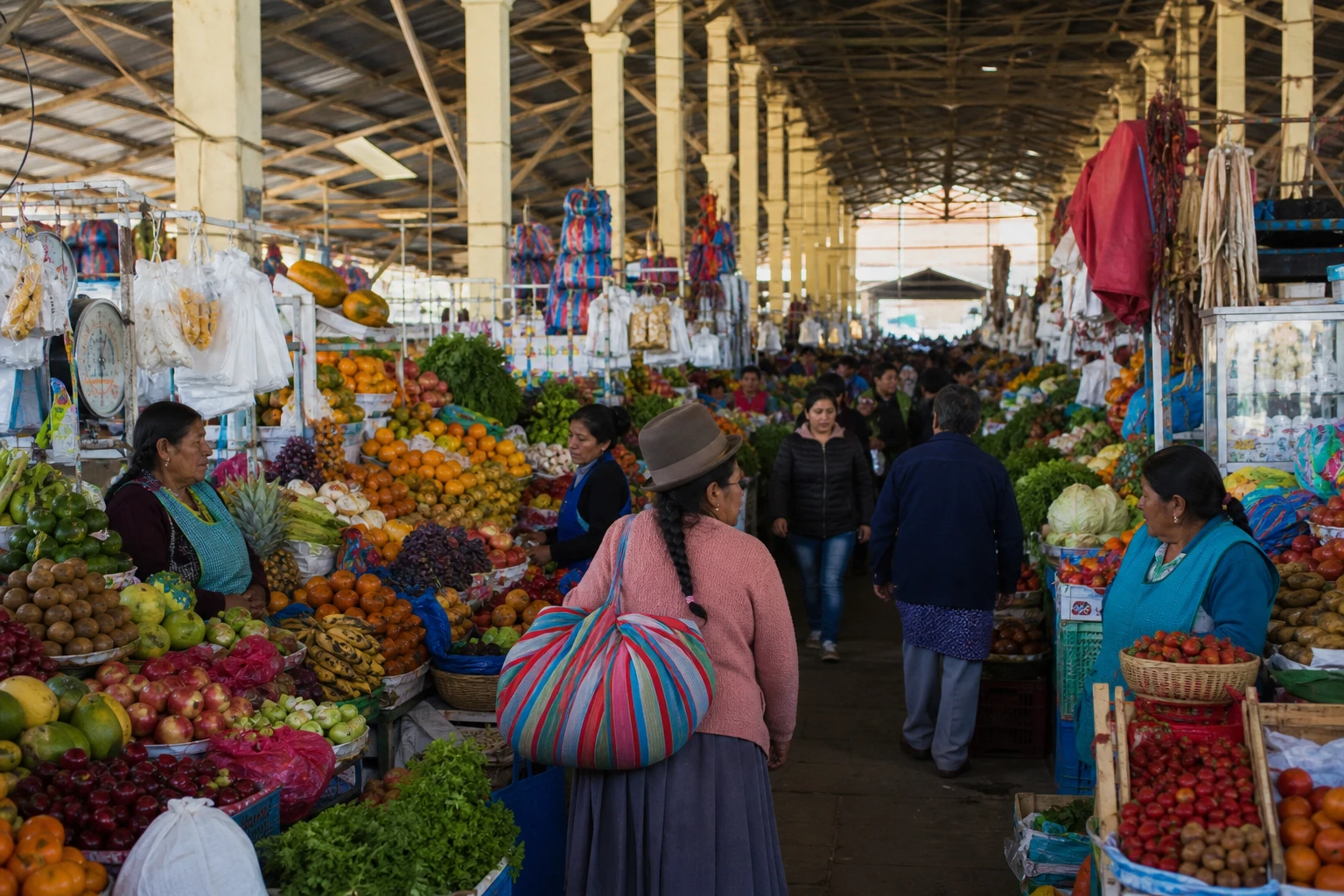
San Pedro Market offers one of the clearest windows into everyday commerce in central Cusco. This covered market serves local shoppers while also welcoming travelers interested in produce, prepared food, juices, crafts and regional ingredients. Its cultural and economic importance reaches well beyond tourism, so the best visit is curious, patient and respectful of the people working around you.
- Visit in the morning for stronger activity and a broader selection of open stalls.
- Choose roughly 9:00 to 11:00 if you want a less intense introduction.
- Carry small-denomination Peruvian soles because payment methods vary and cash is common.
- Compare prices and quality before buying crafts or visitor-oriented goods.
- Keep valuables secure, ask before photographing people and eat prepared dishes while they are hot.
- Confirm current opening conditions locally, especially on Sundays and holidays.
The market stands in the traditional San Pedro neighborhood of Cusco’s historic center, opposite the train station. It is about 600 meters from Plaza de Armas, with the walk commonly estimated at around eight minutes. Treat that as a rough guide because pace, crowds and Cusco’s elevation can stretch even a short walk.

Peruvian Cooking Class Cocktails and Market Tour in Cusco
You will cook 3 Peruvian courses and 2 cocktails. Our Peruvian Cooking, cocktails and market tour starts at San Pedro Market (door number 1), with a v...
Admission is generally described as free, making the market easy to add to a morning in the historic center. Opening times vary across current visitor information, however. Plan a morning visit rather than relying on a late arrival, and check locally before going on a Sunday or holiday.
Why San Pedro Market is worth visiting
San Pedro is worthwhile because it remains a working supply market rather than a staged visitor attraction. Government coverage describes it as one of Cusco’s principal markets, with groceries, meat, fresh fruit, crafts and gastronomy all represented. Regional reporting connected with its centennial described a community of more than 1,000 merchants, while a 2026 modernization initiative involved more than 300 participating vendors.
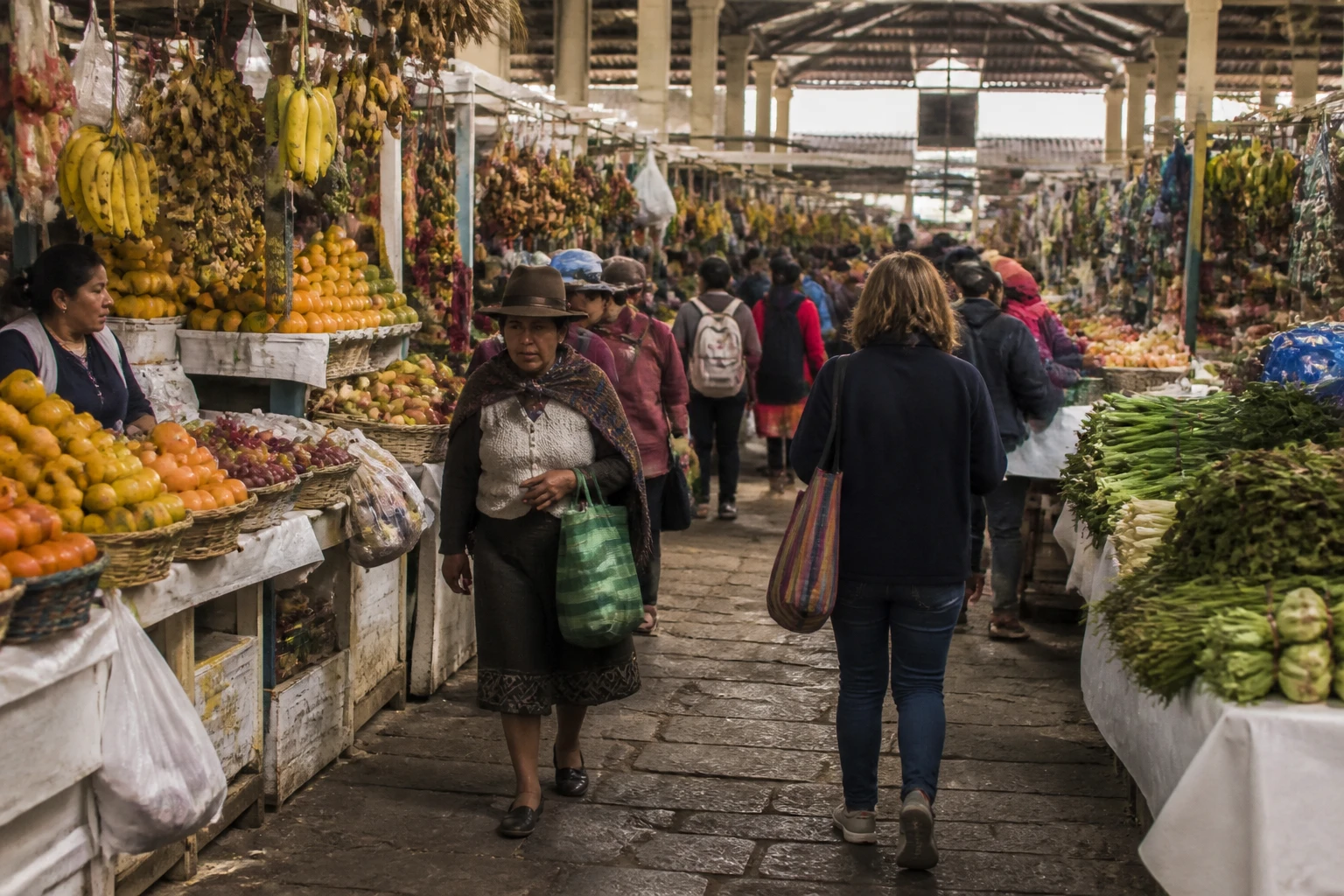
That scale creates an experience built around movement and practical exchange. Shoppers compare produce, vendors prepare food, and aisles shift between everyday provisions and goods aimed more directly at visitors. The market is most rewarding when you observe these different roles instead of approaching every aisle as a souvenir display.
Cusco’s municipal cultural record documents the market’s historic, social and economic importance. This context matters. San Pedro is a civic institution where tourism overlaps with daily life, not an undiscovered enclave. Visit as a guest, leave space for working shoppers and avoid blocking narrow circulation points while taking photographs.
What you can see, eat and buy
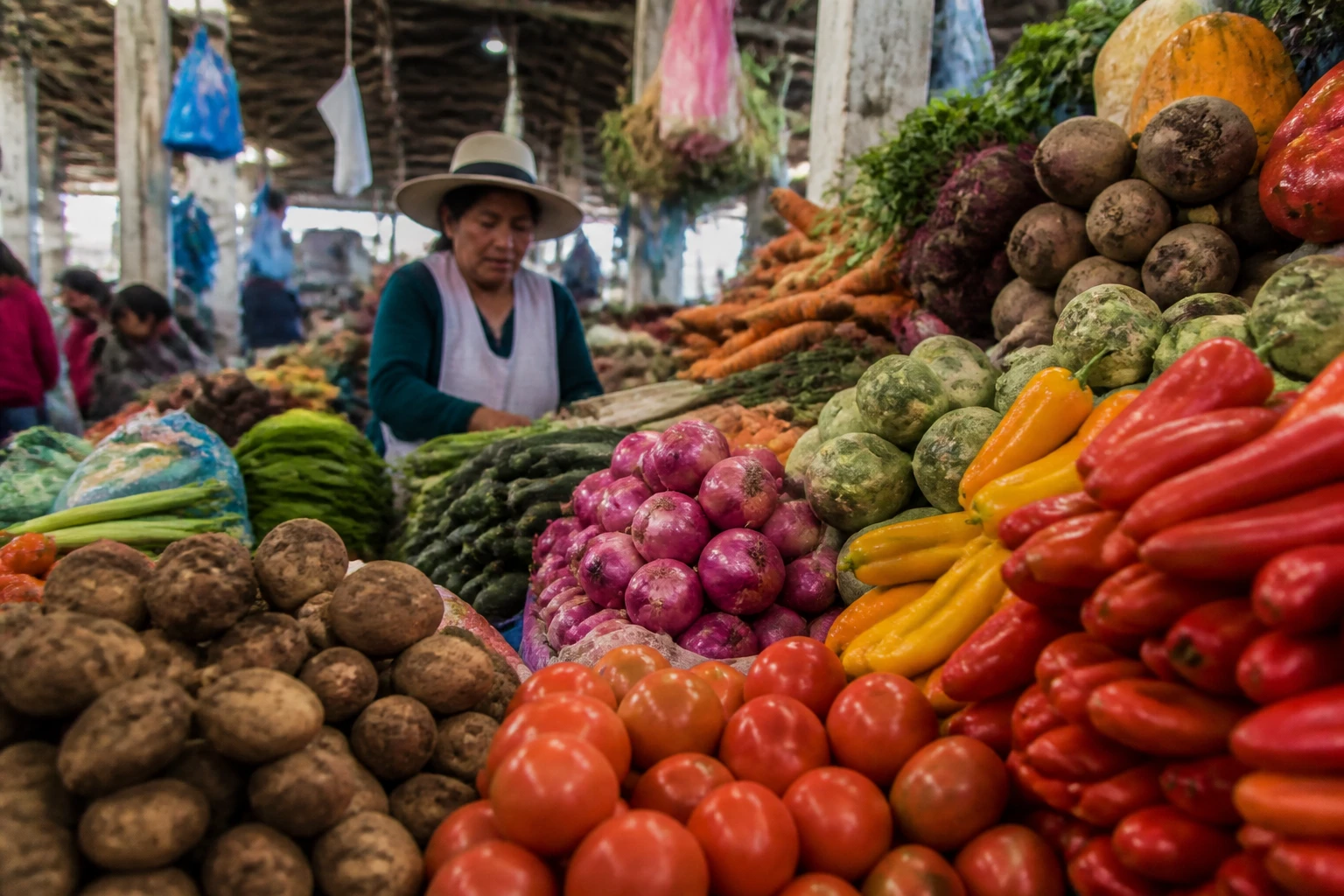
The broad mix includes fresh fruit, meat, groceries, prepared food, crafts and souvenirs. Peru’s tourism inventory also highlights food and drink tasting, observing the preparation of local products, and shopping for crafts. Selection changes by stall and time of day, so a slow circuit is more useful than arriving with one rigid shopping list.
Produce and everyday provisions
Morning is the strongest period for seeing the produce trade in motion. Earlier hours tend to bring more activity and selection, although they can also feel busier. Pause at the edge of an aisle before stepping closer to a display, and remember that many customers are completing ordinary household shopping rather than sightseeing.
Food counters and juice stalls
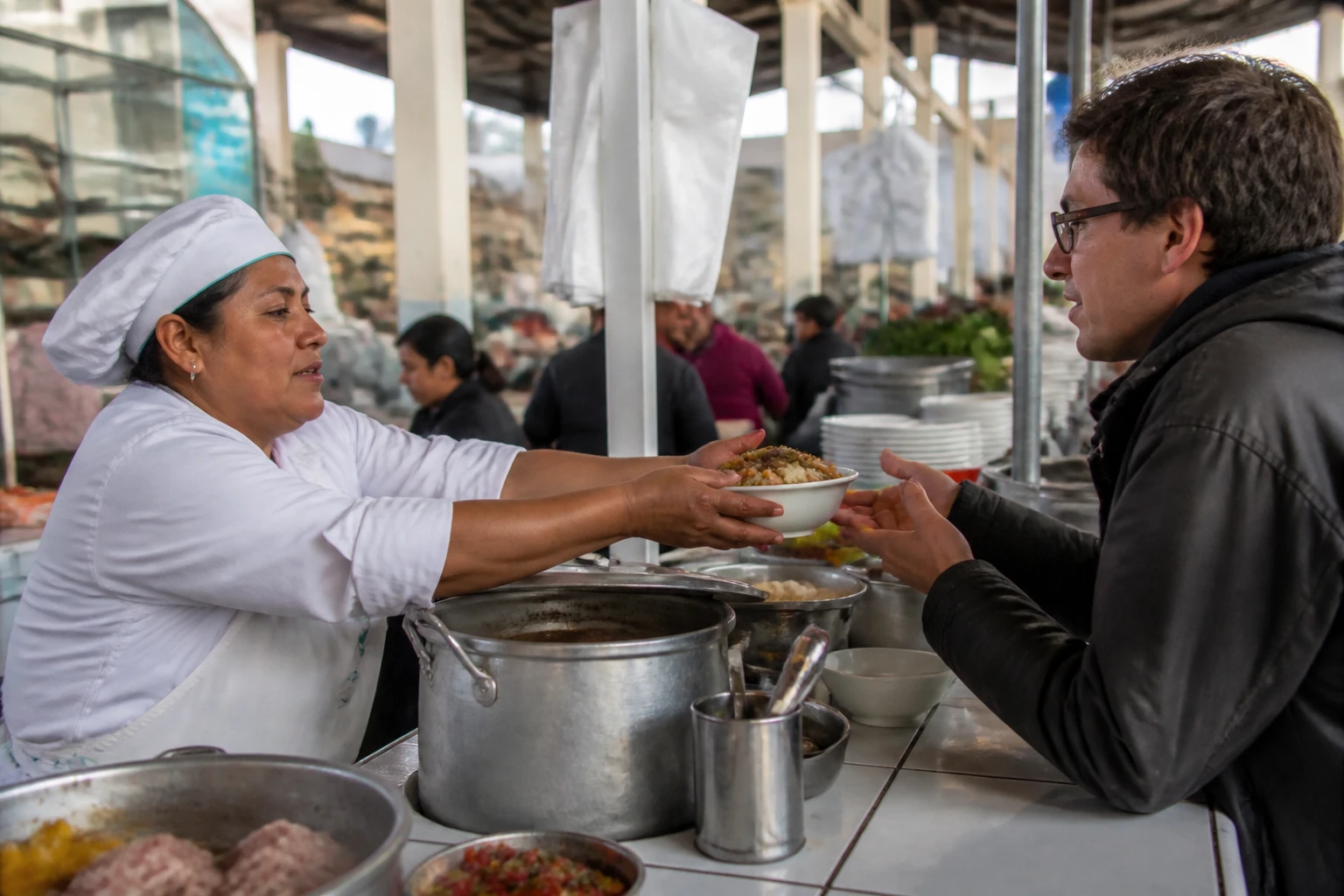
Prepared-food counters and juice stalls are commonly positioned as low-cost market choices. Lunch activity is strongest around noon to 2:00 p.m., so this period suits travelers who want a meal but brings a different rhythm than a produce-focused morning. Look at what is being prepared, ask the price before ordering and choose food cooked hot and served promptly if you want to reduce foodborne-illness risk.
Portions, menus and preparation differ between counters. If your Spanish is limited, point politely, confirm what is included and listen for the total before paying. A little patience works better than expecting restaurant-style service in a busy market aisle.
Crafts and souvenirs
Craft sections can be convenient for browsing several types of souvenirs in one place, but prices and quality vary. Compare similar pieces at several stalls before deciding. Bargaining expectations are not uniform, so begin by asking the price courteously rather than assuming every quoted amount is an invitation to negotiate.
Best time to visit San Pedro Market
For most first-time visitors, roughly 9:00 to 11:00 offers the best balance. The market should still have substantial morning activity and selection, while the experience is usually less intense than at the earliest produce-trading period. Arrive earlier if your priority is watching the market at its busiest rather than browsing at an easier pace.
Visit around noon to 2:00 p.m. if lunch is the main purpose of your trip. This can work well after a morning walk through central Cusco, but it is not the ideal window for travelers primarily interested in the widest produce selection.
| Time of visit | Best for | Main tradeoff |
|---|---|---|
| Early morning | Produce activity and a broader selection | Busier and more intense |
| About 9:00 to 11:00 | First visits, browsing and photography with permission | Still active, with conditions varying by day |
| Noon to 2:00 p.m. | Lunch counters and prepared food | Less focused on the morning produce trade |
| Sunday or holiday | A flexible visit if already nearby | Fewer stalls or changed hours are possible |
Published schedules differ, with one visitor listing giving 6:00 a.m. to 6:00 p.m. year-round and another recent guide suggesting approximately 6:00 a.m. to 7:00 p.m. from Monday through Saturday, with reduced Sunday activity. Avoid planning around the final hour. Confirm that day’s conditions locally if the market is central to your itinerary.

Salkantay Trek to Machu Picchu 4or 5 Days Authentic Peruvian Food
The Salkantay to Machu Picchu trek is popular with trekking enthusiasts. Embark on an epic 75 km trek through breath...
Peruvian Cooking Class Cocktails and Market Tour in Cusco
You will cook 3 Peruvian courses and 2 cocktails. Our Peruvian Cooking, cocktails and market tour starts at San Pedr...
How to get to the market from Plaza de Armas
The market is in the historic center, about 600 meters from Plaza de Armas and opposite San Pedro train station. A commonly published estimate puts the walk at roughly eight minutes, but it is sensible to allow longer. Crowded pavements, navigation stops and the effects of walking at about 3,400 meters can all slow the route.
Cusco’s elevation deserves attention even on short urban walks. Travelers still adjusting to the altitude should use an easy pace and avoid packing the market between two demanding activities. The practical advice in Altitude in Cusco: How to Acclimatize Without Wasting Your Trip can help shape a gentler first day.
The central location makes San Pedro easy to combine with other historic-center sights. If your schedule is tight, the 3 Days in Cusco Itinerary provides a broader framework for balancing markets, monuments and day trips without turning every morning into a race.
How much to budget and how to pay
There is no single market-wide price list. One recent commercial guide estimated individual purchases at roughly S/2 to S/25 and a simple lunch at around S/15, but these figures are only planning benchmarks. Actual prices depend on the stall, item, portion and day. Check the displayed or quoted amount before ordering or accepting a product.
Bring Peruvian soles in small denominations. Cash is commonly used, while card and digital-payment acceptance varies by vendor. Smaller notes make quick purchases easier and reduce the need for a stallholder to find change during a busy period.
Food counters and juice stalls generally fit a modest budget, while crafts call for comparison shopping. Decide what you want before negotiating, inspect quality and keep the exchange friendly. The lowest quote is not automatically the best purchase if materials, size or workmanship differ.
A respectful route through a working market
- Begin with a broad circuit to understand how the market is arranged before stopping to buy.
- Explore produce and everyday-goods areas while morning selection is strong.
- Pause at a food or juice counter only after confirming the item and price.
- Compare crafts at several stalls instead of purchasing the first similar piece you see.
- Finish purchases with small notes and secure your wallet before returning to busier aisles.
Photography needs particular care. Ask before photographing a merchant, customer or stall at close range. A friendly question gives the other person a genuine choice and prevents your picture from interrupting a sale. If permission is declined, thank them and move on.
Keep your group compact and avoid standing across an aisle while deciding where to go next. The market’s appeal comes partly from its working character, and considerate visitors make it easier for vendors and local customers to continue their day.
Safety, food hygiene and comfort
Crowded circulation is the main practical concern. Keep your phone and wallet secure, close bags properly and avoid displaying more cash than you need for the transaction. These simple habits matter most when an aisle narrows or attention shifts toward a busy counter.
Travelers concerned about food hygiene should favor dishes cooked thoroughly, served hot and handed over promptly. Stall-level conditions vary, so use direct observation when choosing where to eat. Busy service can indicate rapid turnover, but it does not replace checking the food and preparation area yourself.
The market sits at approximately 3,400 meters above sea level. Dress for the broader conditions in Cusco and carry only what you can manage comfortably through busy aisles. A bulky daypack is less convenient than a compact, closable bag.
Still comparing San Pedro Market Cusco?
Ask for tour ideas, hotel suggestions, or a simple trip plan that combines both.
Trip Helper
Accessibility and sensory considerations
Do not assume the market offers a consistently step-free visit. Reliable details about wheelchair routes, accessible toilets, seating and other services are not established. Travelers who need these features should check current conditions before setting out and consider visiting with a companion who can help assess entrances and aisle conditions.
Circulation can be narrow and busy, with people stopping, carrying goods and queueing at counters. Visitors who prefer more personal space should aim for the midmorning window rather than the earliest peak or the main lunch period. A short visit with one clear goal can also be more comfortable than attempting to inspect every aisle.
The working environment can involve dense visual displays, food aromas and sustained conversation around active stalls. Anyone sensitive to crowds or layered sensory input should keep the visit flexible and step outside when a break is needed.
How to fit San Pedro Market into a day in Cusco
A practical plan is to walk over after breakfast, browse between about 9:00 and 11:00, and continue through the historic center. This timing preserves the morning atmosphere without forcing you into the earliest produce rush. If lunch counters are your priority, shift the visit closer to noon.
San Pedro also pairs naturally with a neighborhood walk elsewhere in central Cusco. The San Blas Cusco Travel Guide covers the city’s hillside artist quarter and can help you judge how much additional walking to include. Keep the elevation in mind before combining several districts on an acclimatization day.
Allow enough flexibility to browse without blocking the rest of your schedule. San Pedro suits travelers interested in food culture, daily commerce and practical souvenir shopping. Its main limitation is the unpredictability of a busy working market, including variable stall hours, payment options and aisle conditions.
Is San Pedro Market right for you?
Visit if you enjoy observing daily life, comparing regional ingredients, trying straightforward market food or browsing crafts in a central location. The experience rewards attention more than speed. One thoughtful circuit can reveal how food, trade and tourism meet in the same civic space.
Travelers who need guaranteed step-free access, fixed restaurant-style service or predictable stall hours should plan more carefully. For everyone else, a midmorning visit, small cash, a secure bag and respectful photography habits provide a solid foundation. Check current Sunday or holiday hours, then let the market’s working rhythm set the pace.
Frequently asked questions
Is San Pedro Market in Cusco worth visiting?
Yes, especially for travelers interested in local commerce, food, produce and crafts. It is a working supply market with significant cultural, social and economic importance to Cusco, rather than an attraction created only for visitors.
What is the best time to visit San Pedro Market?
About 9:00 to 11:00 is a practical window for most first-time visitors. Go earlier for busier produce activity or around noon to 2:00 p.m. if prepared food and lunch counters are your priority.
What are San Pedro Market’s opening hours?
Published visitor information generally places activity from early morning into the early evening, but exact closing times differ between sources. Confirm locally before a Sunday or holiday visit and avoid relying on the final hour of the day.
Does San Pedro Market charge admission?
Admission is generally listed as free. You only need to budget for food, drinks, produce, crafts or other purchases made inside.
Can I pay by card at San Pedro Market?
Cash is the safest payment choice because acceptance of cards and digital payments varies by stall. Carry small-denomination Peruvian soles and confirm the price before ordering or buying.
How far is San Pedro Market from Plaza de Armas?
The market is about 600 meters from Plaza de Armas, with a commonly published walking estimate of roughly eight minutes. Allow extra time for crowds, navigation and the effects of Cusco’s elevation.
Is San Pedro Market wheelchair accessible?
Consistent step-free access and wheelchair facilities should not be assumed. Current details about entrances, aisle routes, accessible toilets and seating need to be checked before visiting.
Is it safe to eat at San Pedro Market?
Choose prepared food that is cooked thoroughly, served hot and handed over promptly. Conditions differ by stall, so observe the food and preparation area before ordering.
Peruvian Cooking Class Cocktails and Market Tour in Cusco
You will cook 3 Peruvian courses and 2 cocktails. Our Peruvian Cooking, cocktails and market tour starts at San Pedro Market (door number 1), with a v...