How to Get Around Cusco Without a Car
Cusco is manageable without a rental car. The historic center is compact enough to explore largely on foot, while taxis cover steep climbs, airport transfers, luggage-heavy journeys, and trips after a long day. For places beyond the center, travelers can choose among colectivos, prearranged transfers, tours, and trains. The best approach is usually a flexible mix rather than relying on one mode for the entire trip.
Cusco transportation at a glance
- Walk around the compact historic center, but take hills slowly during your first day or two at altitude.
- Use taxis for steep routes, luggage, distant neighborhoods, and airport journeys.
- Agree on the complete taxi fare before entering when the vehicle does not use a meter.
- Consider colectivos for lower-cost regional travel when flexibility matters more than comfort or a fixed schedule.
- Choose a prearranged transfer or organized tour when you have important connections or substantial luggage.
- Use train services as part of a planned Machu Picchu journey, and check the operator’s baggage rules.
Driving is rarely necessary for a visitor focused on central Cusco and organized day trips. Walking gives you the closest view of the historic core, but the city’s slopes and altitude can turn a short route into a tiring one. Keep taxi journeys in reserve and arrange longer regional transportation around your schedule, luggage, and tolerance for uncertainty.

Cusco Airport Round-Trip Private Transfer
Our premium Cusco transfers offer a personalized touch to your travel. You'll enjoy private, direct transportation in a vehicle that promises comfort...

Private transfer from your hotel in downtown Cusco to the Airport
End your stay in Cusco with comfort and tranquility. With this private transfer, you will be picked up directly at y...

Cusco Airport Transfer: Private Taxi, Van & SUV
Book your Private Cusco Airport Transfer for reliable, comfortable, and completely stress-free service in Cusco. We...

Tambomachay to Inkilltambo Hike & Scenic Picnic Private Tour
This spectacular journey starts with a hotel pick-up for a tailor-made adventure. This TripAdvisor promotions offer...
Choose the right option for each journey
| Journey | Best starting option | Main tradeoff |
|---|---|---|
| Historic center sightseeing | Walking | Hills and altitude can make short distances feel demanding. |
| Steep or luggage-heavy city trip | Taxi | Confirm the fare before entering if no meter is used. |
| Airport to hotel | Taxi or prearranged transfer | Traffic can extend the journey, so avoid tight timing. |
| Nearby town or Sacred Valley stop | Colectivo, transfer, or tour | Colectivos offer less predictability; transfers provide more control. |
| Time-sensitive regional connection | Prearranged transfer | Usually chosen for convenience rather than the lowest possible cost. |
| Machu Picchu journey | Planned road transfer plus train, depending on the itinerary | Train baggage restrictions and connections require advance planning. |
A car-free plan works best when you divide transportation into three layers. Walk for nearby central sights, take taxis for point-to-point city journeys, and reserve regional transportation separately. This keeps daily plans simple and prevents an ambitious walking route or uncertain regional connection from disrupting the rest of the day.
Walking is the best way to explore central Cusco
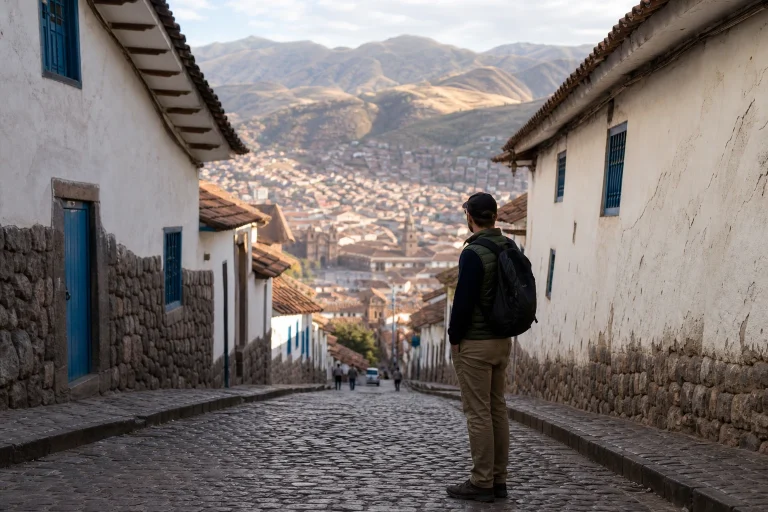
The historic core is compact and walkable, making walking the natural choice for sightseeing. Moving at street level also lets you notice how quickly the city changes between busy central spaces and rising side streets. Distances that look short can still involve a steady climb, so judge a route by elevation and energy rather than distance alone.

During your first day or two, slow the pace and avoid stacking several uphill walks together. The guide to altitude in Cusco and acclimatization offers useful context for planning those first days. A gentle itinerary with frequent pauses is more practical than trying to cover every central attraction immediately after arrival.
Build walking routes around clusters of sights. Visit several nearby places before moving to another part of the center, and use a taxi to remove the steepest or least interesting leg. This simple tactic saves energy without turning every short journey into a vehicle trip.
When walking stops being the practical choice
- You have just arrived and are still adjusting to the altitude.
- Your destination requires a sustained uphill walk.
- You are carrying suitcases or bulky day-trip equipment.
- Fatigue is affecting your balance or awareness.
- You need to reach a departure point at a specific time.
- Your accommodation is outside your comfortable walking radius.
Taxis are the useful backup for city travel
Taxis are valuable for crossing the city, avoiding a demanding climb, or returning with bags. Cusco taxis are generally not metered, so state the destination and agree on the complete fare before getting in. Do not wait until arrival to begin that conversation.
A hotel-arranged taxi, formal taxi stand, or licensed service is a sensible choice where available. Show the driver the destination name or your accommodation details before departure, especially if several properties have similar names. If you have luggage, confirm that the agreed amount covers both the journey and the bags.
Avoid treating one quoted fare as a universal city price. Amounts can vary with the route, provider, traffic, and type of service, and there is no dependable current fare table in the supporting transportation information. Confirm the total before departure and keep smaller denominations available for ordinary transactions.

Machu Picchu Private Day Trip from Cusco
This private Machu Picchu day trip is ideal for travelers seeking a seamless, stress free experience. With guarantee...

Peru Cusco Airport (CUZ) Private Transfer to Cusco City
Reliable and convenient transportation to and from the Pickup location. Our professional drivers ensure a smooth jou...

5 Days Tour in Cusco to Machu Picchu and Rainbow Mountain
Discover the best of Cusco on this unforgettable 5-day adventure. From the moment you arrive, enjoy a seamless exper...
Getting between Cusco Airport and the historic center
Taxi operations exist at Alejandro Velasco Astete Airport, and travelers can also arrange a private pickup through a hotel or transport provider. A general planning estimate places the airport about 15 minutes from the historic center in favorable conditions, while transfer guidance allows up to 30 minutes. Treat that span as a planning range, not a promise.
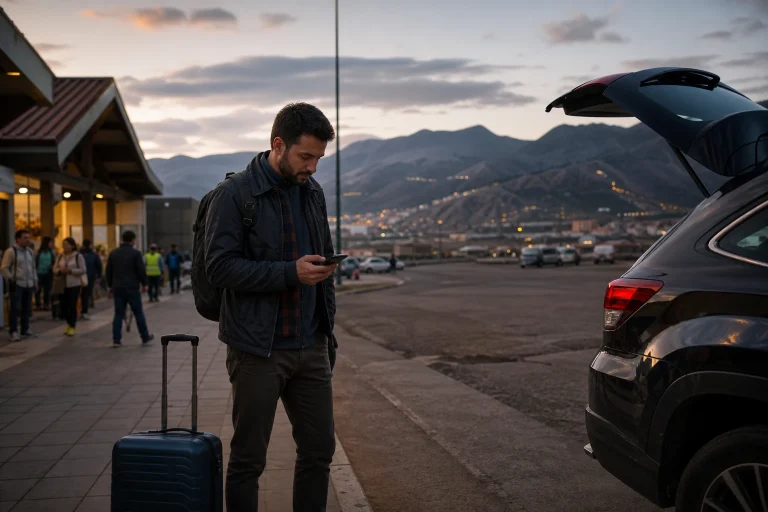
For arrival, choose between an airport taxi and a prebooked transfer according to how much certainty you want. A prearranged pickup is particularly useful after a long journey, with substantial luggage, or when assistance has been organized in advance. Check the confirmation for the meeting point, included waiting time, luggage allowance, and total charge.
For departure, leave more time than the driving estimate suggests. One local transfer operator recommends hotel pickup at least 2.5 hours before a flight and says the drive can take up to 30 minutes. That is operator guidance rather than an airport rule, but it provides a conservative baseline when combined with airline check-in requirements and changing road conditions.
Travelers comparing arrival options can consult the Cusco Airport to Historic Center Transportation Guide for a focused look at that specific journey. Whatever service you select, avoid building an onward regional departure around the shortest possible airport transfer estimate.
Colectivos suit flexible, budget-focused travelers
Colectivos are shared minibuses used for journeys to nearby towns and parts of the Sacred Valley. They appeal to travelers who prioritize lower costs and a more local transportation style. In return, expect less predictability than a private transfer and the possibility of crowded conditions.

Do not plan a colectivo journey around an assumed online fare, exact frequency, or universal departure point. Routes and operating details should be checked locally. Ask your accommodation which departure area serves your destination, then confirm the vehicle’s destination and fare before boarding.
Colectivos work best when your schedule has breathing room and your luggage is easy to manage. They are less suitable for a tight train connection, an airport transfer, or a journey requiring assured step-free access. For those situations, the additional control offered by a private vehicle can outweigh the savings.
Stay central if you want to minimize transportation
Accommodation location has a major effect on how often you need a taxi. A central base keeps many daily journeys within walking distance, although the gradient between your lodging and the places you plan to visit still matters. The guide to where to stay in Cusco for first timers can help you compare practical bases before booking.
San Blas deserves extra attention because an appealing location can still involve more climbing than expected. Read the San Blas Cusco Travel Guide while comparing accommodation, then look closely at the approach to the property. If hills are a concern, ask the hotel how guests usually arrive with luggage and where a vehicle can drop them.
A central hotel can also simplify tours and transfers by giving providers a familiar meeting area. Pickup arrangements still depend on the operator and the exact property, so use the meeting point stated in your confirmation rather than assuming every vehicle can stop directly outside.
Plan Sacred Valley transportation separately
Leaving Cusco for the Sacred Valley changes the transportation calculation. Colectivos can serve flexible, budget-minded journeys, while private transfers and tours make timing and luggage handling easier. Select the option according to your itinerary rather than assuming the best way to cross central Cusco is also best for a regional day.

Machu Picchu Full-Day Tour from Cusco with Panoramic Train
Enjoy a Small Day trip to Machu picchu with us If you’re short on time, this experience is the best option and wel...

2-Day Luxury Machu Picchu & Sacred Valley Classic Tour
Explore the Sacred Valley of the Incas on this 2-day tour, which leaves Cusco to visit a lively market town and two...

Classic Inca Trail 4 days to Machu Picchu
4 Day Inca Trail to Machu Picchu passing some incan sites and get Machu Picchu by the sungate • Hike Inca Trail...
Use a colectivo when flexibility is part of the plan
A colectivo is a reasonable match for a straightforward journey when you can verify the departure point locally and do not have a critical connection immediately afterward. Travel light and leave room in the schedule. A delayed arrival is inconvenient on an open sightseeing day but much more serious when a reserved train is involved.
Book a transfer or tour when timing matters
A prearranged vehicle is the practical choice for a detailed route, multiple stops, significant luggage, or a time-sensitive connection. An organized excursion can also remove the need to coordinate each segment yourself. Review the Sacred Valley Travel Guide From Cusco when deciding which places to combine and how much transportation structure your day needs.
Machu Picchu requires coordinated road and rail planning
A Machu Picchu journey is not simply another taxi ride from central Cusco. Train operators form part of the regional travel chain, and road transfers must be coordinated with the selected itinerary. Leave a sensible buffer between separate bookings instead of relying on minimum travel estimates.

PeruRail and Inca Rail services have baggage restrictions, so check the rules attached to your train before packing. Large suitcases can complicate transfers and station connections. Travelers continuing through the region often find it easier to separate what they need for the rail journey from luggage that can remain stored elsewhere by prior arrangement.
The guide to choosing the right train to Machu Picchu explains the rail side of the decision, while the Machu Picchu Day Trip From Cusco guide addresses the demands of fitting the journey into one day. Once the train and entry plan are settled, arrange the road segment around those fixed times.
A simple car-free transportation plan
- Before arrival, decide whether you want an airport taxi or a transfer booked through your accommodation or a transport provider.
- Choose lodging by considering both central location and the steepness of the approach.
- Spend the first day walking short central routes at a gentle pace.
- Use taxis selectively for hills, luggage, distant stops, and fixed-time departures.
- Arrange Sacred Valley and Machu Picchu transportation as separate regional journeys.
- Recheck meeting points, baggage rules, and pickup times before every reserved transfer or train.
This approach avoids overplanning ordinary city movements while protecting the journeys where missed connections have greater consequences. It also leaves room to adjust after you learn how your body responds to the altitude and hills.
Accessibility and mobility require advance arrangements
Travelers needing step-free routes, mobility assistance, or a wheelchair-compatible vehicle should arrange transportation directly with their hotel or provider before arrival. Confirm vehicle dimensions, assistance, luggage capacity, and the exact curb-to-door route. Do not assume that a standard taxi, colectivo, station, or terminal will meet a specific access requirement.
The hills that make walking tiring can also create a practical barrier between a vehicle drop-off point and a hotel entrance. Ask where the vehicle can stop and whether stairs or a steep approach remain after drop-off. For regional travel, confirm each stage rather than checking only the first vehicle.
Private transportation offers more opportunity to arrange assistance and luggage space, but accessibility is not guaranteed by the word “private.” Give the provider your specific requirements and confirm that the selected vehicle and pickup location are suitable before booking.
How to budget without relying on outdated fares
Build a transportation budget by category rather than copying isolated fare estimates. Allow for an airport transfer, occasional city taxis, regional transport, and any train or tour required by your itinerary. The final amount depends heavily on how often you replace walking or shared transport with a private vehicle.
For an ordinary taxi, agree on the full fare before entering. For a reserved transfer, check the booking confirmation for the total price and inclusions. For a colectivo, verify the current fare and destination locally before boarding. These habits are more dependable than treating a previously published number as a fixed rate.
The best car-free strategy for Cusco
Most visitors can explore Cusco comfortably without renting a car by combining walking with selective taxi rides. The main limitation is physical effort: altitude and steep streets can make an otherwise compact center feel larger. Plan gentle first days, use taxis before fatigue becomes a problem, and treat airport and regional journeys as separate transportation decisions.
Choose colectivos when cost and flexibility lead the decision. Choose transfers or tours when luggage, assistance, timing, or connections matter more. With those priorities clear, getting around Cusco becomes less about finding one perfect mode and more about selecting the right tool for each part of the trip.
Frequently asked questions
Can you get around Cusco without renting a car?
Yes. Central Cusco is compact and walkable, while taxis cover steep, distant, luggage-heavy, and airport journeys. Colectivos, private transfers, tours, and trains serve many regional travel needs.
Is Cusco easy to explore on foot?
The historic center is walkable, but the hills and altitude make some short routes demanding. Take a slower pace during your first day or two and use a taxi when a climb exceeds your comfort level.
Do taxis in Cusco use meters?
Cusco taxis are generally not metered. State your destination and agree on the complete fare before entering the vehicle.
How long does it take to travel from Cusco Airport to the historic center?
Allow roughly 15 to 30 minutes as a general planning range, with extra time when traffic or other conditions slow the journey. The lower figure is an estimate for favorable conditions, not a guaranteed transfer time.
Are colectivos a good way to reach the Sacred Valley?
Colectivos can suit budget-focused travelers with flexible schedules and manageable luggage. Confirm the current departure point, destination, and fare locally, and avoid relying on them for a tight connection.
Should I book an airport transfer in advance?
Advance booking is useful when you want a defined pickup arrangement, have substantial luggage, or require mobility assistance. Review the confirmation for the meeting point, total charge, luggage allowance, and included waiting time.
What is the best way to travel from Cusco to Machu Picchu without a car?
Plan the journey as a coordinated combination of road transportation and train travel according to your itinerary. Check train baggage restrictions and leave buffers between separately booked connections.
Is accessible transportation available in Cusco?
Travelers with accessibility requirements should arrange a suitable vehicle directly with their hotel or provider. Confirm vehicle dimensions, assistance, luggage capacity, and curb-to-door access because standard taxis and shared transport should not be assumed accessible.
Peru Cusco Airport (CUZ) Private Transfer to Cusco City
Reliable and convenient transportation to and from the Pickup location. Our professional drivers ensure a smooth journey, providing a stress-free expe...

Safe transportation from Cusco airport to your hotel
Our transfer service from the airport - hotel is safe and reliable, where you can easily reach the city of Cusco wit...

3 Days excursion City tour and the magical Machu Picchu
In this 3-day tourist visit where you can visit (Day 1) the famous city tour with 5 tourist attractions and (Day 2)...

4 Day Private Tour Cusco Sacred Valley and Machu Picchu
Discover the highlights of Cusco on a carefully planned journey that combines history, culture, and spectacular Ande...
Still comparing Cusco Airport Transfer And City Transport?
Ask for tour ideas, hotel suggestions, or a simple trip plan that combines both.
Trip Helper
Experiences to explore
 Explore experience ↗
Cusco Private One-Way Sacred Valley Airport Transfer by Car
◷ 1 hr
Have a transportation with a local driver waiting for you upon arrival at the airport in the city of Cusco, for your transfer to your h
From $12.00 USD
View dates Explore experience ↗
Private Transportation from Cusco Airport to Sacred Valley Hotels
◷ 2 hr
Our shuttle service offers direct transportation from Cusco Airport or from your hotel in Cusco to your hotel in the Sacred Valley of t
See dates for Current pricing
View dates Explore experience ↗
Private Taxi from Airport to Hotel in Cusco or Vv
◷ 20 min
Private one-way transfer from the airport to the hotel in Cusco, or vice versa. We provide a safe, comfortable, and punctual transfer s
See dates for Current pricing
View dates