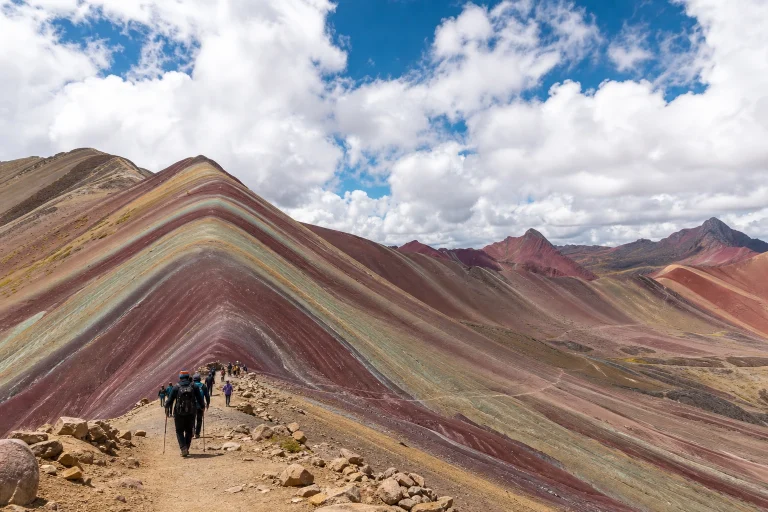
Inca Trail to Machu Picchu Guide
The classic Inca Trail to Machu Picchu is a permit-controlled trek with a memorable finish: entry to the citadel through Intipunku, the Sun Gate. Starting at Piscacucho, known as Km 82, it follows a historic route past several archaeological sites rather than treating Machu Picchu as a single stop. Its rewards come with firm rules, limited capacity, and a guided, pre-booked format.
- The classic Km 82 route must be booked through an authorized agency and completed with official guides.
- The daily limit is 500 people including support personnel, so the number of visitor places is lower than 500.
- The route begins at Piscacucho on the Cusco-Machu Picchu rail corridor and reaches Machu Picchu through the Sun Gate.
- The official listing identifies February as a maintenance-closure month and April through October as the more favorable climatic period.
- Published access rates are separate from the total cost of an operator’s trek package.
What makes the classic Inca Trail different
This trek suits travelers who want the approach to Machu Picchu to be part of the experience. The route combines a guided hike, restricted access, and archaeological stops before the final arrival at the citadel. That structure is also its main limitation: it is not a spontaneous or self-guided walk, and the itinerary must be arranged through an authorized agency.

Short 2-Day Inca Trail Hike to Machu Picchu via the Sun Gate
Travel confidently with Alpaca Expeditions, Peru's #1 Tour Operator! The Short Inca Trail tour is perfect if you are short on time but still want to...

Classic Inca Trail 4 days to Machu Picchu
4 Day Inca Trail to Machu Picchu passing some incan sites and get Machu Picchu by the sungate • Hike Inca Trail...

Inca Trail 4-Day Trek to Machu Picchu – Return by Vistadome Train
Travel confidently with Alpaca Expeditions, Peru's #1 Tour Operator!. 3 Guarantees for Your Inca Trail Adventure...
For many travelers, the decision comes down to access versus flexibility. The Inca Trail is a strong choice if a regulated walking route and Sun Gate arrival are central to the trip. If you prefer to make plans at short notice, travel independently, or avoid a demanding hike, research a different Machu Picchu visit rather than assuming the classic trek will fit.
The Km 82 route and archaeological highlights
The official starting point for the classic Camino Inca is Piscacucho at Km 82, on the rail corridor linking Cusco and Machu Picchu. Along the route, the official inventory identifies Llactapata, Runkurakay, Sayacmarca, Phuyupatamarca, and Wiñay Wayna. The journey culminates at Intipunku, the Sun Gate, where the route enters Machu Picchu.
- Piscacucho, or Km 82, is the classic trailhead.
- Llactapata is one of the archaeological sites named along the route.
- Runkurakay, Sayacmarca, Phuyupatamarca, and Wiñay Wayna add a sequence of Inca sites to the walk.
- Intipunku, the Sun Gate, is the route’s arrival point at Machu Picchu.
Those place names are a useful way to understand why the classic trail feels distinct from simply visiting the citadel. The experience follows a defined archaeological corridor, with access managed to protect it. Let the operator’s permitted itinerary set expectations for the order of stops, campsite arrangements, and daily walking plan.
Permits: book through an authorized agency
You cannot independently enter the classic Camino Inca from Km 82. Access is restricted to travelers booked with an authorized agency and accompanied by official guides. The overall daily cap is 500 people, and that figure includes support personnel, so it should never be read as 500 available trekker places.

Reserve as far ahead as practical, particularly for travel between April and October, when the route’s limited capacity is especially important for trip planning. There is no useful universal lead time because space changes by departure date. Before committing to flights or accommodation, have an authorized operator verify live permit space and the payment deadline for your exact date.
- Choose your preferred trekking date, then keep backup dates in mind before arranging the rest of your itinerary.
- Contact an authorized operator and ask them to check live permit availability for the selected departure.
- Confirm the payment deadline and the information needed to secure the booking.
- Review the operator’s itinerary, services, and exclusions before comparing package prices.
- Only then lock in nonrefundable flights, hotels, or onward plans that depend on the trek.
For 2026 departures, advance Camino Inca reservations were managed through the Ministry of Culture’s TuBoleto system, with reservations reported to open at 08:00. Booking platforms and procedures can change, but the practical lesson remains the same: agency confirmation of permit space matters more than an assumed availability calendar.
When to go and how the February closure affects plans
The official listing identifies April through October as the more favorable period climatically and recommends booking months in advance in this window. It also identifies February as a full-month closure for maintenance. Treat that closure as a core planning rule, then confirm the reopening and operating dates for the specific year of your trip before finalizing arrangements.
| Planning period | What it means for the classic trail |
|---|---|
| February | The official listing identifies an all-month maintenance closure. Confirm future-year dates before booking travel. |
| April to October | The official listing identifies this as the more favorable climatic period; limited capacity makes early planning sensible. |
| Any intended departure date | Ask an authorized operator to verify live permit space, current rules, and payment timing. |
Do not build a plan around a guaranteed permit lead time. A date can be a good seasonal fit and still be unavailable because the daily allocation includes both visitors and trek support personnel. Flexibility with dates is useful, but an operator’s live permit check is the decision point that counts.

Machu Picchu Day Trip from Cusco: Full-Day Guided Tour
Our Day trip to Machu Picchu from Cusco is a beautiful way to see one of the World's New Seven Wonders. Happy Gringo...

One Day Train Trip to Machu Picchu from Cusco
This one-day trip to Machu Picchu from Cusco offers a seamless journey to one of the most iconic landmarks in the wo...

Machu Picchu Circuit 2 Entrance Ticket with Guided Tour
Explore the wonders of Machu Picchu via the official Circuit 2 route, known for its stunning views and historical si...
Inca Trail costs: separate access rates from trek packages
The Ministry of Foreign Trade and Tourism inventory publishes access rates for the Camino Inca Piscacucho to Km 82 route. These figures are useful for understanding the access component, but they are not an all-in budget for trekking to Machu Picchu with an operator.
| Traveler category | Published access rate |
|---|---|
| General adult | S/300 |
| University or technical student with valid ID | S/150 |
| Travelers aged 17 and under | S/75 |
An operator’s advertised price can include services beyond access, while other costs can be listed separately. Compare each offer line by line and ask what is included and excluded before paying. Published access rates, rules, and commercial package prices can change, so use the operator’s current booking information for the final calculation.
Fitness, personal preparation, and accessibility
The official resource classifies the classic route as hiking and trekking. Give yourself an honest assessment before booking: the experience is a fixed guided trail itinerary, not a short, independent sightseeing walk. Ask the operator for its day-by-day plan and the practical demands of its specific departure so you can decide if the trek matches your experience and preparation.

The full Km 82 to Machu Picchu route is not established as step-free or wheelchair-accessible. Travelers who need mobility, sensory, or other accommodations should obtain written, route-specific confirmation from an authorized operator before booking. Accessibility initiatives elsewhere on Qhapaq Ñan should not be treated as proof that this full classic trek can accommodate every access need.
Use the operator’s packing guidance as the final checklist
Package arrangements differ, so the operator’s confirmed list should guide your packing and personal gear decisions. Keep booking documents organized, carry a valid student ID if you are using the student access category, and prepare the personal items specified for your departure. Break in any footwear you intend to hike in before leaving home rather than testing it on the trail.
- A confirmed booking summary and the documents requested by the operator.
- A valid student ID if you booked the published student access category.
- Personal medications and essential items for the days covered by your itinerary.
- Clothing, weather protection, and footwear that match the operator’s current packing guidance.
- A small system for keeping essentials easy to reach, rather than searching through all your luggage at each stop.
Plan your time in Cusco before the trail
The Inca Trail has a fixed departure and limited permit allocation, so avoid squeezing the start between tight connections or a packed sightseeing schedule. Leave enough room in your Cusco plan to attend the operator’s required arrangements and deal with ordinary travel delays. Our altitude acclimatization in Cusco guide can help you organize the days before a high-effort trekking departure.
A well-paced pre-trek stay also makes it easier to enjoy Cusco on its own terms instead of treating the city only as a staging point. Keep your first days adaptable, then confirm the operator’s meeting instructions before making fixed dinner reservations, transport bookings, or late-night plans immediately before departure.
Getting to Km 82 and arriving through the Sun Gate
The classic trail begins at Piscacucho, Km 82, on the Cusco-Machu Picchu rail corridor. The official listing gives an entry window of 05:30 to 09:00. Your operator should confirm the precise meeting point, road or rail-transfer arrangements, and checkpoint process attached to your permit date, since these operational details should guide your departure-day schedule.
The destination is not simply a gate at Machu Picchu. The classic route arrives through Intipunku, the Sun Gate, after the sequence of trail sites. That final approach is the feature that makes the trek compelling for hikers, while the strict access system is the price of experiencing it this way.
Still comparing Classic Inca Trail To Machu Picchu?
Ask for tour ideas, hotel suggestions, or a simple trip plan that combines both.
Trip Helper
Questions to ask before choosing an operator
Start with the essentials that affect your ability to travel: authorization, permit space, payment timing, route logistics, and package inclusions. A clear answer to these questions is more useful than a vague headline price. Keep the conversation focused on your exact date, not a general statement that the operator runs Inca Trail treks.

- Can you verify live permit availability for my exact dates through the authorized booking process?
- What is the payment deadline once space is found?
- What does the advertised package price include, and what remains excluded?
- What meeting point, transfer plan, and checkpoint instructions apply to this departure?
- What is the operator’s route-specific guidance for a traveler who needs accessibility accommodations?
- What itinerary and personal-equipment guidance should I use to judge if this trek is a good fit?
Is the classic Inca Trail the right Machu Picchu experience for you?
Choose the classic Inca Trail if the appeal lies in a guided walk through named Inca sites and a Sun Gate arrival at Machu Picchu, and if you are comfortable committing to a limited-capacity itinerary. Reconsider it if freedom to travel independently or book late matters more. In that case, use our Machu Picchu day trip from Cusco guide to compare a different planning path before deciding.
The best decision is made before the permit search begins. Decide first how much structure, walking, and advance commitment you want. Then let confirmed availability, the operator’s itinerary, and a transparent list of inclusions determine whether you proceed with the classic trek.
Plan early, then let the permit shape the trip
The Inca Trail to Machu Picchu is especially worthwhile for travelers who want a regulated, archaeological walking route ending at the Sun Gate. Its fixed, agency-only format and limited capacity demand advance planning, but those same controls define the experience. Choose dates carefully, verify live space with an authorized operator, review the package closely, and build the rest of your Cusco trip around the confirmed permit.
Frequently asked questions
Can I hike the classic Inca Trail to Machu Picchu independently?
No. The classic Km 82 Camino Inca requires a booking through an authorized agency and accompaniment by official guides.
Where does the classic Inca Trail start and end?
The classic route starts at Piscacucho, known as Km 82, on the Cusco-Machu Picchu rail corridor and arrives at Machu Picchu through Intipunku, the Sun Gate.
When is the Inca Trail closed?
The official listing identifies February as a full-month maintenance closure. Confirm the specific year’s closure and reopening dates before arranging a trip around February or early March.
How much is the Inca Trail permit?
The official inventory publishes access rates of S/300 for general adults, S/150 for eligible university or technical students with valid ID, and S/75 for travelers aged 17 and under. These are access rates, not the complete cost of an operator-led trek.
How far ahead should I book the Inca Trail?
Book months ahead when possible, especially for April through October, but do not rely on a guaranteed lead time. Ask an authorized operator to check live permit space and payment deadlines for your chosen dates.
Is the classic Inca Trail wheelchair-accessible?
The full Km 82 to Machu Picchu route is not established as an accessible, step-free route. Travelers needing accommodations should obtain written, route-specific confirmation from an authorized operator before booking.
Classic Inca Trail 4 days to Machu Picchu
4 Day Inca Trail to Machu Picchu passing some incan sites and get Machu Picchu by the sungate • Hike Inca Trail to Machu Picchu • Get Machu Pi...
Short 2-Day Inca Trail Hike to Machu Picchu via the Sun Gate
Travel confidently with Alpaca Expeditions, Peru's #1 Tour Operator! The Short Inca Trail tour is perfect if you ar...
Inca Trail 4-Day Trek to Machu Picchu – Return by Vistadome Train
Travel confidently with Alpaca Expeditions, Peru's #1 Tour Operator!. 3 Guarantees for Your Inca Trail Adventure...