
Cusco Digital Nomad Guide
This Cusco digital nomad guide is for remote workers who want a tourism-oriented base while keeping room for the Sacred Valley, Machu Picchu, and other nearby plans. Cusco offers reported coworking availability, modest third-party cost estimates, and an average internet benchmark that can work well for many routines. The trade-off is flexibility: test your setup early, keep mobile data available for important calls, and leave buffer time around transport and excursions.
Cusco suits flexible remote workers best
- Arrive before any important meetings, since the Cusco airport terminal is under a rehabilitation initiative and extra airport time is sensible.
- Book a short initial stay, then test the room's connection before committing to a longer rental.
- Treat the reported 53 Mbps average as a benchmark, not a promise for every building or neighborhood.
- Keep a mobile-data backup ready for client calls, uploads, and two-factor authentication.
- Build a budget around your accommodation and workspace needs instead of trusting one monthly-cost figure.
- Use established transport operators for intercity journeys and avoid self-driving at night where possible.
Cusco is a better fit for people who can shape their schedule around a few practical checks than for travelers whose work depends on uninterrupted, location-independent reliability every hour of the day. A patient first few days can turn the city into a useful base. Arriving late and immediately relying on unknown Wi-Fi for a major presentation is a much less comfortable plan.

The Best Private Sacred Valley Tour in Cusco ( with Pisac)
We know very well each place of this tour, since we have been grown in this area and we studied over 3 years to get a guide license. as well, our vehi...

from Cusco Chinchero Moray & Salt Mines drop off in Ollantaytambo
This group service tour biggings with the pick up from your hotel and travel to Chinchero, a small rustic town with...

The Ultimate Full Day Sacred Valley Tour
Beat the Crowds: Experience the magic without the masses. We've meticulously planned our itinerary to ensure you arr...

Cusco City Tour Four Ruins in Half-Day
Enjoy the Ancient Inca Capital of Cusco .This Tour is half a day that includes a visit to the main square , the Temp...
Build an arrival buffer before your first workday
Alejandro Velasco Astete International Airport's passenger terminal is under a rehabilitation initiative intended to support safety, operational continuity, and service quality. Reconfirm your flight status shortly before departure and allow extra time at the airport. Keep the arrival day free of critical calls where possible, especially if you need to collect luggage, arrange local transport, and settle into a new room before opening your laptop.
Use your first 24 hours for low-stakes setup: charge devices, confirm that your accommodation matches the booking, identify a backup workspace, and send colleagues a realistic availability window. This approach gives you space to handle transport changes or a weak in-room connection without putting a deadline at risk.
For the practical handoff between landing and checking in, the Cusco Airport to Historic Center Transportation Guide is a useful companion when arranging your arrival transfer. Keep your first transfer simple and avoid stacking it with a meeting, a long-distance bus, or an excursion departure.
Treat internet as a setup task, not a booking filter
A third-party digital-nomad directory reports an average internet speed of 53 Mbps in Cusco and lists eight coworking spaces. Those figures are encouraging starting points, but they do not guarantee the connection in a particular hotel, apartment, room, or café. Connection quality is one of the first things to test after arrival, before extending a stay or scheduling important video calls.
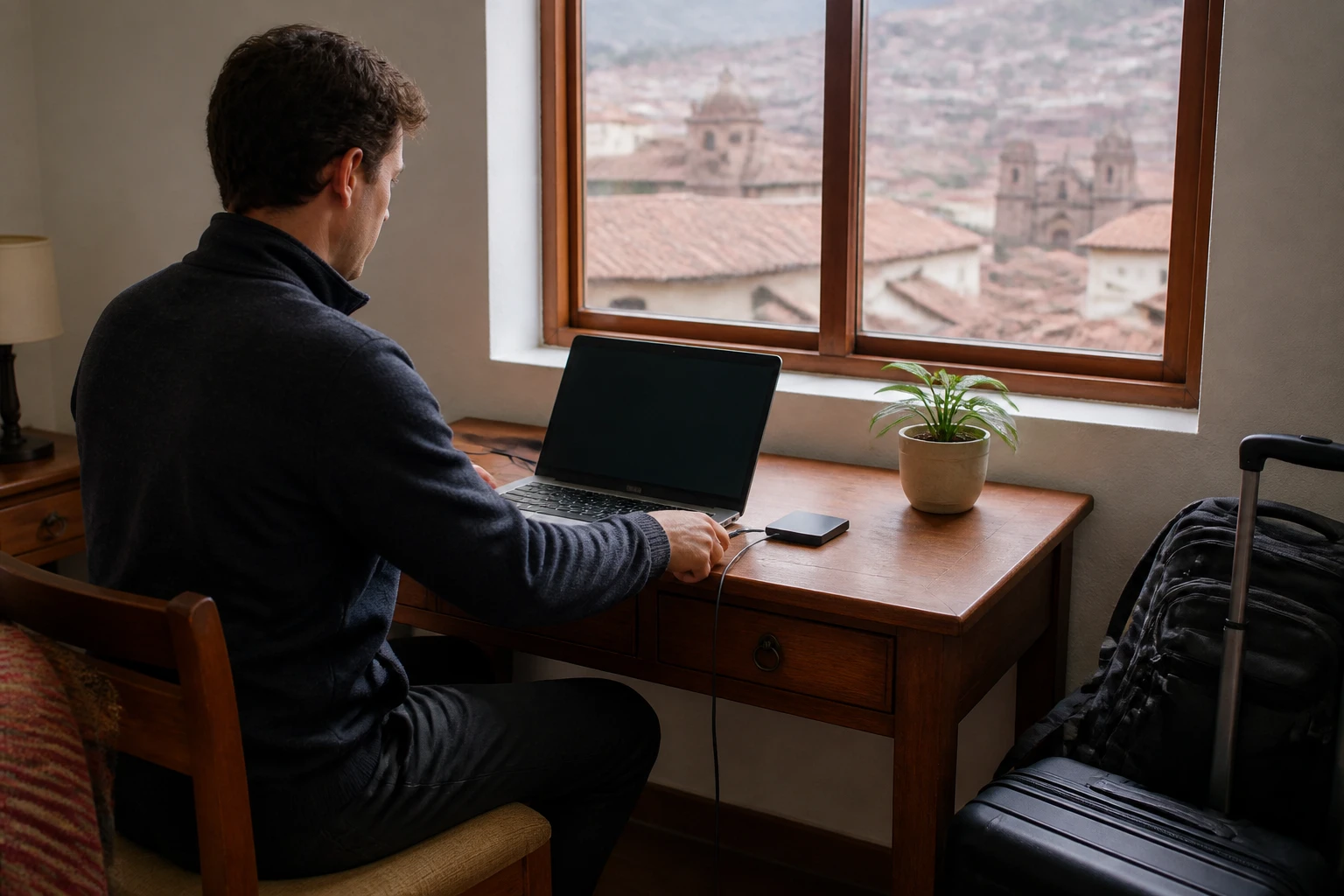
Run a simple connection check on day one
- Ask the host where the router is located and whether the connection serves several rooms or units.
- Test download speed, upload speed, and video-call stability at the time you usually work.
- Try the connection from the exact desk or table where you expect to spend most of the day.
- Identify a second place to work before your first deadline, such as a coworking space or another suitable workspace.
- Keep a charged mobile-data backup for calls that cannot be moved.
Coworking can be a useful second option rather than an automatic monthly expense. A local cost guide places a monthly coworking budget around S/300 to S/600, while the nomad directory reports multiple spaces in the city. Visit or contact a workspace early in your stay so you know where to go if the accommodation connection becomes unsuitable for focused work.
The strongest remote-work routine uses two locations: your lodging for ordinary work and a tested fallback for calls or upload-heavy tasks. That small amount of redundancy is more valuable than relying on a single advertised speed, particularly when a workday has little room for technical surprises.
Make a flexible budget instead of chasing one nomad number
Cusco can be comparatively low-cost for a remote-work base, but no single monthly budget fits every traveler. Third-party estimates for 2026 differ substantially, with one placing overall monthly living costs at about US$631 and another estimating typical digital-nomad spending at about US$879. Accommodation standard, location, season, and your need for coworking are major reasons to build your own working budget.
| Budget driver | How to plan for it |
|---|---|
| Accommodation | Start with a short booking, assess the room and connection, then decide if a longer stay suits your work routine. |
| Workspace | Include coworking in the plan if your work requires a dependable backup location. |
| Location | Compare areas by your daily route, comfort needs, and the amount of time you want to spend commuting. |
| Excursions and transport | Keep a separate buffer for changing plans, established transport, and days away from your desk. |
A useful financial rule is to budget for the version of Cusco that protects your work, not simply the cheapest version on a cost calculator. A private room with a tested connection or occasional coworking access can be the better value when it prevents missed calls and last-minute changes of plan.

Sacred Valley with Maras and Moray Ending in Ollantaytambo.
The tour to the Super Valley will take you through the main attractions of the Sacred Valley, where you will be able...

Machu Picchu Private Day Trip from Cusco
This private Machu Picchu day trip is ideal for travelers seeking a seamless, stress free experience. With guarantee...

Machu Picchu Day Trip from Cusco: Full-Day Guided Tour
Our Day trip to Machu Picchu from Cusco is a beautiful way to see one of the World's New Seven Wonders. Happy Gringo...
Choose lodging around your daily routine
Choose a base by the rhythm you need each day: the route from your room to food, work, transport, and a backup workspace matters more than a broad “digital nomad” label. The Where to Stay in Cusco for First Timers guide can help frame an initial area comparison, while the San Blas Cusco Travel Guide is useful for travelers considering that part of the city.
Before moving beyond a short booking, examine the details that affect work: desk comfort, room temperature, noise at your normal call time, electrical outlets, Wi-Fi reach, and the host's response when you ask a practical question. A pleasant listing description cannot replace a test from the room you will actually use.
Travelers with mobility, respiratory, or other access needs should confirm arrangements directly with accommodation, coworking, transfer, and tour providers before booking. Ask about the specific room, entrance, bathroom, vehicle, and route involved rather than assuming that a general description covers the support you need. The published guide Altitude in Cusco: How to Acclimatize Without Wasting Your Trip is also useful reading when planning a gentler first few days.
Protect deep-work hours with a simple operating routine
Set your most important calls and concentrated work blocks before adding tours, transfers, or long meals to the calendar. Keep a clear division between workdays and outing days whenever possible. Cusco rewards a plan that leaves enough flexibility to respond to a connection issue, a changed flight plan, or an alert affecting a road or mountain excursion.

Give colleagues a reliable contact method outside your main video platform, keep key documents available offline, and store backup power and connectivity options where you can reach them quickly. These are small habits, but they reduce the pressure to solve every problem from an unfamiliar room minutes before a meeting.
Plan excursion days without sacrificing deadlines
Cusco city and nearby visitor destinations including the Sacred Valley, Inca Trail, and Machu Picchu are central to many Peru itineraries. Give these outings their own calendar space instead of squeezing them into a workday. A day with a fixed meeting is best kept local and flexible; a true day off is the better time for a more complex transport plan.
For trip planning, the Sacred Valley Travel Guide From Cusco and Machu Picchu Day Trip From Cusco cover two natural additions to a remote-work stay. Place major excursions after you have tested your lodging and settled your work rhythm. Avoid booking an important call immediately after a long transfer, since weather, road conditions, and changing local circumstances can require a plan adjustment.
Use established operators for longer road journeys
Road travel in Peru calls for extra care. The U.S. State Department notes road-safety risks and restricts its employees' nighttime driving, while allowing commercial buses on the Lima-Arequipa-Cusco corridor. For remote workers, the practical lesson is straightforward: prefer established operators for intercity travel and avoid self-driving at night where possible.
Treat transfer days as low-commitment days. Bring charged devices, keep work files available offline, and do not rely on a narrow arrival window for a high-stakes call. The goal is not to eliminate every variable, but to avoid making one delayed journey disrupt the rest of your workweek.
Still comparing Cusco Digital Nomad Excursion Planning?
Ask for tour ideas, hotel suggestions, or a simple trip plan that combines both.
Trip Helper
Check weather alerts before mountain and road plans
Check the active SENAMHI Cusco meteorological alert page shortly before arrival and again before mountain or road excursions. Conditions that affect travel can change, so make this a regular planning step rather than a last-minute search after a tour or transfer is already booked.
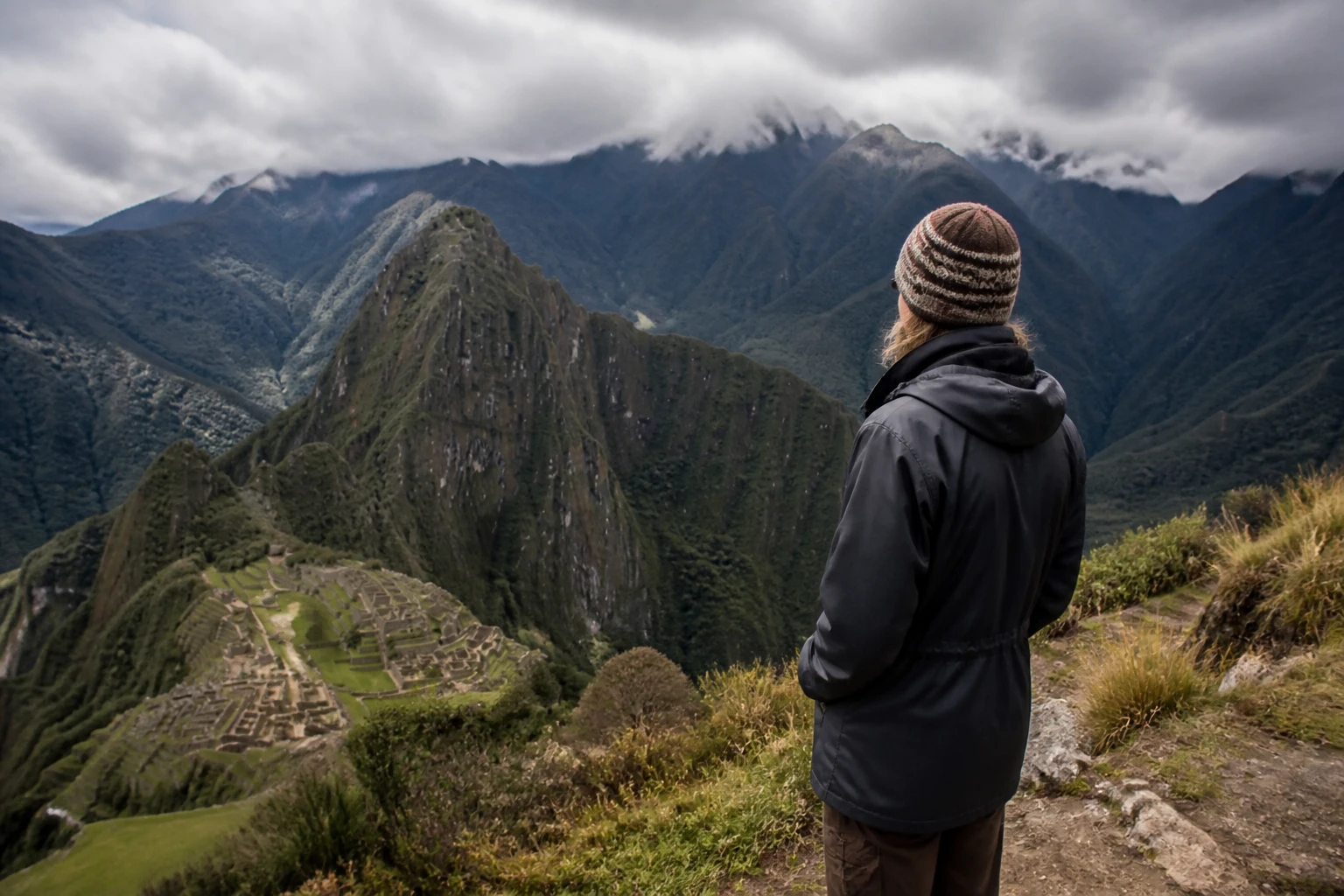
A practical rhythm is to review alerts at the start of each week, then repeat the check before any day that takes you beyond the city. Keep an alternative workday or local plan in reserve. That way, changing conditions do not force you to choose between missing work and forcing an outing that no longer suits the day.
Keep safety and accessibility planning practical
Peru is listed by the U.S. State Department at Level 2, which calls for increased caution because of crime, civil unrest, and kidnapping risk. Cusco city and the nearby popular sites named in the advisory are outside the specifically affected parts of the Cusco region. Even so, avoid demonstrations, follow local news, and leave room to change plans if conditions shift.
Keep your routine simple: use sensible transport choices, avoid displaying valuable equipment unnecessarily, and monitor official alerts during your stay. For accessibility, confirm the details that matter before paying for a longer stay or a tour. A direct answer about a particular entrance, room, vehicle, or route is more useful than a broad accessibility label.
A workable first week in Cusco
- Day 1: Arrive, settle in, charge equipment, and keep work commitments light.
- Day 2: Test the accommodation connection at your normal work time and identify a mobile-data backup.
- Day 3: Visit or evaluate a coworking fallback if your work includes important calls or uploads.
- Day 4: Review transport and meteorological alerts before committing to a longer outing.
- Day 5 onward: Book excursions around established work blocks, keeping transfer days free of high-stakes deadlines.
The verdict: make flexibility part of the plan
Cusco can be a rewarding remote-work base for travelers who want a practical city stay alongside time for Peru's best-known nearby destinations. Its strongest advantages are reported coworking options and potentially modest living costs; its main limitation is that internet, airport operations, road travel, weather, and local conditions all require a little planning slack. Start with a short stay, test your work setup, then build your excursions around the routine that works.
Frequently asked questions
Is Cusco a good place for digital nomads?
Cusco can be a good base for remote workers with a flexible schedule and a backup plan for connectivity. Reported coworking availability and internet benchmarks are useful starting points, but test your specific lodging before committing to a longer stay.
How much does it cost to live in Cusco for a month?
Cusco can be comparatively affordable, but there is no single reliable monthly figure. Third-party estimates range from about US$631 in overall monthly living costs to about US$879 for typical nomad spending, with accommodation and workspace choices shaping the difference.
Is the internet reliable enough for video calls in Cusco?
Reported internet averages are workable for many remote routines, but reliability varies by property and is not guaranteed. Book a short initial stay, test video calls from your actual room, and keep mobile data or a coworking option available for important meetings.
Do I need a coworking space in Cusco?
A coworking membership is not essential, but it is a practical fallback for connection-sensitive work. A directory lists eight coworking spaces, and a local guide estimates monthly coworking at roughly S/300 to S/600.
How should I plan my arrival in Cusco?
Arrive with time to settle in before any critical meetings. The airport passenger terminal is under a rehabilitation initiative, so reconfirm flights, allow extra airport time, and use the first day to test your accommodation setup.
Can I combine remote work with Sacred Valley or Machu Picchu trips?
Yes, if you reserve full excursion days and keep high-stakes work commitments separate from long transfers. Check current weather and travel alerts before heading out, and retain an alternative local plan if conditions change.
The Best Private Sacred Valley Tour in Cusco ( with Pisac)
We know very well each place of this tour, since we have been grown in this area and we studied over 3 years to get a guide license. as well, our vehi...
Cusco City Tour Four Ruins in Half-Day
Enjoy the Ancient Inca Capital of Cusco .This Tour is half a day that includes a visit to the main square , the Temp...

Sacred Valley Full Day Tour
The Sacred Valley of the Incas is one of Peru's most iconic destinations and one of the main gateways to discovering...

Inca Trail 4-Day Trek to Machu Picchu – Return by Vistadome Train
Travel confidently with Alpaca Expeditions, Peru's #1 Tour Operator!. 3 Guarantees for Your Inca Trail Adventure...