Cusco Horseback Riding Guide
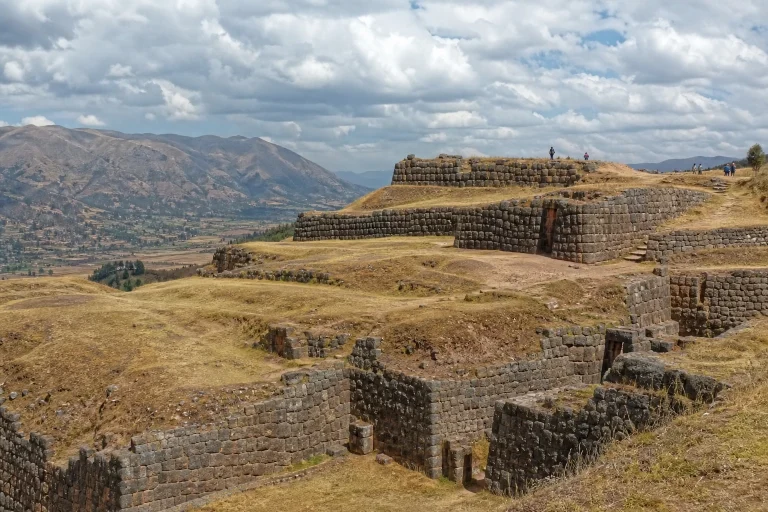
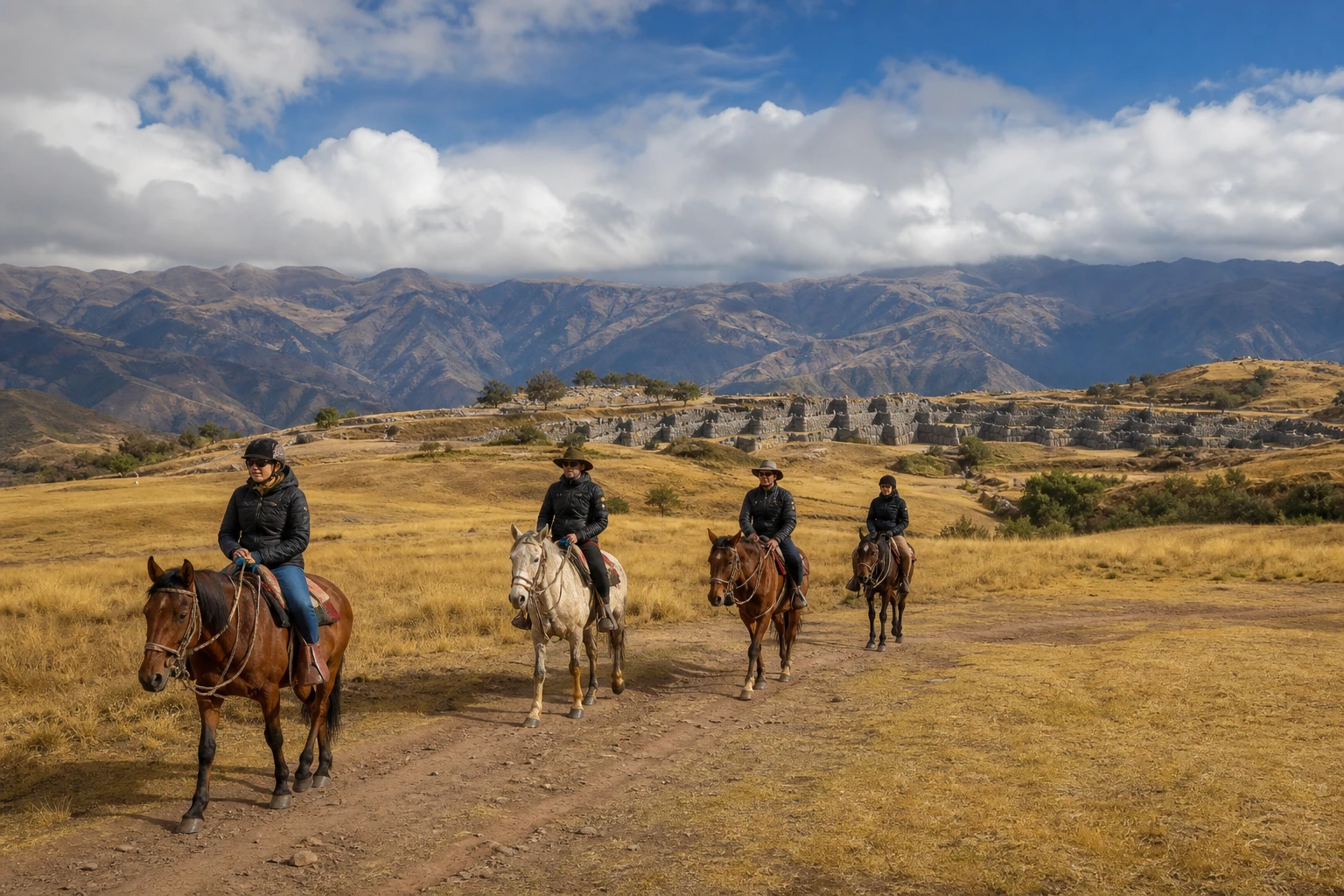
Cusco horseback riding takes travelers beyond the city streets to the upland country around Sacsayhuamán, where trails and archaeological landmarks sit above the historic center. Many tours begin with a hotel pickup or transfer to a ranch, then follow routes that can connect Sacsayhuamán, Q’enqo, Puka Pukara, and Tambomachay. The key is choosing a trip for its real focus: archaeological stops, time in the saddle, or open-country views.
Cusco horseback riding at a glance
- Most city-based rides head to the high ground near Sacsayhuamán, with transfers commonly included.
- Half-day products are often advertised at about four hours overall, not four hours spent riding.
- Four-ruins itineraries can involve Sacsayhuamán, Q’enqo, Puka Pukara, and Tambomachay, but site entry is not automatic.
- Archaeological admission can be separate from the horse-riding tour and may require the personal, non-transferable Cusco Tourist Ticket.
- Some operators welcome beginners, yet helmet provision, weight limits, accessibility, and horse-welfare practices should be confirmed before booking.
- High routes can reach about 3,800 meters, so leave this activity until after you have adjusted to Cusco’s altitude.
A horse ride here works best as a half-day outing after a little acclimatization, rather than as a rushed add-on between major travel days. Departure times, route lengths, and inclusions differ by provider. Read the itinerary for the transfer, orientation, riding, and site-stop sequence, then judge the experience by the amount of saddle time and scenery that matters to you.

Cusco Horseback Riding Adventure
Enjoy a tour in the countryside, a free place where you can connect with nature, breathe fresh air and contemplate a beautiful landscape. During this...

From Cusco: Horseback Riding Maras Moray - Huaynas Expeditions
Riding by horseback on the mountains of the Sacred Valley is an unforgettable experience, with a stunning view of th...

Horseback Riding tour to Inkilltambo - Cusco
Horseback Riding tour to Inkilltambo in Cusco is one of the most escenic and adventurous way to explore the hidden i...

Half day Horseback Riding tour around Sacsayhuaman park
This tour is the best way to explore the hiden places in Sacsayhuaman archeological park, this impresive place is lo...
Choose between the four ruins circuit and a landscape-focused ride
The classic choice is a route above Cusco that links the four landmarks of Sacsayhuamán, Q’enqo, Puka Pukara, and Tambomachay. It is a convenient format for travelers who want guided transport, a horseback outing, and a look at major sites in the same half-day. Still, a tour advertised as a four-ruins ride does not necessarily enter every site. Some itineraries use roads, viewpoints, or trail connections between stops.
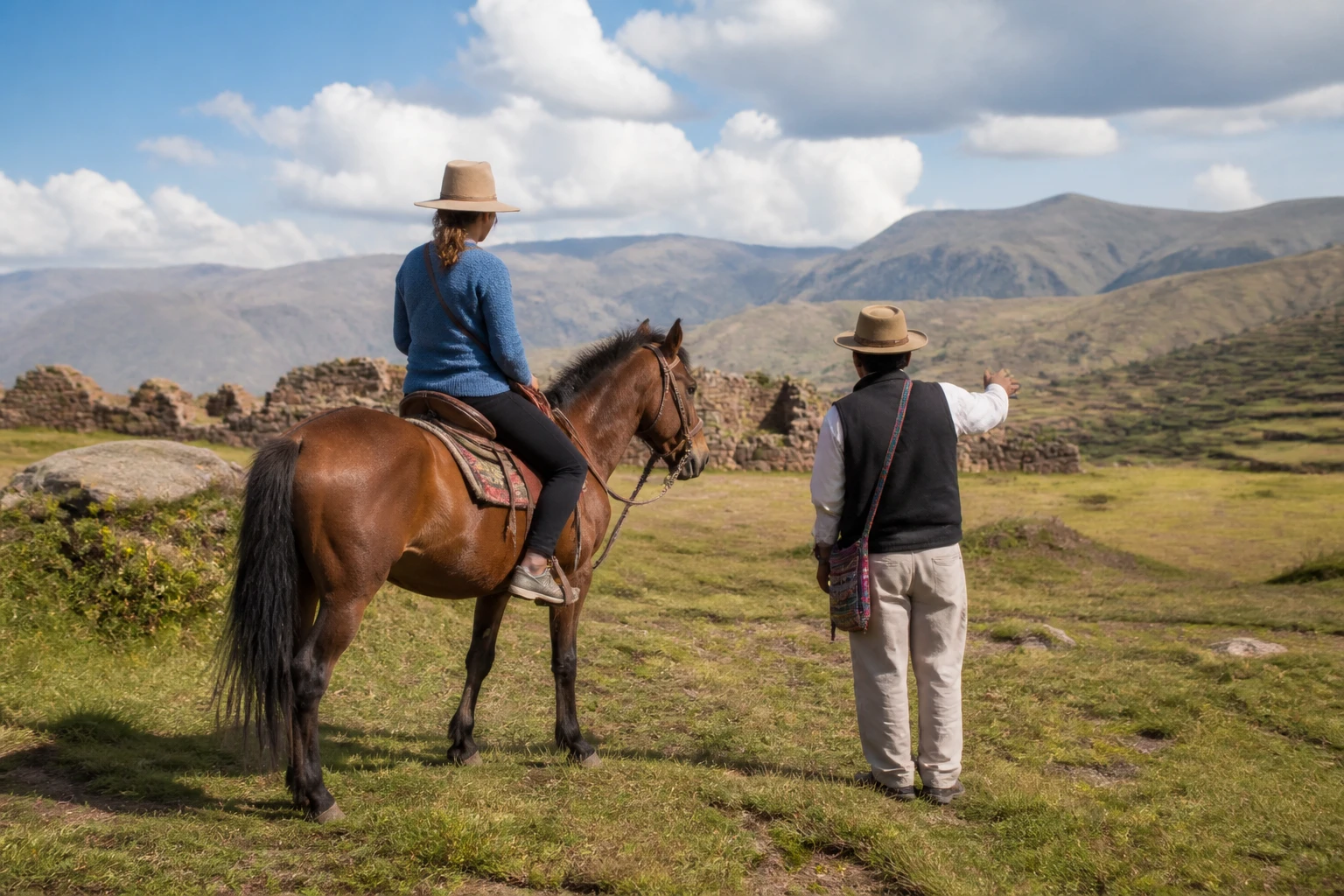
A landscape-led ride puts the emphasis elsewhere: countryside trails, wide views, and the rhythm of the horse rather than a checklist of archaeological stops. One Sacsayhuamán and Devil’s Balcony route reaches roughly 3,800 meters, a reminder that these hills are proper highland terrain even when the ride is sold as an easy city excursion.
Pick the four-ruins format if archaeological context is your priority and you already have, or plan to buy, the appropriate entry ticket. Pick a trail-focused option if you want more of the outing to feel like riding. In either case, ask for the exact route before paying, including which sites are entered and which are viewed from outside.
For more background on the largest and most commonly linked landmark, the Sacsayhuaman Guide for First Timers is useful preparation before deciding how much time to devote to the ruins themselves versus the ride.
How a typical horseback tour near Cusco runs
Half-day horseback rides commonly use morning or afternoon departures. Current examples show pickup windows around 08:00 or 09:00 in the morning and 13:00 or 14:00 in the afternoon, depending on the provider. A transfer from your hotel or another agreed meeting point usually brings the group to the ranch or starting area near Sacsayhuamán.
The four-hour label needs a little decoding. It can include pickup, transport, a riding briefing, time to mount and dismount, sightseeing stops, and the return journey. A full-day product can begin around 08:00 and return in the afternoon, but that too includes more than the time spent in the saddle. Ask directly for the estimated riding time.
- Confirm the hotel pickup area or the exact meeting point.
- Ask how long you will be mounted, not only the total tour duration.
- Check whether a guide rides with the group and whether a handler accompanies each horse or the group.
- Find out the expected group size and the intended riding pace.
- Confirm the rain and poor-trail policy before committing the rest of your day.
What Cusco horseback riding costs
Online prices are useful as budgeting snapshots, not as a fixed market rate. Recent listings range from US$70 per person for a private full-day product with a two-person minimum to US$75 per person for a four-ruins half-day product with the same minimum. Another four-hour product is listed from US$115 per person. Duration, group terms, and inclusions vary, which explains much of the spread.
| Example product | Displayed price snapshot | Details to check |
|---|---|---|
| Private full-day ride | US$70 per person | Two-person minimum; listed with transfers, guide, horse, handler, and picnic lunch; archaeological entry excluded. |
| Four-ruins half-day ride | US$75 per person | Two-person minimum; listed with broadly similar support services; verify site-entry arrangements. |
| Four-hour riding product | From US$115 per person | Compare the final route, group format, and exact inclusions before treating it as equivalent to other rides. |
Do not treat the horse ride and archaeological admission as one expense unless the booking description explicitly says so. A low initial tour price can still leave the Cusco Tourist Ticket, food beyond stated inclusions, and personal items as separate costs. Review the final inclusion list before booking rather than relying on a headline price.

Cusco City Tour Four Ruins in Half-Day
Enjoy the Ancient Inca Capital of Cusco .This Tour is half a day that includes a visit to the main square , the Temp...

Horseback Riding Plus Tour to Sacsayhuaman, Quenqo, Puka Pucara and Tambomachay
Enjoy a horseback riding tour which will visit the "Four Ruins" taking you to the most famous archaeological sites a...

Horseback Tour in cusco to Temple of the Moon & Hidden temples
Enjoy a 3-hour horseback riding tour from Cusco in which you will get to visit the archaeological sites of Chuspiyoc...
Bring the right Cusco Tourist Ticket for site entry
Sacsayhuamán, Q’enqo, Puka Pukara, and Tambomachay are among the attractions covered by the Cusco Tourist Ticket, known as the BTC. The ticket is personal and non-transferable. If your chosen horseback itinerary actually enters any of these sites, confirm which version of the BTC is required and budget for it separately when admission is not included.
This detail matters because a route can pass near a ruin without including entry. Check the itinerary language for words such as “visit,” “enter,” “viewpoint,” or “pass by,” then make sure your ticket plans match the experience you want. Bring the original ID or passport requested by the operator for the activity and any ticket arrangements.
Is horseback riding in Cusco suitable for beginners?
Some Cusco operators state that prior riding experience is not required and include a practice session, guide, and horse handler. That makes a gentle trail outing approachable for many first-time riders. It does not make every route, horse, or pace identical, particularly on uneven highland ground where balance and confidence still matter.
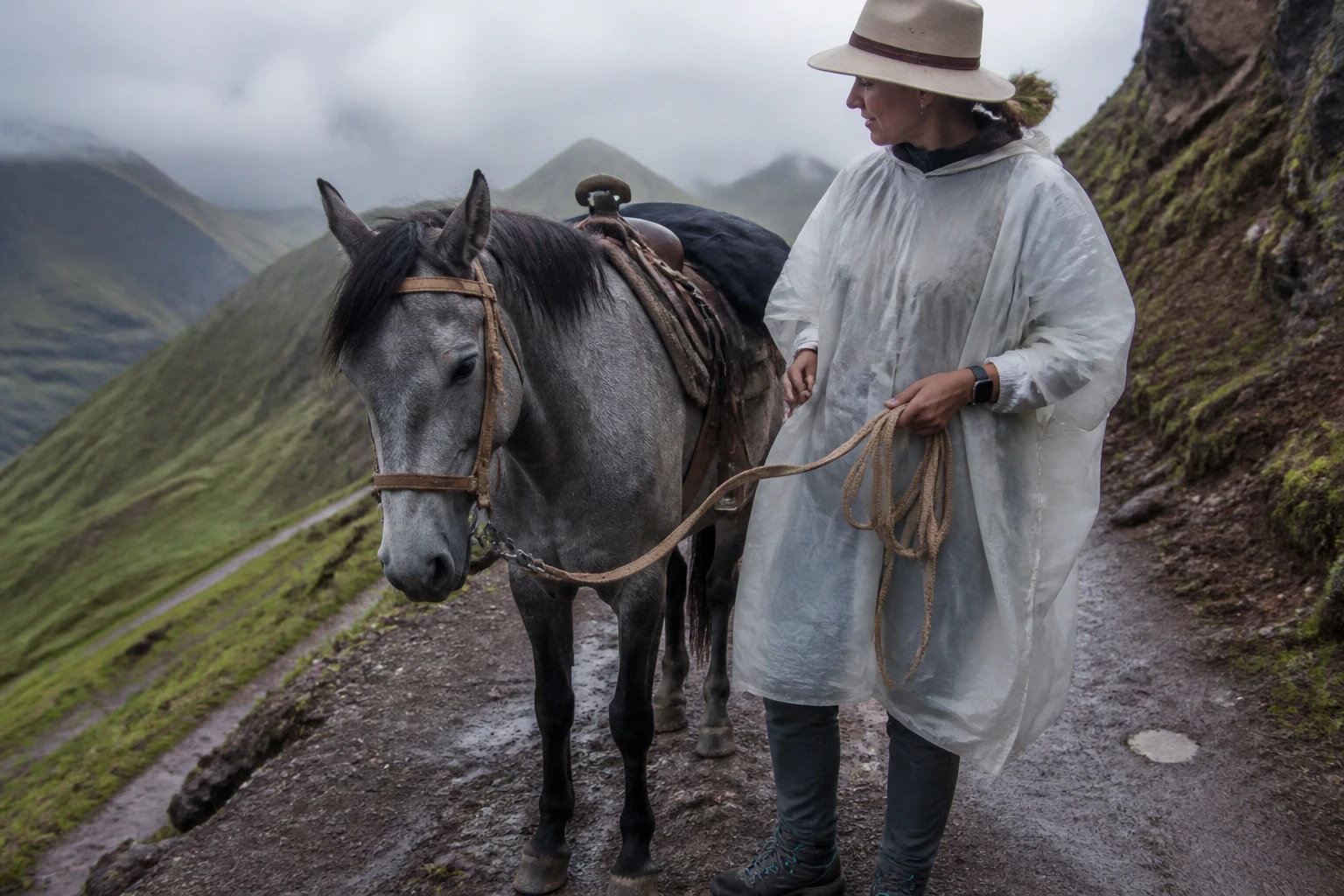
Be candid about your riding background and any comfort concerns when booking. Published listings do not provide a consistent standard for minimum age, rider weight, mounting assistance, adaptive equipment, helmets, or medical screening. Travelers with mobility or balance limitations, pregnancy, heart or lung concerns, or altitude-related health issues should obtain written confirmation that the specific operator can accommodate them before paying.
Altitude, weather, and what to pack
Treat this as a high-altitude activity, not a casual city stroll. A route around Sacsayhuamán and Devil’s Balcony reaches about 3,800 meters. Plan the ride after you have had time to settle into Cusco, keep your schedule flexible, and do not book it immediately before another physically demanding day.
Use the practical steps in Altitude in Cusco: How to Acclimatize Without Wasting Your Trip before committing to a high trail day. The extra preparation leaves more room to enjoy the landscape and pay attention to your horse, rather than watching the clock or pushing through discomfort.
- Water and sun protection for exposed highland conditions.
- Trekking shoes or supportive sneakers rather than loose footwear.
- A rain poncho in the rainy season.
- Comfortable layers that allow easy movement while mounting and riding.
- Your original identification if requested in your booking instructions.
Weather can affect trail conditions and operations. Confirm the operator’s plan for rain or poor ground when you book, then check your confirmation for the final pickup time and location. That one quick check is especially useful when a morning ride could overlap with an afternoon museum visit, food tour, or travel connection.
Book responsibly: questions that improve the ride
Good booking questions sharpen the difference between a scenic outing and an archaeological tour with a short ride attached. They also help you choose an operator that communicates clearly about animal care and day-of conditions. Ask before payment, then keep the final response with your booking details.
- What is the exact route, and which archaeological sites are entered?
- How much of the total trip is actual time on horseback?
- Are helmets available, and what is the guide and handler ratio?
- What group size and pace should riders expect?
- What are the horse-welfare practices and the cancellation policy?
- Will the activity operate in rain or if trail conditions deteriorate?
Still comparing Cusco Horseback Riding?
Ask for tour ideas, hotel suggestions, or a simple trip plan that combines both.
Trip Helper
Who will enjoy a horseback ride in Cusco?
This experience suits travelers who want a slower, more open-air perspective on the hills beyond Cusco and are comfortable planning around altitude and variable trail conditions. It is particularly appealing for beginners who choose a calm, guided route and for history-minded visitors who want to pair riding with the landmarks above the city.
The main limitation is that a short tour can contain more transport and sightseeing than saddle time. Choose a four-ruins circuit for convenient archaeological context, or a landscape-focused ride for more trail atmosphere. Confirm the exact route, riding time, BTC need, equipment, and weather policy, then you can book with a clear idea of the day ahead.
Frequently asked questions
How long is a horseback-riding tour in Cusco?
Half-day tours are commonly advertised at around four hours in total, while some full-day options run from about 08:00 into the afternoon. The total includes transfers, orientation, riding, and possible site stops, so ask for the expected saddle time.
Do I need horseback-riding experience in Cusco?
Some operators welcome beginners and include a practice session, guide, and handler. Tell the operator about your experience level, because route difficulty, riding pace, equipment, and assistance are not standardized across providers.
Do horseback tours enter Sacsayhuamán and the other ruins?
Some four-ruins itineraries link Sacsayhuamán, Q’enqo, Puka Pukara, and Tambomachay, but entry depends on the specific route and the required Cusco Tourist Ticket. Confirm whether each site is entered or simply passed or viewed from outside.
How much does horseback riding in Cusco cost?
Recent online listings range from US$70 to US$115 per person, with important differences in duration, group terms, and inclusions. Archaeological admission can be an extra cost, so compare the full inclusion list rather than the headline price alone.
What should I bring on a Cusco horseback ride?
Bring water, sun protection, supportive trekking shoes or sneakers, and a rain poncho in the rainy season. Carry the original ID or passport if your operator requests it, and confirm the final meeting point and weather policy before departure.
Cusco Horseback Riding Adventure
Enjoy a tour in the countryside, a free place where you can connect with nature, breathe fresh air and contemplate a beautiful landscape. During this...

Full-Day Horseback Riding to the Viewpoint of the Lagoons from Cusco
This private tour is the best way to explore the hiden places around Sacsayhuaman archeological park, this impresive...

Horseback Riding Temple of the Moom in Cusco
This is a horseback ride along the Sacred route to the temple of the moon that will take you to know wonderful place...

Hidden Inca Temples – Full day Horseback Riding Tour – Cusco
This experience was designed for people who likes to explore some hidden gems around Cusco city, this is a perfect c...
Experiences to explore
 Explore experience ↗
Half day Horseback Riding tour around Sacsayhuaman park
◷ 3 hr 30 min
This tour is the best way to explore the hiden places in Sacsayhuaman archeological park, this impresive place is located 15 min away f
From $75.00 USD
View dates Explore experience ↗
Horseback riding around Sacsayhuaman, Cusco
◷ 2 hr
Our main objective is to offer you unforgettable experiences. Our guides, in addition to being experts in horseback riding, are deeply
See dates for Current pricing
View dates Explore experience ↗
Horseback Riding Plus Tour to Sacsayhuaman, Quenqo, Puka Pucara and Tambomachay
◷ 4 hr
Enjoy a horseback riding tour which will visit the "Four Ruins" taking you to the most famous archaeological sites around Cusco which a
See dates for Current pricing
View dates